
Introduction
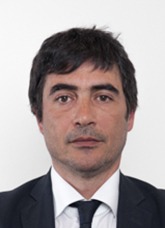
Nicola Fratoianni is a prominent figure in Italian politics, known for his strong left-wing stance and commitment to social justice. Born on October 4, 1972, in Pisa, Italy, Fratoianni has played a significant role in shaping contemporary Italian politics, particularly within the leftist movements. As a key leader in parties like Sinistra Ecologia Libertà (SEL) and Sinistra Italiana, his career reflects the evolving landscape of Italy’s political left. This article delves into his life, political journey, and the impact he has had on Italian politics.
Early Life and Education
Nicola Fratoianni was born into a family with roots in the province of Campobasso, but he grew up in the culturally rich city of Pisa. From an early age, Fratoianni displayed a keen interest in political activism, a trait that would define his future career. His early exposure to politics was influenced by the socio-political environment of Italy during the 1980s, a time when leftist ideologies were gaining momentum in response to global and national socio-economic challenges.
Fratoianni pursued higher education in philosophy, a field that would later influence his political ideology. His academic background provided him with a critical lens through which he viewed the socio-political issues of his time. During his university years, Fratoianni became actively involved in student movements, which marked the beginning of his journey into organized politics.
Entry into Politics: The Beginnings with Rifondazione Comunista
Nicola Fratoianni’s formal entry into politics began in the early 1990s when he joined Rifondazione Comunista (Communist Refoundation Party). This was a period of significant political turbulence in Italy, with the fall of the Soviet Union and the redefinition of leftist politics in Europe. Rifondazione Comunista was at the forefront of these changes, advocating for a reimagined left that could address the new global realities.
By the age of 20, Fratoianni had already immersed himself in the party’s activities, quickly rising through the ranks. His dedication and ideological alignment with the party’s principles earned him a leadership role as the national coordinator of the Giovani Comunisti (Young Communists). This position allowed Fratoianni to influence the youth wing of the party, nurturing a new generation of politically conscious individuals committed to leftist ideals.
Move to Bari and Rise in Regional Politics
In 2004, Nicola Fratoianni made a strategic move to Bari, a city in Southern Italy, where he took on the role of regional secretary for Rifondazione Comunista. This move was significant as it marked Fratoianni’s transition from national youth politics to a more hands-on role in regional governance. His time in Bari was marked by his close collaboration with Nichi Vendola, a charismatic leader of the Italian left and a key figure in Puglia’s political landscape.
Fratoianni played a crucial role in Vendola’s campaign for the presidency of the Puglia region. Their collaboration proved to be highly effective, and Vendola won the 2005 regional elections, defeating the centrist candidate Francesco Boccia. This victory was a turning point in Fratoianni’s career, solidifying his reputation as a skilled political strategist and a rising star within the leftist political sphere.
National Political Career and the Birth of Sinistra Ecologia Libertà
After his success in regional politics, Fratoianni continued to climb the political ladder. In 2009, following a split within Rifondazione Comunista, he aligned himself with Nichi Vendola in forming a new political party, Sinistra Ecologia Libertà (Left Ecology Freedom – SEL). This party aimed to unify the fragmented Italian left and present a progressive alternative to the centrist and right-wing parties dominating Italian politics.
Fratoianni quickly became a prominent figure within SEL, taking on a national coordination role. His work within the party was instrumental in shaping its policies and electoral strategies. In 2010, he was appointed as the regional minister for youth policies in Puglia, further expanding his influence in regional governance.
The 2013 general elections marked a significant milestone for Fratoianni, as he was elected to the Italian Chamber of Deputies on the SEL ticket. As a member of parliament, Fratoianni focused on cultural, scientific, and educational policies, serving on several key committees, including the Culture, Science and Education Commission, the Social Affairs Commission, and the Commission for the Supervision of Radio and Television Services.
Leadership of Sinistra Italiana and Opposition to Renzi’s Government
Following the dissolution of SEL in 2016, Nicola Fratoianni played a pivotal role in the formation of Sinistra Italiana (Italian Left). The new party sought to continue the work of SEL while adapting to the changing political landscape in Italy. At the party’s founding congress in Rimini, Fratoianni was elected as the national secretary, a position that placed him at the forefront of Italy’s left-wing politics.
Under Fratoianni’s leadership, Sinistra Italiana positioned itself as a staunch opponent of the center-left government led by Matteo Renzi. Fratoianni was particularly critical of Renzi’s neoliberal economic policies and his handling of social issues. His opposition extended to the subsequent government led by Paolo Gentiloni, where Fratoianni refused to support the administration in parliament.
Electoral Challenges and the Formation of La Sinistra
The 2018 general elections were a challenging time for the Italian left, with many leftist parties struggling to gain traction in a political environment increasingly dominated by right-wing populism. Nicola Fratoianni ran as part of the Liberi e Uguali (Free and Equal) coalition, but the results were disappointing. The coalition barely surpassed the 3% threshold needed to enter parliament, reflecting the difficulties faced by leftist movements in Italy during this period.
In response to the disappointing election results, Fratoianni resigned as the leader of Sinistra Italiana. However, his political career was far from over. In the lead-up to the 2019 European Parliament elections, Fratoianni spearheaded the formation of a new electoral list called La Sinistra (The Left). This coalition brought together various leftist groups, including Rifondazione Comunista and other small movements.
La Sinistra presented a radical platform that included proposals to renegotiate European austerity measures and protect social rights. Despite the bold platform, the coalition failed to meet the 4% electoral threshold required for representation in the European Parliament. The defeat led Fratoianni to step down temporarily from his leadership role, allowing Claudio Grassi to take over.
Return to Leadership and Opposition to Mario Draghi’s Government
In February 2021, Nicola Fratoianni returned to the leadership of Sinistra Italiana. His return coincided with the formation of the government led by Mario Draghi, a former European Central Bank president brought in to manage Italy’s economic recovery during the COVID-19 pandemic. Fratoianni positioned himself as one of the leading voices in opposition to Draghi’s government, criticizing its technocratic approach and policies favoring the wealthy at the expense of social welfare.
Fratoianni’s opposition intensified following the government’s decision to send military aid to Ukraine in response to the Russian invasion in 2022. Fratoianni argued against the escalation of military involvement, advocating instead for diplomatic solutions and humanitarian aid. His stance resonated with many on the Italian left, who viewed the government’s actions as a betrayal of Italy’s tradition of peace and diplomacy.
The Alliance with Europa Verde and the 2022 General Elections
As Italy approached the 2022 general elections, Nicola Fratoianni sought to build a broader left-wing alliance to counter the growing influence of right-wing parties. In January 2022, after being re-elected as the national secretary of Sinistra Italiana, Fratoianni formed an electoral pact with Europa Verde (Green Europe), a party focused on environmental issues and sustainability.
The alliance aimed to present a united front on the left, emphasizing social justice, environmental protection, and opposition to neoliberal economic policies. In August 2022, the coalition reached an agreement with the Democratic Party (PD) to form a broader center-left alliance for the elections. However, the alliance faced internal challenges, particularly from centrist factions led by Carlo Calenda, who were reluctant to embrace the more radical elements of the leftist platform.
Personal Life and Beliefs
Nicola Fratoianni resides in Foligno, a city in central Italy, with his wife Elisabetta and their son Adriano. Known for his down-to-earth demeanor, Fratoianni is a dedicated family man who balances his political career with his personal life. He is openly atheist, a reflection of his secular beliefs and his commitment to the separation of church and state in political affairs.
Fratoianni’s personal life is closely tied to his political journey, with his long-time friend and political ally Nichi Vendola officiating his civil wedding ceremony. This connection underscores the close-knit relationships within the Italian left and the deep personal bonds that have shaped Fratoianni’s career.
Conclusion
Nicola Fratoianni’s political career is a testament to his unwavering commitment to leftist ideals and social justice. From his early days in Rifondazione Comunista to his leadership roles in Sinistra Ecologia Libertà and Sinistra Italiana, Fratoianni has consistently advocated for the rights of the marginalized and the working class. His opposition to neoliberal policies, his advocacy for environmental sustainability, and his dedication to building a united left have made him a significant figure in Italian politics.
As Italy continues to navigate the challenges of the 21st century, Nicola Fratoianni remains a vital voice for progressive change. His leadership, characterized by a deep understanding of the socio-political landscape and a commitment to radical yet pragmatic solutions, ensures that the ideals of the Italian left remain a crucial part of the national conversation.


