
Introduction
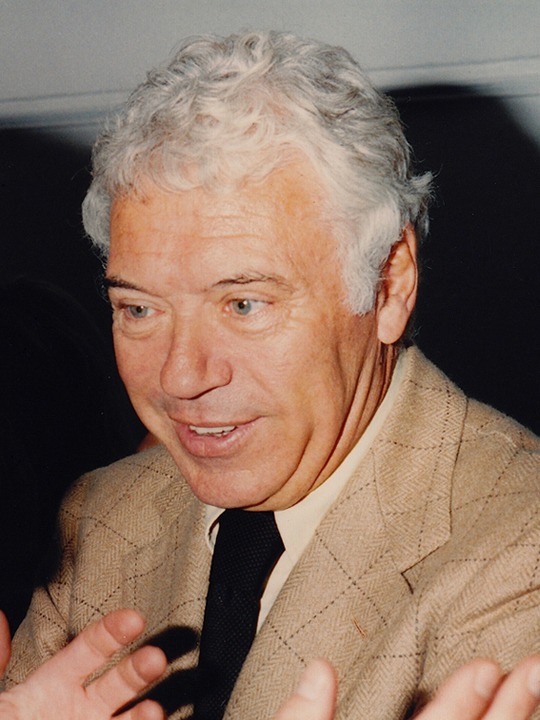
Nicola Pietrangeli, born on September 11, 1933, in Tunis, Tunisia, is a name synonymous with the golden era of Italian tennis. Widely regarded as one of Italy’s greatest tennis players, Pietrangeli’s career is marked by numerous achievements on the court, particularly on clay surfaces, where he established himself as a dominant force in the late 1950s and early 1960s. His contributions to tennis have made him a legendary figure, not just in Italy but worldwide. This article delves into the life, career, and legacy of Nicola Pietrangeli, exploring his rise to fame, key accomplishments, and the enduring impact he has had on the sport of tennis.
Early Life and Background
Nicola Chirinsky Pietrangeli was born to an Italian father and a Russian mother in Tunis, Tunisia, where he spent his early years. His multicultural background played a significant role in shaping his personality and linguistic skills. Pietrangeli was fluent in several languages, including French, Russian, Italian, English, and Spanish, making him a cosmopolitan figure in the world of tennis.
His upbringing in Tunisia, a French protectorate at the time, exposed him to the French language and culture, which remained a significant part of his identity throughout his life. Pietrangeli’s mother, being Russian Orthodox, also influenced his religious beliefs, which he carried with him even on the tennis court, where he was known to pray in Russian during matches.
Rise to Tennis Stardom
Nicola Pietrangeli’s journey to tennis stardom began in Italy, where his family moved after World War II. It was in Italy that Pietrangeli developed his passion for tennis, honing his skills on the clay courts that would later become his domain. Known for his graceful style of play, Pietrangeli was a master of baseline rallies, excelling in passing shots and drop shots. His backhand was particularly formidable, though his forehand was considered less consistent.
Pietrangeli’s dedication to the sport quickly paid off. He began to gain recognition in the 1950s, a period that saw him rise to the pinnacle of the tennis world. His breakthrough came when he won the French Open at Roland Garros in 1959 and successfully defended his title in 1960. These victories solidified his reputation as one of the best clay-court players of his time and earned him the unofficial title of “world champion on clay.”
Achievements and Legacy in Tennis
Nicola Pietrangeli’s career is highlighted by numerous accolades and records that have cemented his place in tennis history. Among his most significant achievements are his two French Open titles in 1959 and 1960, victories that placed him at the forefront of the international tennis scene. In addition to his French Open triumphs, Pietrangeli won the Italian Open in 1961, further demonstrating his dominance on clay courts.
Pietrangeli’s contribution to the Davis Cup is also noteworthy. He competed in an astounding 164 Davis Cup matches, a record that still stands today. Of these matches, he won 120, including 78 in singles and 42 in doubles, making him one of the most successful players in the history of the competition. Despite his individual success, Pietrangeli never managed to win the Davis Cup as a player, though he came close on several occasions. It wasn’t until 1976, when he served as the captain of the Italian team, that Italy finally clinched the Davis Cup title in Santiago, Chile, with a team that included Adriano Panatta, Corrado Barazzutti, Paolo Bertolucci, and Antonio Zugarelli.
Pietrangeli’s contributions to tennis were not limited to his on-court achievements. His influence extended to mentoring and coaching, where he played a crucial role in developing future generations of Italian tennis players. His dedication to the sport and his exemplary career earned him a place in the International Tennis Hall of Fame, where he was inducted in 1986, a fitting recognition of his impact on the sport.
Playing Style and Influence
Nicola Pietrangeli was known for his elegant and strategic playing style, which set him apart from many of his contemporaries. He was not the most powerful player on the circuit, but his game was built around precision, finesse, and tactical intelligence. Pietrangeli’s ability to construct points patiently and exploit his opponent’s weaknesses made him a formidable opponent, especially on clay courts where his style was most effective.
His backhand, often described as one of the best of his era, was a key weapon in his arsenal. Pietrangeli’s drop shots and passing shots were also highly effective, allowing him to control rallies and keep his opponents on the defensive. His style of play has influenced many players, particularly those who excel on clay courts, and his emphasis on strategy and placement over sheer power remains relevant in modern tennis.
Personal Life and Challenges
Off the court, Nicola Pietrangeli led a life as colorful as his tennis career. He married model Susanna Artero, with whom he had three children: Marco, Giorgio, and Filippo. The couple eventually separated, and Pietrangeli later had a relationship with television presenter Licia Colò.
Pietrangeli’s personal life was not without challenges. In 1996, he underwent surgery to remove a benign tumor from his colon, a significant health scare that he overcame with resilience. Despite these challenges, Pietrangeli remained active in the tennis community, continuing to contribute to the sport he loved.
Pietrangeli’s cosmopolitan upbringing and multilingual abilities also played a significant role in his personal and professional life. He was affectionately nicknamed “Er Francia” by his friends in Italy, a nod to his French mother tongue and international upbringing. His ability to navigate different cultures and languages made him a well-respected figure both on and off the court.
The Enduring Legacy of Nicola Pietrangeli
Nicola Pietrangeli’s legacy extends far beyond his records and titles. He is remembered as a pioneer of Italian tennis, a player who paved the way for future generations and brought Italian tennis to the international stage. His success inspired many young Italians to take up the sport, and his influence can still be seen in the country’s tennis culture today.
Pietrangeli’s impact is also evident in the recognition he has received from the tennis community. In addition to his induction into the International Tennis Hall of Fame, the center court at the Foro Italico in Rome, where the Italian Open is held, was named in his honor. The “Nicola Pietrangeli Court” stands as a testament to his contributions to the sport and his status as one of Italy’s greatest tennis icons.
Furthermore, Pietrangeli’s records in the Davis Cup are a testament to his enduring commitment to his country and the sport. His record for the most Davis Cup matches played and won remains unbroken, highlighting his dedication and resilience as a competitor. These achievements have ensured that Nicola Pietrangeli’s name will forever be associated with excellence in tennis.
Conclusion
Nicola Pietrangeli’s life and career are a testament to the power of passion, dedication, and skill in achieving greatness. From his early days in Tunisia to his rise as one of the world’s top tennis players, Pietrangeli’s journey is one of perseverance and excellence. His contributions to tennis, both on and off the court, have left an indelible mark on the sport, inspiring generations of players and fans alike.
As we look back on his career, it is clear that Nicola Pietrangeli is more than just a tennis legend; he is a symbol of the rich history and tradition of Italian tennis. His achievements continue to inspire, and his legacy lives on in the hearts of those who appreciate the artistry and dedication required to excel in the sport of tennis.
In the world of tennis, where power and speed often dominate, Pietrangeli’s emphasis on strategy, finesse, and mental toughness serves as a reminder of the beauty and complexity of the game. His story is a celebration of a life lived with purpose and a career defined by excellence, making Nicola Pietrangeli a true icon in the annals of tennis history.


