
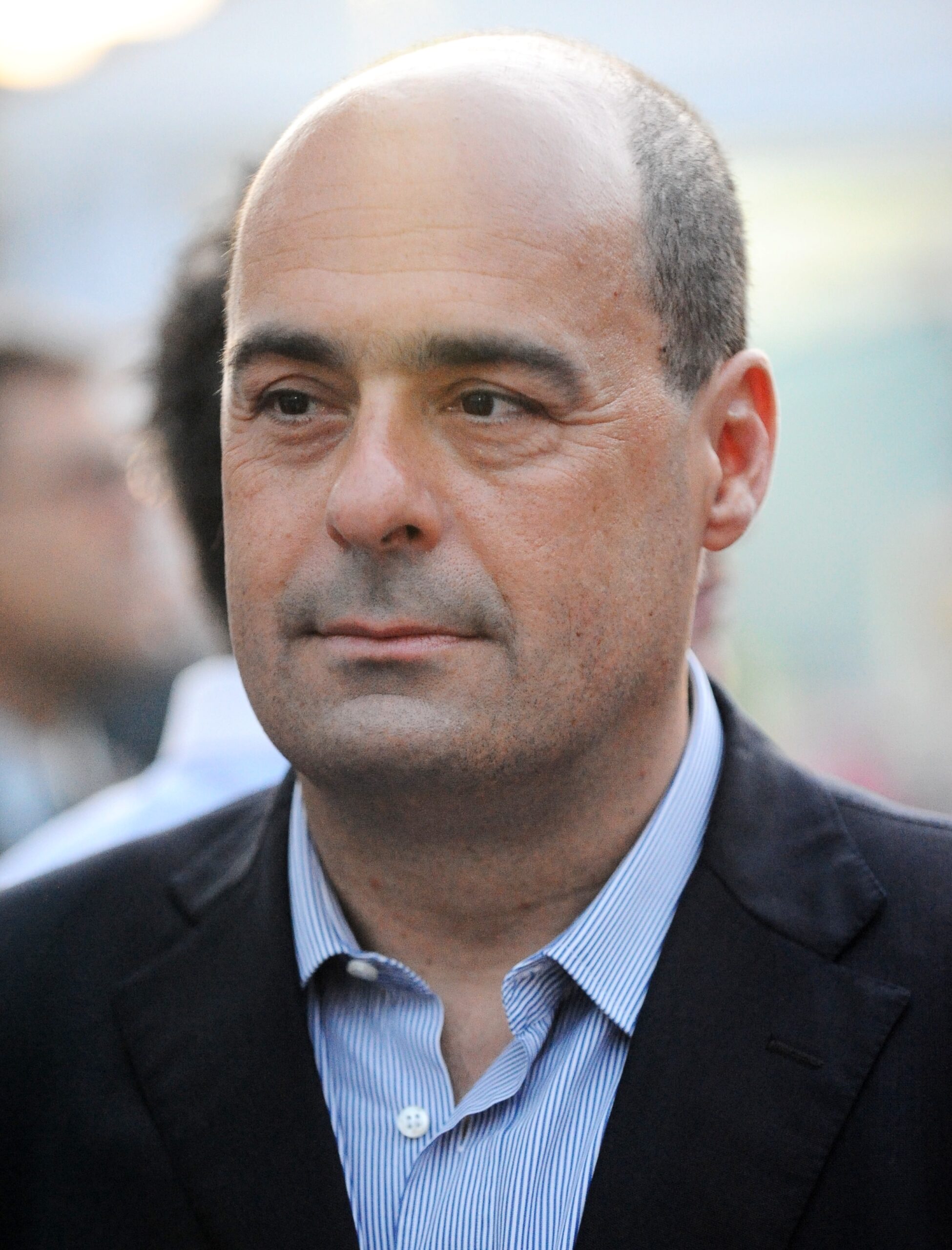
Nicola Zingaretti, born on October 11, 1965, in Rome, Italy, is a prominent Italian politician who has played a significant role in shaping the political landscape of the country over the past few decades. A key figure on the Italian left, Zingaretti has served in various political capacities, including as the President of the Lazio region and the Secretary of the Democratic Party (Partito Democratico). His career is marked by a commitment to progressive values, social justice, and political reform, which have earned him both national and international recognition.
Early Life and Political Engagement
Nicola Zingaretti was born into a family with deep roots in Italian culture and society. His older brother, Luca Zingaretti, is a well-known actor, famous for his portrayal of the fictional detective Salvo Montalbano in the popular Italian TV series “Inspector Montalbano.” Growing up in Rome, Nicola was exposed to the vibrant cultural and political life of the city, which undoubtedly influenced his future career in public service.
From an early age, Zingaretti showed a keen interest in politics and social issues. As a teenager, he joined the Italian Communist Party (Partito Comunista Italiano – PCI), where he began to develop his political philosophy and commitment to leftist ideals. His early involvement in political activism was marked by his participation in the peace movement and his co-founding of “Nero e non solo,” an anti-racist volunteer organization dedicated to promoting a multicultural and multiethnic society in Italy.
Zingaretti’s early political career saw him taking on leadership roles within the youth wing of the Communist Party. By 1985, he had become the Secretary of the PCI’s Rome branch, and later, a member of the National Directorate of the Italian Communist Youth Federation. These roles provided Zingaretti with valuable experience in political organization and leadership, setting the stage for his future career in national and international politics.
The 1990s: Rising Political Star
The 1990s were a transformative period for Nicola Zingaretti, as he continued to rise through the ranks of the Italian left. In the early part of the decade, he was elected as the National Secretary of the Youth Left (Sinistra Giovanile), a position that allowed him to influence the direction of the party’s younger members and advocate for progressive policies.
In 1992, Zingaretti was elected to the Rome City Council, where he focused on issues related to environmental protection, sustainable development, and the fight against organized crime. During his tenure, he organized several initiatives to honor the memory of anti-mafia judges Paolo Borsellino and Giovanni Falcone, both of whom were assassinated by the Sicilian Mafia. Zingaretti also organized the first Anti-Mafia Youth Camp in Sicily, reflecting his commitment to combating organized crime and promoting a culture of legality.
In 1995, Zingaretti was elected president of the International Union of Socialist Youth (IUSY), a role that expanded his influence beyond Italy’s borders. As president of IUSY, he worked to promote democratic values and social justice on a global scale, particularly in post-conflict regions like Bosnia, following the Dayton Accords of 1995. His international work also included efforts to foster dialogue between Israeli and Palestinian youth, demonstrating his commitment to peace and reconciliation in the Middle East.
The 2000s: From European Parliament to Regional Leadership
Zingaretti’s political career took a significant step forward in the 2000s when he was elected as a Member of the European Parliament (MEP) in 2004. Representing the Central Italy constituency on the United in the Olive Tree list (Uniti nell’Ulivo), Zingaretti garnered over 213,000 votes, reflecting his growing popularity and influence. In the European Parliament, he was appointed president of his delegation during its first meeting.
As an MEP, Zingaretti served on several important committees, including the Committee on Legal Affairs and the Committee on the Internal Market and Consumer Protection. He was also involved in various inter-parliamentary groups, such as those focusing on Tibet, LGBTQ+ rights, disability issues, and volunteerism. Zingaretti’s work in the European Parliament was marked by his advocacy for consumer rights and fair trade practices, as well as his efforts to ensure that European trade partners adhered to World Trade Organization (WTO) commitments.
In 2006, Zingaretti was elected Secretary of the Lazio Regional Union of the Democrats of the Left, a position that allowed him to influence local politics in one of Italy’s most populous regions. His leadership was instrumental in organizing the 2007 Congress of European Socialists in Milan, further solidifying his reputation as a key figure in the Italian left.
Zingaretti’s growing influence was further demonstrated when he was elected President of the Province of Rome in 2008. During his tenure, he focused on improving public services, promoting sustainable development, and enhancing social welfare programs. One of his notable achievements was the inauguration of “Porta Futuro,” a job orientation center in Rome’s Testaccio neighborhood, which aimed to provide career guidance and support to young people entering the workforce.
The 2010s: Regional President and National Leadership
The 2010s were a defining decade for Nicola Zingaretti, as he transitioned from regional to national leadership. In 2013, he was elected President of the Lazio region, defeating the center-right candidate Francesco Storace in a closely watched election. As President, Zingaretti implemented a series of progressive reforms aimed at improving the lives of Lazio’s residents.
Among the key achievements of Zingaretti’s administration were the introduction of the first regional law on geothermal energy, the establishment of a regional fund to support individuals affected by over-indebtedness and usury, and the creation of the Lazio Regional Tumor Registry. Zingaretti’s government also passed a law to promote the cultivation of cannabis for environmental, food, and industrial purposes, and implemented a new integrated social services system.
Zingaretti’s administration was also notable for its efforts to improve civil protection in Lazio. Under his leadership, the region established a new Regional Civil Protection Agency, which aimed to coordinate the efforts of volunteer organizations and law enforcement agencies in responding to natural disasters and other emergencies. Additionally, Zingaretti oversaw the creation of a multi-risk functional center and a regional civil protection committee, further enhancing the region’s preparedness and resilience.
In 2018, Zingaretti was re-elected as President of Lazio, this time defeating the center-right candidate Stefano Parisi. His re-election was seen as a testament to his effective leadership and the popularity of his policies among the region’s residents.
Zingaretti’s success in Lazio catapulted him to national prominence within the Democratic Party. In March 2019, he was elected Secretary of the Democratic Party, a position that made him one of the most powerful figures in Italian politics. As Secretary, Zingaretti faced the challenge of uniting a party that had been deeply divided by internal conflicts and the rise of populist movements in Italy.
Despite these challenges, Zingaretti worked to reposition the Democratic Party as a force for progressive change in Italy. He emphasized the importance of social justice, environmental sustainability, and democratic values, and sought to build alliances with other progressive forces in the country.
Challenges and Controversies
Like many political leaders, Nicola Zingaretti’s career has not been without its challenges and controversies. One of the most significant controversies he faced was his involvement in the Mafia Capitale investigation, a major anti-corruption probe that rocked the Italian political establishment. Zingaretti was investigated for corruption and interference with public tenders as part of the investigation. However, in October 2016, the Rome prosecutor’s office requested the dismissal of the charges, and in 2017, the investigating judge ordered the case to be definitively closed.
Despite this exoneration, the Mafia Capitale investigation cast a shadow over Zingaretti’s career and highlighted the challenges of governing in a political environment where corruption remains a significant concern. Nevertheless, Zingaretti’s ability to navigate these challenges and maintain his position as a leading figure in Italian politics is a testament to his resilience and political acumen.
In March 2021, during the COVID-19 pandemic, Zingaretti made the unexpected decision to resign as Secretary of the Democratic Party. His resignation was a surprise to many, as he had been widely expected to lead the party into the next general election. Zingaretti cited internal divisions within the party as the reason for his resignation, expressing frustration with the constant infighting that had plagued his leadership. Despite stepping down as party leader, Zingaretti continued to serve as President of Lazio, focusing on managing the region’s response to the pandemic.
Legacy and Future Prospects
Nicola Zingaretti’s career is characterized by his commitment to progressive values, his ability to navigate the complexities of both regional and national politics, and his dedication to public service. As a leader, Zingaretti has consistently focused on promoting social justice, environmental sustainability, and democratic governance, both in Italy and internationally.
His legacy as President of Lazio and as Secretary of the Democratic Party is marked by significant policy achievements, particularly in the areas of civil protection, social services, and environmental sustainability. Zingaretti’s leadership during the COVID-19 pandemic, including his efforts to coordinate the regional response and protect public health, further solidified his reputation as a capable and effective leader.
Looking to the future, Nicola Zingaretti remains a key figure in Italian politics, with the potential to continue influencing the direction of the country’s left. Whether through a return to national leadership or continued service at the regional level, Zingaretti’s impact on Italian politics is likely to endure.
Conclusion: Nicola Zingaretti’s Enduring Influence
Nicola Zingaretti’s life and career are a testament to the power of public service and the importance of progressive leadership. From his early days as a youth activist to his roles as a regional and national leader, Zingaretti has consistently demonstrated a commitment to social justice, democratic values, and the well-being of the people he serves.
As Italy continues to navigate the challenges of the 21st century, figures like Nicola Zingaretti will play a crucial role in shaping the country’s future. His legacy as a leader who prioritizes the needs of the many over the interests of the few serves as an inspiration for current and future generations of politicians and activists alike.


