
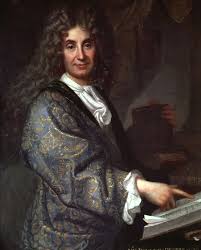
Nicolas Boileau, also known as Boileau-Despréaux, was a seminal figure in French literature and criticism. Born on November 1, 1636, in Paris, Boileau became a defining voice of the French classical age, advocating for literary standards and aesthetic principles that influenced generations of writers. This article delves into his life, career, and significant achievements, providing a comprehensive view of his journey and impact on French literature.
Early Life and Education
Nicolas Boileau was born into a well-off family as the fifteenth of sixteen children. His father, Gilles Boileau, was the chancellor of the Great Chamber of the Paris Parliament, which afforded the family a comfortable lifestyle. Despite this, Boileau’s childhood was marred by poor health, leading to a prolonged educational journey.
Boileau was initially steered towards the study of law, attending the Collège de Harcourt and later the Collège de Beauvais. However, he soon developed a deep interest in literature, particularly the works of classical poets. This passion set him apart from his family’s expectations, culminating in his departure from legal studies to pursue a literary career. His decision to abandon the legal profession scandalized his family, especially his brother-in-law, who predicted a bleak future for him.
Transition to Literature
Despite his family’s disapproval, Boileau found solace in the world of letters. He began his literary career with theological studies at the Sorbonne, though without notable success. Instead, he channeled his efforts into literature, supported by a modest income from the priorate of Saint-Paterne, which provided him with financial stability.
Boileau’s early works, including his satires written between 1660 and 1668, quickly established his reputation. His “Satires,” influenced by the works of Horace and Juvenal, criticized contemporary writers and societal norms with wit and precision. These satires targeted notable figures like Jean Chapelain, Georges de Scudéry, and Philippe Quinault, earning Boileau both admiration and enmity in literary circles.
Major Works and Literary Criticism
Boileau’s contribution to literature extended beyond satire. His “Epitres,” published starting in 1669, showcased a more mature and serene style. In 1674, he translated Longinus’ “On the Sublime,” introducing French readers to classical theories of aesthetics and rhetoric. The same year, Boileau published “L’Art poétique,” his most influential work.
“L’Art poétique,” consisting of four books, laid out principles of good writing based on clarity, order, and harmony. The first and last books dealt with general precepts, emphasizing common sense as the foundation of literary creation. The second book discussed various poetic forms like elegy, ode, satire, and epigram, while the third book focused on tragic and epic poetry. Although some criticized the treatise for making poetry appear mechanical, its impact on French literature was profound, reinforcing classical ideals.
Boileau also wrote “Le Lutrin,” a mock-heroic poem satirizing the quarrels of the clergy, which influenced later works like Alexander Pope’s “The Rape of the Lock.” Despite some weaknesses in its later additions, “Le Lutrin” remains a notable example of Boileau’s skill in blending humor with criticism.
Court Life and Royal Patronage
Boileau’s success brought him into the orbit of the French court. Introduced to King Louis XIV by Madame de Montespan, Boileau gained royal favor due to his moral character and literary achievements. The king granted him a pension and commissioned him, along with Jean Racine, to write the official history of his reign.
Boileau’s appointment as royal historiographer in 1677 marked a shift in his career, leading to a decline in his literary output. His focus on chronicling the king’s achievements required him to follow Louis XIV on various campaigns, limiting his time for creative endeavors. Nonetheless, he continued to produce notable works, including the satire “Sur les femmes” and the ode “Sur la prise de Namur.”
Later Life and Legacy
In 1684, Boileau was elected to the Académie Française, and shortly thereafter, he joined the Académie des Inscriptions et Belles-Lettres. These honors reflected his standing as a leading figure in French literary circles. However, the death of his friend and collaborator Racine in 1699 led Boileau to withdraw from court life.
Preferring the company of close friends, Boileau retired to his home in Auteuil. In 1705, he sold his residence and moved to Paris, where he lived in seclusion with his confessor. During this period, he wrote the twelfth satire, “Sur l’equivoque,” which criticized the Jesuits and led to calls for the withdrawal of his publishing privileges.
Boileau’s health, always fragile, declined in his later years. He passed away on March 13, 1711, at the age of 75, leaving much of his estate to the poor.
Contributions to French Literature
Nicolas Boileau’s contributions to French literature are manifold. As a critic and poet, he championed the principles of clarity, order, and harmony, which became cornerstones of French classical literature. His works emphasized the importance of adhering to classical models and the necessity of moral and intellectual rigor in literary creation.
Boileau’s influence extended beyond his lifetime, shaping the development of French literary criticism and inspiring subsequent generations of writers. His insistence on rationality and good taste helped define the literary standards of the French Enlightenment and beyond.
Historical Context and Significance
Understanding Boileau’s impact requires a consideration of the historical context in which he lived. The 17th century was a period of significant cultural and intellectual development in France, marked by the rise of absolutism under Louis XIV and the flourishing of classical arts and literature. Boileau’s work reflects the values of this era, emphasizing order, reason, and the emulation of classical antiquity.
Boileau’s literary career coincided with the rise of French classicism, a movement that sought to emulate the artistic ideals of ancient Greece and Rome. His advocacy for the classical unities of time, place, and action in drama, as well as his emphasis on decorum and propriety, aligned with the broader cultural trends of his time.
Personal Philosophy and Literary Criticism
Boileau’s literary philosophy was grounded in the belief that good writing should reflect universal truths and adhere to established aesthetic principles. He argued that literature should instruct and delight, combining moral purpose with artistic excellence. This perspective informed his critical writings and shaped his approach to both poetry and prose.
Boileau’s emphasis on clarity and precision in language was a reaction against the perceived excesses and obscurities of contemporary literature. He believed that true genius lay in the ability to express complex ideas simply and elegantly, a principle that guided his own writing and criticism.
Influence on Subsequent Literature
Boileau’s impact on French literature can be seen in the works of later writers such as Voltaire, who admired Boileau’s wit and clarity, and Jean-Jacques Rousseau, who appreciated his emphasis on moral purpose. Boileau’s insistence on rationality and order also influenced the development of French neoclassicism, which dominated the literary landscape of the 18th century.
Boileau’s legacy extends beyond France. His works were translated into multiple languages, and his ideas on literary criticism influenced writers and critics across Europe. In England, Alexander Pope’s “An Essay on Criticism” reflects Boileau’s principles, demonstrating the transnational reach of his influence.
Conclusion: Nicolas Boileau’s Enduring Legacy
Nicolas Boileau’s life and work represent a pivotal chapter in the history of French literature. As a poet, critic, and advocate for classical ideals, Boileau helped shape the literary standards of his time and left an enduring mark on the world of letters. His emphasis on clarity, order, and moral purpose continues to resonate with readers and writers today.
Boileau’s contributions to literary criticism and his advocacy for high standards in literature have secured his place as one of the great figures of French classical literature. His works remain a testament to the enduring value of reason, clarity, and artistic excellence in the creation of lasting literary art.


