
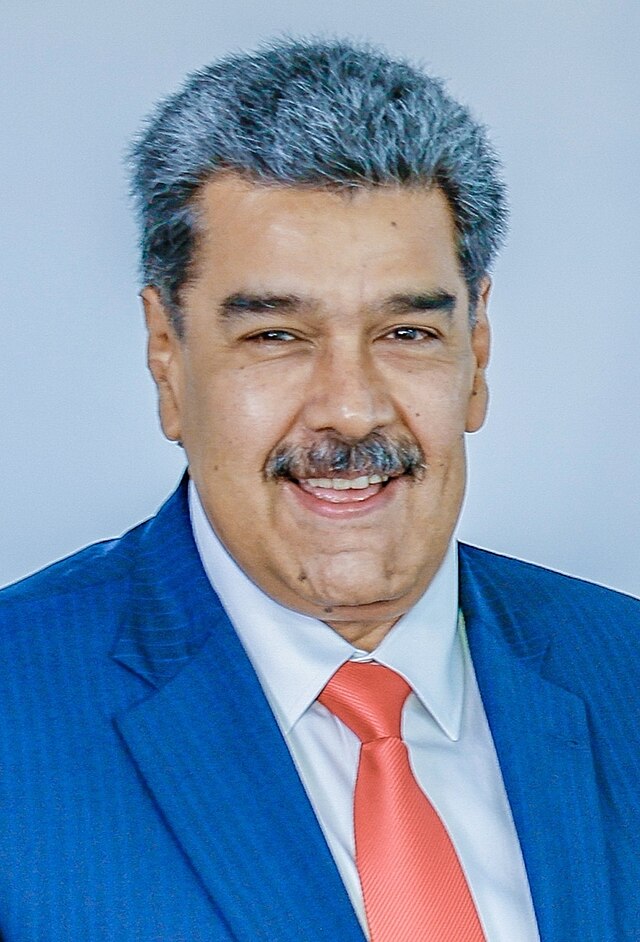
Nicolás Maduro Moros, born on November 23, 1962, in Caracas, Venezuela, is a prominent political figure best known for his tenure as the President of Venezuela. His rise to power, his association with Hugo Chávez, and his controversial leadership have made him a significant figure in Latin American politics. In this article, we will explore the life, career, and key moments that have shaped Nicolás Maduro’s legacy, delving into his early life, political journey, and the impact he has had on Venezuela and the world.
Early Life and Background
Nicolás Maduro was born into a working-class family in the capital city of Caracas. His father, Nicolás Maduro García, had Jewish roots, while his mother, Teresa de Jesús Moros, had Colombian heritage. This diverse cultural background shaped Maduro’s worldview from an early age. Raised in a modest household, Maduro’s early life was marked by the challenges and struggles typical of many Venezuelans during that time.
Maduro’s education was limited, and he did not attend university. Instead, he found work as a bus driver for the Caracas Metro, a job that would later prove significant in his life. It was during this period that Maduro became actively involved in labor unions, advocating for workers’ rights. His role as a union leader was his first step into the political arena, where he would later make a name for himself.
Entry into Politics: The Chávez Connection
In the early 1990s, Venezuela was undergoing significant political and economic turmoil. It was during this time that Maduro crossed paths with Hugo Chávez, a charismatic military officer who would later become one of the most influential leaders in Venezuelan history. Chávez was preparing to run for the presidency, and Maduro quickly became one of his most ardent supporters.
Maduro’s loyalty to Chávez was unwavering. He played a crucial role in Chávez’s 1998 presidential campaign as a member of the Fifth Republic Movement (MVR), a political party founded by Chávez. Following Chávez’s victory, Maduro was elected to the National Constituent Assembly in 1999, where he contributed to drafting a new constitution for Venezuela, a key component of Chávez’s Bolivarian Revolution.
Rising Through the Ranks
Maduro’s political career continued to ascend in the 2000s. In 2000, he was elected to the National Assembly and quickly established himself as a prominent figure within the ruling party. By 2005, Maduro had risen to the position of Speaker of the National Assembly, a role that gave him significant influence over Venezuela’s legislative process.
In 2006, Maduro was appointed as Minister of Foreign Affairs, a position he held until 2013. His tenure as Foreign Minister was marked by his efforts to strengthen Venezuela’s ties with countries such as Russia, China, and Iran while maintaining a confrontational stance toward the United States. Maduro’s diplomatic efforts were in line with Chávez’s vision of creating a multipolar world and reducing U.S. influence in Latin America.
The Chávez Successor
In 2011, Chávez, battling cancer, named Maduro as his preferred successor. This endorsement was significant, as Chávez was immensely popular in Venezuela, and his support was crucial for anyone seeking to lead the country. When Chávez passed away on March 5, 2013, Maduro assumed the role of interim president and later announced his candidacy for the presidency in the upcoming elections.
Maduro won the presidential election on April 14, 2013, narrowly defeating Henrique Capriles Radonski. However, the election was marred by allegations of fraud and irregularities, leading to widespread protests and political unrest. Despite these challenges, Maduro was sworn in as president, inheriting a country facing severe economic difficulties and deep political divisions.
Leadership and Controversies
Maduro’s presidency has been marked by significant challenges, including a deteriorating economy, hyperinflation, and widespread shortages of basic goods. These issues have led to mass protests and civil unrest, with many Venezuelans blaming Maduro’s government for the country’s economic collapse.
Maduro has continued to promote the socialist policies of his predecessor, Chávez, often referring to his government as the continuation of the Bolivarian Revolution. However, his leadership style has been criticized for being authoritarian, with many accusing him of undermining democratic institutions. Maduro has ruled by decree for much of his presidency, bypassing the National Assembly, which has been controlled by the opposition since 2015.
In 2014, in response to increasing protests, Maduro’s government implemented a series of repressive measures, including the arrest of opposition leaders and the use of excessive force against demonstrators. These actions drew widespread condemnation from the international community, with several countries, including the United States, imposing sanctions on Maduro and other high-ranking Venezuelan officials.
International Relations and Sanctions
Maduro’s foreign policy has been characterized by his efforts to resist U.S. influence in Latin America while seeking alliances with countries that oppose U.S. hegemony. This has led to closer ties with nations such as Russia, China, and Iran, which have provided Venezuela with economic and military support.
However, Maduro’s government has faced significant challenges on the international stage. In 2015, then-President Barack Obama signed an executive order declaring Venezuela a national security threat and imposing sanctions on several Venezuelan officials. This move was met with strong condemnation from Maduro, who accused the U.S. of imperialism and interference in Venezuela’s internal affairs.
The situation escalated in 2017, when widespread protests against Maduro’s government led to violent clashes between protesters and security forces. The crisis deepened as Maduro pushed forward with plans to create a new Constituent Assembly, which was widely seen as an attempt to bypass the opposition-controlled National Assembly and consolidate his power. The move was condemned by many countries, and the U.S. imposed additional sanctions, targeting Maduro himself and labeling him a dictator.
Re-election and Continued Controversy
Despite widespread opposition and international condemnation, Maduro was re-elected in May 2018 in an election that was widely criticized as fraudulent. Many opposition leaders were barred from running, and the election was boycotted by a significant portion of the electorate. Maduro’s victory was rejected by the United States, the European Union, and several Latin American countries, further isolating his government on the international stage.
Maduro’s second term has been marked by continued economic decline, with Venezuela experiencing one of the worst humanitarian crises in the world. Millions of Venezuelans have fled the country, seeking refuge in neighboring countries and beyond. The Maduro government has been accused of gross human rights violations, including arbitrary arrests, torture, and extrajudicial killings, leading to calls for his prosecution by the International Criminal Court (ICC).
In 2020, a United Nations report accused Maduro and his government of crimes against humanity, further escalating calls for his removal from power. The U.S. Department of State has offered a $15 million reward for information leading to Maduro’s arrest, citing his involvement in drug trafficking.
The Guyana Dispute and Regional Tensions
In December 2023, Maduro held a controversial referendum to annex a large portion of Guyana, known as the Guayana Esequiba, which is rich in minerals and oil. The move has sparked fears of a potential war in Latin America, as the disputed territory has long been a point of contention between Venezuela and Guyana. The United Nations and other international bodies have expressed concern over the potential for conflict, further complicating Maduro’s already precarious position on the global stage.
Conclusion
Nicolás Maduro’s life and career are a complex tapestry of political ambition, ideological commitment, and controversy. From his humble beginnings as a bus driver to his rise as the leader of one of the most polarized countries in Latin America, Maduro’s story is one of both resilience and division. His leadership has left an indelible mark on Venezuela, and his legacy will likely be debated for years to come.
As Venezuela continues to grapple with its future, Nicolás Maduro remains a central figure in its ongoing narrative, embodying both the hopes and the challenges of a nation in turmoil. His life highlights the complexities of leadership in a deeply divided country and the enduring impact of one man’s vision on the fate of millions.


