
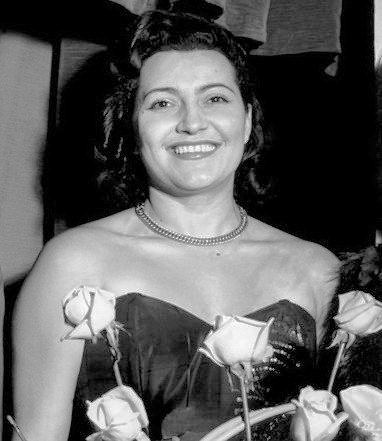
Nilla Pizzi, born Adionilla Pizzi on April 16, 1919, in Sant’Agata Bolognese, Italy, was a trailblazing figure in the Italian music industry. Often referred to as the “Queen of Italian Song,” Pizzi’s career spanned several decades, during which she became a symbol of post-war Italian music. Her contributions to the world of music, especially through the Sanremo Music Festival, have left an indelible mark on Italian culture. This article explores the life of Nilla Pizzi, from her early years and rise to fame to her enduring legacy in the music world.
Early Life and Rise to Fame
Nilla Pizzi was born into a humble family in the Emilia-Romagna region of Italy. Her early years were marked by a love for music and singing, talents that would soon propel her to national fame. In 1937, at the age of 18, Pizzi won the “5000 Lire per un Sorriso” competition, a beauty contest that was the precursor to the modern-day Miss Italy pageant. This victory marked the beginning of her public life, showcasing not just her beauty but also her charisma and talent, which would later define her career.
Pizzi’s big break came in 1942 when she participated in a singing competition organized by EIAR (Ente Italiano Audizioni Radiofoniche), Italy’s national broadcasting organization. Competing against more than 10,000 contestants, Pizzi emerged victorious, which led to her performing with the prestigious Zeme Orchestra. However, her career faced an early setback when the Fascist regime banned her from the radio due to what they deemed her “too sensual” voice. This ban was a testament to the power and emotive quality of her singing, qualities that would later make her a beloved figure in Italian music.
The Sanremo Music Festival and Iconic Hits
The Sanremo Music Festival, which began in 1951, would become the platform that solidified Nilla Pizzi’s status as a music icon. At the very first edition of the festival, Pizzi won with the song “Grazie dei Fiori,” a performance that has since become legendary. Her victory was not just a personal triumph but also a significant cultural moment for post-war Italy, as the festival itself became a symbol of renewal and optimism in the country.
Pizzi’s dominance at Sanremo did not end with her first win. In the following year, 1952, she made history by securing all three top positions at the festival with the songs “Vola Colomba,” “Papaveri e Papere,” and “Una Donna Prega.” This unprecedented achievement demonstrated her versatility and appeal across a wide audience. “Vola Colomba,” in particular, became a symbol of hope and reunification in Italy, reflecting the nation’s mood in the post-war period.
A Multifaceted Career in Music and Media
Beyond the Sanremo Music Festival, Nilla Pizzi enjoyed a prolific career that spanned various media, including film and radio. Her voice became synonymous with the Italian popular music of the 1950s, and she regularly appeared on radio broadcasts, further endearing herself to the public. Pizzi’s music during this time was characterized by its emotional depth and connection to the everyday lives of Italians, making her a household name.
Pizzi also ventured into film, capitalizing on her fame to appear in several movies, though music remained her primary passion. Her songs during this period, including “O mama mama,” “Che si fa con le fanciulle?,” and “Oh papà,” were hits that resonated with the Italian public, reflecting both the joys and sorrows of the time.
The 1950s also saw Pizzi entangled in public romantic relationships, which, while contributing to her status as a celebrity, also added a layer of intrigue to her public persona. Notably, her relationship with fellow singer Gino Latilla became the subject of much gossip, particularly when Latilla reportedly attempted suicide over their tumultuous romance. This era cemented Pizzi’s status not just as a singer but as a cultural icon, whose life was as much a part of her allure as her music.
Challenges and Resilience in the Changing Music Scene
As the 1960s dawned, the music scene in Italy began to change, with the rise of new musical styles such as rock ‘n’ roll and the “urlatori” (screamers), a group of energetic young singers who embraced a more modern sound. This shift posed a challenge for established artists like Nilla Pizzi, whose style was more traditional and rooted in the melodrama of the earlier post-war years.
Despite these challenges, Pizzi continued to perform and record music. She adapted to the changing times by participating in various music festivals, including the Naples Festival, which she won in 1952 with the song “Desiderio ‘e sole.” Her resilience in the face of an evolving music industry is a testament to her talent and determination to remain relevant.
During this time, Pizzi also expanded her career internationally, performing in countries like Mexico, where she opened a nightclub in Acapulco. This venture was a reflection of her ability to reinvent herself and maintain her status as a significant figure in the entertainment world, even as the industry around her changed. Her international engagements also brought her into contact with global stars such as Frank Sinatra and Sammy Davis Jr., further enhancing her reputation as a global artist.
Later Career and Enduring Legacy
In the later stages of her career, Nilla Pizzi remained a beloved figure in Italian popular culture. She continued to participate in the Sanremo Music Festival, not as a competitor but as a guest and presenter, symbolizing her lasting connection to the festival that had launched her career. In 1981, she returned to Sanremo as a presenter, marking the festival’s 30th anniversary and celebrating her enduring legacy in Italian music.
The 1990s saw a resurgence of interest in Pizzi’s work, as she participated in various television programs and embarked on extensive tours around the world. Her ability to connect with new audiences, even decades after her peak, underscored the timeless quality of her music and her status as a cultural icon. In 2001, Pizzi surprised fans by releasing a rap version of “Grazie dei Fiori” in collaboration with the boyband 2080, demonstrating her willingness to experiment with new styles and remain relevant in a rapidly changing music industry.
Nilla Pizzi passed away on March 12, 2011, just shy of her 92nd birthday. At the time of her death, she was working on a new album of original songs, a project that unfortunately remained unfinished. Her passing marked the end of an era in Italian music, but her legacy continues to live on through her recordings and the memories of those who were touched by her music.
Historical and Cultural Context
Nilla Pizzi’s career must be understood within the broader historical and cultural context of mid-20th century Italy. The post-war period was a time of significant reconstruction and social change in Italy, and music played a crucial role in shaping the national identity. Pizzi’s songs, many of which spoke to the themes of love, loss, and hope, resonated with a population eager for renewal after the devastation of World War II.
Her success at the Sanremo Music Festival, especially in its early years, mirrored the festival’s role in Italian society as a unifying force. The festival itself became a cultural institution, and Pizzi, as one of its earliest and most successful participants, helped to define its place in Italian popular culture. Her music provided a soundtrack to the aspirations and emotions of the Italian people during a time of profound change.
Moreover, Pizzi’s career reflects the broader trends in the global music industry, particularly the challenges faced by traditional artists in adapting to new musical genres and the rise of television as a dominant cultural medium. Her ability to navigate these changes, while staying true to her artistic roots, highlights her versatility and resilience as an artist.
Conclusion: Nilla Pizzi’s Lasting Impact on Italian Music
Nilla Pizzi’s contributions to Italian music are immeasurable. As the first “Queen of Sanremo,” she set the standard for what the festival could achieve and how it could impact the Italian music scene. Her voice, characterized by its emotional depth and clarity, became a symbol of Italian resilience and hope in the post-war years.
Pizzi’s influence extends beyond her music. She was a trailblazer for women in the entertainment industry, demonstrating that female artists could achieve both commercial success and cultural significance. Her life and career are a testament to the power of music to reflect and shape societal values, and her legacy continues to inspire new generations of musicians and fans alike.
In the end, Nilla Pizzi was more than just a singer; she was a cultural icon whose work helped to define a critical period in Italian history. Her songs continue to be celebrated, and her influence is still felt in the music of today. As we look back on her life and career, it is clear that Nilla Pizzi’s legacy will endure, ensuring that she remains a central figure in the history of Italian music.


