
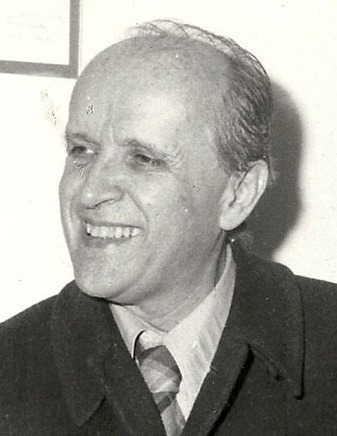
Nino Rota, born Giovanni Rota Rinaldi on December 3, 1911, in Milan, Italy, is a towering figure in the world of film music and classical composition. His extensive body of work, spanning several decades, has left an indelible mark on both Italian and international cinema. Best known for his collaborations with legendary filmmakers like Federico Fellini and Francis Ford Coppola, Rota’s music continues to resonate with audiences and influence contemporary composers.
Early Life and Musical Beginnings
Nino Rota’s early life was steeped in music, born into a family with a rich musical heritage. His grandfather, Giovanni Rinaldi, was a distinguished pianist, and it was under his and his mother’s guidance that young Rota began his musical education. Remarkably, Rota started playing the piano at the tender age of four and composed his first piece of music by the age of eight. This early display of talent caught the attention of music professors, and Rota was soon taken under the wing of a conservatory professor as an auditor, marking the beginning of his formal education in music.
By the age of 11, Rota had already composed his first opera, and by 15, he had created his first full-scale theatrical work, “Il Principe Porcaro.” Between 1924 and 1926, Rota studied composition at the Accademia di Santa Cecilia under the tutelage of Alfredo Casella, a leading figure in contemporary music at the time. It was here that Rota began to develop the esoteric and mystical themes that would later permeate his work, influenced by the teachings of his mentor and the esoteric practices he was introduced to.
A Turning Point: The American Influence
Rota’s musical journey took a significant turn in the early 1930s when, with the support of the renowned conductor Arturo Toscanini, he traveled to Philadelphia to study at the Curtis Institute of Music. During his time in the United States from 1931 to 1933, Rota was exposed to the vibrant world of American popular music. He developed an appreciation for composers such as George Gershwin, Cole Porter, Aaron Copland, and Irving Berlin, whose influences can be subtly detected in his later compositions.
Upon returning to Italy, Rota’s broadened musical perspective allowed him to infuse his work with a unique blend of classical and popular styles. His first foray into film music came in 1933 when he composed the score for “Treno Popolare.” Although the film did not achieve significant success, it marked the beginning of Rota’s career in cinema, even though he temporarily stepped away from film music throughout the 1930s.
Academic Pursuits and a Return to Composition
Despite his early successes in composition, Rota sought a more stable career, leading him to earn a degree in modern literature—a move he described as securing a “backup profession.” However, his passion for music remained undiminished, and in 1939, he resumed his compositional work when he joined the Conservatorio di Musica Niccolò Piccinni in Bari, eventually becoming its director in 1950.
The 1940s marked the beginning of Rota’s prolific career as a film composer, starting with his collaboration with director Renato Castellani on the film “Zazà.” This project solidified Rota’s reputation as a composer who could skillfully craft music that enhanced the narrative and emotional depth of the cinematic experience. Rota’s approach to film scoring was to create music that served the imagery, a philosophy that would guide him throughout his career.
The Fellini Partnership: A Musical Genius Meets Cinematic Brilliance
Perhaps the most significant chapter in Nino Rota’s career was his collaboration with the iconic Italian director Federico Fellini. Their partnership, which began in the early 1950s, lasted for nearly three decades and produced some of the most memorable film scores in cinema history. Rota’s music became an integral part of Fellini’s films, contributing to the unique atmosphere and emotional resonance of each work.
Their collaboration began with “The White Sheik” (1952) and continued with classics such as “La Strada” (1954), “La Dolce Vita” (1960), “8½” (1963), “Amarcord” (1973), and many others. Rota’s ability to blend whimsical melodies with melancholic undertones perfectly complemented Fellini’s exploration of human folly, dreams, and the surreal. The music for “La Dolce Vita,” with its iconic themes, remains one of the most recognizable film scores of all time.
Rota’s music for Fellini’s films was not just background accompaniment; it was a character in itself, embodying the emotions, themes, and nuances of the narrative. This symbiotic relationship between director and composer created a body of work that continues to be studied and admired by filmmakers and musicians alike.
Collaborations with Other Cinematic Giants
While his work with Fellini is perhaps the most celebrated, Nino Rota also collaborated with other legendary directors, contributing to the soundtracks of films that have become cultural milestones. For Luchino Visconti, Rota composed the scores for “The Leopard” (1963) and “Senso” (1954), both of which are revered for their lush, orchestral soundscapes that capture the grandeur and drama of Visconti’s narratives.
Rota’s work with Franco Zeffirelli also deserves special mention. His score for “Romeo and Juliet” (1968) is particularly famous, with the “Love Theme” becoming one of the most beloved and enduring pieces of film music. This composition, with its hauntingly beautiful melody, perfectly captures the tragic romance at the heart of Shakespeare’s play.
Another high point in Rota’s career came with his collaboration with Francis Ford Coppola on “The Godfather” series. The score for “The Godfather” (1972) and “The Godfather Part II” (1974) is among Rota’s most recognized work, with the iconic “Love Theme” becoming synonymous with the film itself. This score earned Rota an Academy Award for Best Original Score for “The Godfather Part II,” further cementing his legacy as one of the greatest film composers of all time.
Rota also worked with other notable directors, including Mario Soldati, for whom he scored “Le miserie di Monsù Travet” (1941), and King Vidor, for whom he composed the music for “War and Peace” (1956). His ability to adapt his musical style to fit the unique vision of each director made him a versatile and highly sought-after composer in the film industry.
A Composer Beyond Cinema
While Nino Rota is primarily known for his film scores, his contributions to classical music and opera are equally significant. Rota was a prolific composer of operatic and orchestral works, often drawing on his esoteric interests and deep knowledge of classical traditions. His operas, such as “Il cappello di paglia di Firenze” (1955) and “La notte di un neurastenico” (1959), showcase his ability to blend humor, drama, and intricate musical composition.
Rota also composed sacred music, chamber music, and orchestral works that reflect his wide-ranging musical interests. His compositions often reveal the influence of both Italian and American musical traditions, merging the old and the new in a way that was uniquely his own.
In addition to his work as a composer, Rota was a dedicated educator. As the director of the Conservatorio di Bari, he influenced a generation of young musicians, instilling in them the same passion for music that had driven him throughout his life.
The Later Years and Legacy
In the later years of his career, Nino Rota faced criticism from some quarters for his prolific output in the realm of popular music. Some critics argued that his association with mainstream cinema diminished the seriousness of his work. However, these criticisms did little to detract from his reputation as a master composer. Rota’s ability to create music that was both accessible and artistically profound ensured that his work remained relevant and respected.
Rota’s final project was to compose an opera based on the music he had written for Eduardo De Filippo’s “Napoli Milionaria.” Tragically, he passed away on April 10, 1979, at the age of 67, before he could complete this project. His death marked the end of an era, but his music continues to live on, both in the films that made him famous and in the concert halls where his classical works are performed.
The Enduring Influence of Nino Rota
Nino Rota’s influence on film music and classical composition is profound and far-reaching. His ability to craft melodies that are at once simple and deeply evocative has left a lasting impact on both genres. Rota’s music is characterized by its lyrical quality, emotional depth, and a certain timelessness that allows it to transcend the specific contexts for which it was created.
In the world of film music, Rota’s work set a new standard for what a film score could achieve. His music did more than just accompany the action on screen—it enriched the storytelling, adding layers of meaning and emotion that might not have been present otherwise. This approach has influenced countless composers who followed in his footsteps, making Rota a seminal figure in the history of cinema.
Rota’s classical compositions, while perhaps less widely known than his film scores, also continue to be celebrated for their innovation and artistry. His operas and orchestral works are performed regularly, and his contributions to sacred music and chamber music are held in high esteem by musicians and scholars alike.
In conclusion, Nino Rota was a composer of extraordinary talent and versatility, whose work bridged the worlds of cinema and classical music. His ability to move effortlessly between different genres and styles, while maintaining a distinctive voice, is a testament to his genius. Rota’s music has become a part of the cultural fabric, its melodies woven into the collective memory of audiences around the world. As a composer, educator, and artist, Nino Rota’s legacy is one of enduring creativity and inspiration.


