
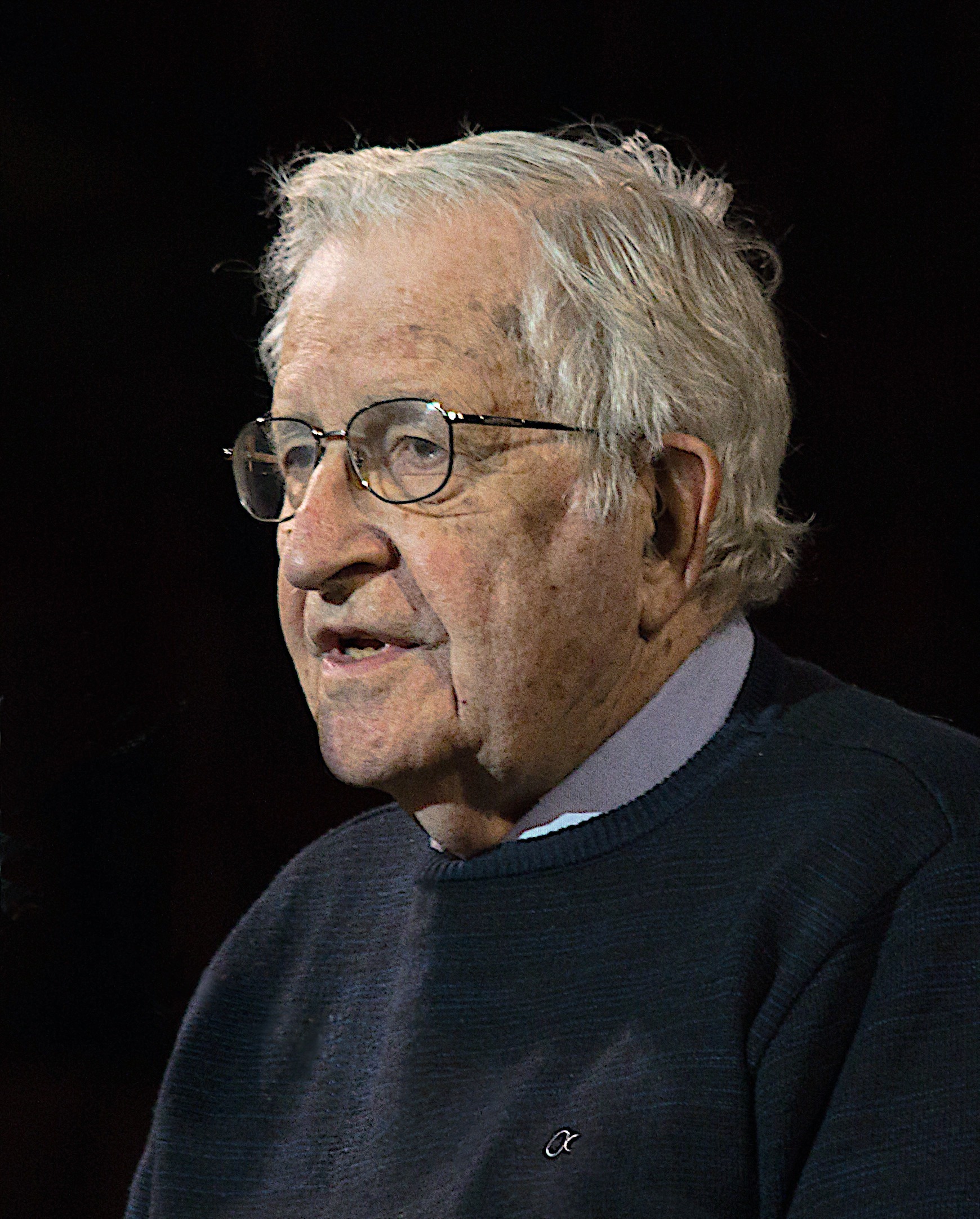
Noam Chomsky, a name synonymous with intellectual brilliance, has left an indelible mark on the world of linguistics, philosophy, and political activism. Born on December 7, 1928, in Philadelphia, Pennsylvania, Chomsky’s influence has transcended the academic sphere to become a global icon of critical thought and social justice. This article delves into the life, achievements, and enduring legacy of Noam Chomsky, offering a comprehensive overview of his journey, the pivotal moments that shaped his career, and the profound impact he has had on modern thought.
Early Life and Academic Foundations
Avram Noam Chomsky was born into a family of intellectuals, with his father, William Zev Chomsky, being a noted scholar of Hebrew. This academic environment undoubtedly influenced Chomsky’s early interest in language and linguistics. Chomsky pursued his education at the University of Pennsylvania, where he studied under the guidance of Zellig Harris, a pioneering figure in American linguistics. This period was crucial in shaping Chomsky’s understanding of language and its structures, eventually leading to his groundbreaking contributions to the field.
In 1949, Chomsky married Carol Schatz, a fellow linguist, and together they embarked on a journey that would see Chomsky rise to prominence in the world of linguistics. By 1955, Chomsky had joined the Massachusetts Institute of Technology (MIT) as an assistant professor, a position he would hold for over five decades, becoming one of the most influential scholars of his time.
The Revolution in Linguistics: Generative Grammar
Chomsky’s most significant contribution to linguistics came in the late 1950s when he introduced the theory of generative grammar. Published in 1957, his work “Syntactic Structures” challenged the prevailing structuralist approach to linguistics, proposing instead that language is a product of an innate cognitive structure in the human mind. This theory, known as generative-transformational grammar, posits that humans possess an inherent ability to generate an infinite number of sentences from a finite set of rules.
Chomsky’s work revolutionized the study of language, moving it away from a focus on observable behavior to an exploration of the underlying mental structures that enable language acquisition and use. This shift had profound implications not only for linguistics but also for fields such as psychology, philosophy, and cognitive science, making Chomsky a central figure in the study of the human mind.
Political Activism and Social Critique
While Chomsky’s contributions to linguistics are monumental, his influence extends far beyond the academic world. In the 1960s, Chomsky became an outspoken critic of the Vietnam War, marking the beginning of his long-standing engagement with political activism. His critique of U.S. foreign policy, particularly in Southeast Asia, brought him into the public spotlight as a leading voice of dissent.
Chomsky’s political writings are characterized by a relentless critique of state power, corporate control, and the role of mass media in shaping public opinion. His book “Manufacturing Consent,” co-authored with Edward S. Herman in 1988, remains a seminal work in media studies, offering a detailed analysis of how media serves the interests of powerful elites while marginalizing alternative perspectives. This work has had a lasting impact on how scholars and activists understand the relationship between media, power, and democracy.
The Intersection of Linguistics and Philosophy
Chomsky’s intellectual pursuits are not confined to linguistics and political activism; he has also made significant contributions to philosophy. His exploration of the philosophical underpinnings of language, particularly in works such as “Cartesian Linguistics” (1966) and “Language and Mind” (1968), has influenced contemporary discussions on the nature of knowledge, consciousness, and the mind-body problem.
Chomsky’s ideas are often associated with rationalist philosophy, drawing on the works of René Descartes and Immanuel Kant. He argues that the human capacity for language is rooted in a universal grammar, a set of cognitive structures shared by all humans. This view challenges the empiricist tradition, which posits that knowledge is primarily derived from sensory experience. Chomsky’s philosophical work has thus contributed to a broader understanding of human cognition and the nature of knowledge.
Recognition and Legacy
Throughout his career, Chomsky has received numerous accolades and honors, reflecting his status as one of the most important intellectuals of the 20th and 21st centuries. In 2005, he was awarded an honorary degree by the University of Bologna, recognizing his contributions to linguistics and his role as a public intellectual.
Chomsky’s influence is evident not only in the academic world but also in popular culture. He is frequently cited alongside figures like Karl Marx, William Shakespeare, and the Bible, reflecting the profound impact of his ideas on modern thought. Publications such as The New York Times and The Guardian have lauded Chomsky as one of the most important thinkers of our time, highlighting his role as a tireless advocate for truth, justice, and intellectual freedom.
The Continued Relevance of Chomsky’s Ideas
As we move further into the 21st century, Chomsky’s ideas continue to resonate with new generations of scholars, activists, and thinkers. His critiques of neoliberalism, corporate power, and environmental degradation are increasingly relevant in a world grappling with the challenges of globalization, economic inequality, and climate change.
Chomsky’s work serves as a reminder of the importance of critical thinking and the need to question dominant narratives. His insistence on the importance of intellectual autonomy and the pursuit of truth remains a powerful call to action for those who seek to challenge the status quo and work towards a more just and equitable world.
Conclusion: A Legacy of Intellectual Brilliance
Noam Chomsky’s life and work are a testament to the power of ideas and the importance of critical inquiry. From his revolutionary contributions to linguistics to his unwavering commitment to social justice, Chomsky has shaped the way we understand language, politics, and the human mind. His legacy is one of intellectual courage, a relentless pursuit of knowledge, and a deep commitment to making the world a better place.
As we reflect on Chomsky’s life and achievements, it is clear that his impact will be felt for generations to come. Whether in the classroom, the political arena, or the broader cultural landscape, Chomsky’s ideas continue to inspire and challenge us to think more deeply about the world and our place in it.
This comprehensive overview of Noam Chomsky’s life highlights the key moments and ideas that have defined his career, offering insights into why he remains one of the most influential intellectuals of our time. As we continue to engage with his work, we are reminded of the enduring relevance of his ideas and the profound impact he has had on the world.


