
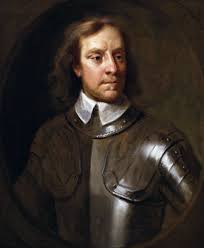
Oliver Cromwell is one of the most significant and controversial figures in British history. Born in 1599, Cromwell rose from relative obscurity to become the leader of the English Commonwealth, playing a pivotal role in the English Civil War and the eventual execution of King Charles I. His life and legacy are a study in contrasts: a devout Puritan who became a military dictator, a champion of parliamentary sovereignty who dissolved Parliament, and a man who sought to protect religious freedoms while simultaneously persecuting those who opposed his vision. This article delves into the life, achievements, and complexities of Oliver Cromwell, offering detailed insights into his age, fame, and life highlights.
Early Life and Puritan Influences
Oliver Cromwell was born on April 25, 1599, in Huntingdon, England, into a moderately wealthy family of gentry. His father, Robert Cromwell, was a squire and a descendant of a knight, while his mother, Elizabeth Stuart, came from a family with connections to the Scottish royal line. Cromwell’s upbringing was deeply influenced by Puritan values, a branch of Protestantism that emphasized piety, moral righteousness, and a desire to “purify” the Church of England from its Catholic practices.
Cromwell’s education began at the local grammar school, and he later attended Sidney Sussex College, Cambridge, a newly established institution with strong Puritan leanings. However, his studies were cut short by the death of his father in 1617, forcing him to return home to manage the family estate. In 1620, Cromwell married Elizabeth Bourchier, the daughter of a wealthy London merchant. This union not only brought him financial stability but also connected him with influential Puritan circles in London.
Cromwell’s Entry into Politics
Cromwell’s political career began in 1628 when he was elected as the Member of Parliament (MP) for Huntingdon. During this period, England was ruled by King Charles I, whose belief in the divine right of kings and disregard for parliamentary authority led to growing tensions between the monarchy and Parliament. Cromwell quickly aligned himself with the opposition to Charles, particularly criticizing the king’s attempts to impose taxes without parliamentary consent and his perceived favoritism towards Catholicism.
The situation came to a head in 1640 when Charles I was forced to recall Parliament to secure funds for a military campaign in Scotland. This Parliament, known as the “Long Parliament,” became the focal point of opposition to the king’s policies. Cromwell, now representing Cambridge, emerged as a vocal critic of the monarchy. He was particularly concerned with the king’s infringement on religious freedoms and his attempts to centralize power.
The English Civil War and Cromwell’s Rise to Power
The tensions between Charles I and Parliament eventually erupted into the English Civil War in 1642. Cromwell, driven by his Puritan convictions and a deep sense of duty to protect the rights of Parliament and the Protestant faith, took up arms against the king. He initially served as a captain of cavalry, but his leadership and military acumen quickly elevated him to the rank of lieutenant-general.
Cromwell was instrumental in the formation of the New Model Army, a disciplined and well-organized force that became the backbone of the parliamentary cause. His “Ironsides,” a regiment of cavalry he personally trained, earned a fearsome reputation for their effectiveness in battle. Cromwell’s leadership was crucial in several key victories, including the Battle of Marston Moor in 1644 and the Battle of Naseby in 1645, which effectively sealed the fate of the royalist forces.
The Execution of Charles I and the Establishment of the Commonwealth
With the royalist forces defeated, the question of what to do with the captured king became a contentious issue. While many in Parliament favored negotiating with Charles I, Cromwell believed that the king could not be trusted and that his continued existence would threaten the future of the nation. In January 1649, after a trial for high treason, Charles I was executed, an unprecedented act that shocked Europe and marked the end of the English monarchy—at least for a time.
Following the king’s execution, Cromwell became one of the leading figures in the establishment of the Commonwealth of England, a republican government that replaced the monarchy. In this new regime, Cromwell held considerable power, though he initially refused to take on the title of king. Instead, he was appointed as Lord Protector in 1653, a role that effectively made him the head of state and military leader.
Cromwell’s Rule: The Protectorate
As Lord Protector, Cromwell ruled with near-absolute authority, though he always maintained that his actions were in the service of God and the nation. His government was marked by a series of reforms aimed at promoting moral and religious discipline, as well as efforts to stabilize the economy and extend English influence abroad. However, Cromwell’s rule was also characterized by its authoritarian nature, particularly in his dealings with political opponents and religious dissenters.
One of the most controversial aspects of Cromwell’s rule was his treatment of Ireland and Scotland. In Ireland, Cromwell led a brutal campaign against the Catholic population, culminating in the massacres at Drogheda and Wexford in 1649. These actions have left a lasting legacy of bitterness in Irish history. In Scotland, Cromwell’s forces defeated the royalist supporters of Charles II, the son of Charles I, who sought to reclaim the throne.
Foreign Policy and Military Campaigns
Cromwell’s foreign policy was marked by both pragmatism and ambition. He sought to strengthen England’s position in Europe and the wider world, often through military means. One of his most significant achievements was the war against the Dutch Republic, which resulted in English control over key trading routes and the capture of several Dutch colonies. This conflict, known as the First Anglo-Dutch War (1652-1654), was part of Cromwell’s broader strategy to challenge the dominance of other European powers and expand English influence.
Cromwell also forged a crucial alliance with France, which helped secure victories against Spain and led to the acquisition of Dunkirk and Jamaica. These successes enhanced England’s strategic position and laid the groundwork for the expansion of the British Empire in the following centuries.
Cromwell’s Legacy and Death
Oliver Cromwell’s legacy is a subject of intense debate. To his supporters, he was a champion of liberty, a defender of parliamentary sovereignty, and a godly ruler who sought to guide England according to divine principles. To his detractors, he was a tyrant who imposed his will on the nation through military force, a dictator who undermined the very freedoms he claimed to protect.
Cromwell’s health began to deteriorate in the mid-1650s, likely due to complications from malaria and kidney disease. On September 3, 1658, he died at the age of 59. His death left a power vacuum that his son, Richard Cromwell, was unable to fill. The Protectorate soon collapsed, and in 1660, the monarchy was restored with the return of Charles II to the throne.
The Restoration and Cromwell’s Posthumous Reputation
The restoration of the monarchy brought with it a desire to erase the memory of Cromwell’s rule. His body was exhumed from Westminster Abbey, where he had been buried with honor, and subjected to a posthumous execution. His head was displayed on a spike outside Westminster Hall, a grim reminder of the political turmoil that had engulfed England during his lifetime.
Despite the efforts to vilify him, Cromwell’s legacy endured. In the centuries that followed, he has been both celebrated and condemned, with historians and scholars continuing to debate his impact on British history. His role in shaping the modern British state, his contributions to the development of parliamentary democracy, and his influence on the course of the English Civil War ensure that Oliver Cromwell remains a figure of enduring significance.
Conclusion
Oliver Cromwell was a complex and multifaceted leader who left an indelible mark on British history. From his early life as a Puritan gentleman to his rise as a military commander and political ruler, Cromwell’s story is one of ambition, conviction, and controversy. His actions during the English Civil War and his role in the execution of Charles I reshaped the political landscape of England, leading to the temporary abolition of the monarchy and the establishment of the Commonwealth.
As Lord Protector, Cromwell wielded immense power, and his legacy is one that continues to spark debate and discussion. Whether viewed as a hero or a tyrant, Cromwell’s impact on British history is undeniable. His life and legacy serve as a reminder of the complexities of leadership and the enduring tensions between power, authority, and the pursuit of justice.


