
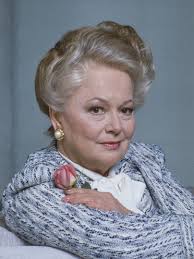
Olivia de Havilland was a monumental figure in Hollywood’s Golden Age, renowned for her beauty, grace, and exceptional acting talent. Born on July 1, 1916, in Tokyo, Japan, to British parents, de Havilland’s life and career spanned more than a century, leaving an indelible mark on the film industry. Her illustrious career, which began in the 1930s and extended into the 1980s, saw her starring in some of the most iconic films of all time, earning two Academy Awards and a place in cinematic history. Olivia de Havilland’s story is one of determination, legal battles, and artistic triumphs, making her one of the most respected actresses of her time.
Early Life and Background
Olivia Mary de Havilland was born into a family with strong connections to both the arts and public service. Her father, Walter de Havilland, was a successful English lawyer, while her mother, Lilian Fontaine, was an actress and former opera singer. Olivia’s younger sister, Joan Fontaine, would also go on to become a famous actress, creating one of Hollywood’s most intriguing sibling rivalries.
The de Havilland family moved to the United States when Olivia was still a child, settling in California after her parents divorced. Growing up in Saratoga, California, Olivia was deeply influenced by her mother’s theatrical background and developed an early interest in acting. This passion for performance led her to participate in school plays, and it wasn’t long before she caught the attention of the broader entertainment industry.
The Beginning of a Legendary Career
Olivia de Havilland’s entry into Hollywood came through the world of theater. While still a college student, she was cast by the renowned theater director Max Reinhardt in his stage production of A Midsummer Night’s Dream. Impressed by her talent and presence, Reinhardt later offered her the same role in the 1935 film adaptation of the play, marking her cinematic debut. This opportunity led to a contract with Warner Bros., where de Havilland quickly became one of the studio’s rising stars.
Her first major success came with the swashbuckling adventure film Captain Blood (1935), directed by Michael Curtiz. In the film, de Havilland starred opposite Errol Flynn, who would become her frequent co-star and one of Hollywood’s most beloved screen couples. The chemistry between Flynn and de Havilland was electric, and together they appeared in eight films, including The Charge of the Light Brigade (1936), The Adventures of Robin Hood (1938), and Dodge City (1939). Their on-screen partnership was instrumental in solidifying both actors’ careers and remains one of the most celebrated pairings in film history.
Breakthrough Role: Gone with the Wind
Olivia de Havilland’s career reached new heights in 1939 when she was cast as Melanie Hamilton in Gone with the Wind. This epic Civil War drama, directed by Victor Fleming and based on Margaret Mitchell’s novel, became one of the most successful and beloved films in cinematic history. De Havilland’s portrayal of Melanie, the gentle and compassionate foil to Vivien Leigh’s fiery Scarlett O’Hara, was widely praised and earned her an Academy Award nomination for Best Supporting Actress.
Melanie Hamilton was a role that allowed de Havilland to showcase her range as an actress. Her performance was marked by a delicate balance of strength and vulnerability, earning her critical acclaim and solidifying her reputation as one of Hollywood’s leading ladies. The success of Gone with the Wind opened doors for de Havilland, leading to a series of roles that would further establish her as a formidable talent.
Legal Battle and Artistic Independence
Despite her success, Olivia de Havilland became increasingly frustrated with the roles she was being offered by Warner Bros. Throughout the early 1940s, she was often typecast in sweet, demure roles that did not challenge her as an actress. Determined to take control of her career, de Havilland made the bold decision to challenge the studio system that had long controlled Hollywood actors’ careers.
In 1943, de Havilland filed a lawsuit against Warner Bros., seeking to break free from her contract. At the time, the studio had attempted to extend her contract beyond its original seven-year term by adding suspension periods when she refused certain roles. The case, known as the “de Havilland Law,” resulted in a landmark ruling that limited the power of studios over their contracted actors. The court’s decision was a significant victory for de Havilland and for actors in general, as it granted them greater autonomy over their careers. This legal battle not only underscored de Havilland’s determination and resilience but also set a precedent that would have lasting implications for the entertainment industry.
Post-War Career: Critical Acclaim and Awards
With her newfound freedom, Olivia de Havilland was able to take on more complex and challenging roles that showcased her depth as an actress. One of her most acclaimed performances came in 1946 with To Each His Own, directed by Mitchell Leisen. In the film, de Havilland played a woman who gives up her illegitimate child and later regrets her decision. Her portrayal was emotionally powerful and earned her the Academy Award for Best Actress, her first Oscar win.
De Havilland’s success continued with The Snake Pit (1948), a groundbreaking film that tackled the sensitive subject of mental illness. Directed by Anatole Litvak, the film featured de Havilland as a woman committed to a mental institution, struggling to regain her sanity. Her harrowing performance was both courageous and moving, further cementing her status as one of Hollywood’s most talented actresses. The film was a critical success and received widespread praise for its honest depiction of mental health issues.
In 1949, de Havilland delivered another stellar performance in The Heiress, directed by William Wyler. The film, based on Henry James’s novel Washington Square, told the story of a shy and wealthy woman who falls victim to a fortune hunter. De Havilland’s portrayal of the naive and heartbroken Catherine Sloper was masterful, and she received her second Academy Award for Best Actress for the role. The Heiress remains one of her most celebrated performances and is often cited as a highlight of her career.
Later Career and Final Roles
As the 1950s approached, Olivia de Havilland began to scale back her film work, choosing to focus on her personal life and selective projects. She moved to Paris in 1953, where she lived for the remainder of her life. Despite taking on fewer roles, de Havilland continued to deliver powerful performances. One of her notable later roles was in the 1964 film Hush…Hush, Sweet Charlotte, directed by Robert Aldrich. Starring alongside Bette Davis, de Havilland played the devious cousin Miriam, a role that showcased her versatility and ability to portray complex, morally ambiguous characters.
In addition to her film work, de Havilland appeared in several television productions during the 1970s and 1980s. She received critical acclaim for her role in the TV movie Anastasia: The Mystery of Anna (1986), earning a Golden Globe nomination for her performance. Her final screen appearance was in the 1988 television film The Woman He Loved, after which she retired from acting.
Personal Life and Legacy
Olivia de Havilland’s personal life was as fascinating as her career. She was married twice—first to author Marcus Goodrich in 1946, with whom she had a son, and later to French journalist Pierre Galante in 1955, with whom she had a daughter. Both marriages ended in divorce, but de Havilland maintained a close relationship with her children throughout her life.
One of the most intriguing aspects of de Havilland’s life was her rivalry with her sister, Joan Fontaine. The two sisters, both successful actresses, had a famously strained relationship that was well-documented in the press. Despite their public feud, both de Havilland and Fontaine were immensely talented and left lasting legacies in the film industry.
De Havilland’s impact on Hollywood cannot be overstated. Her performances in classic films like Gone with the Wind, The Snake Pit, and The Heiress continue to be celebrated for their emotional depth and complexity. Beyond her acting achievements, de Havilland’s legal battle with Warner Bros. marked a turning point in the history of Hollywood, empowering actors to take control of their careers.
Final Years and Passing
Olivia de Havilland lived a long and fulfilling life, passing away peacefully in her sleep on July 25, 2020, at the age of 104 in her home in Paris, France. Her death marked the end of an era, as she was one of the last surviving stars of Hollywood’s Golden Age. Her legacy as a pioneering actress and advocate for artists’ rights remains intact, and she is remembered as one of the greatest talents in the history of cinema.
Conclusion: A Star for the Ages
Olivia de Havilland’s life and career are a testament to her extraordinary talent, resilience, and determination. From her early days as a contract player at Warner Bros. to her Academy Award-winning performances, de Havilland consistently demonstrated her ability to captivate audiences with her nuanced and powerful portrayals. Her willingness to stand up for herself and her fellow actors in the face of the studio system’s tyranny paved the way for future generations of performers. Olivia de Havilland’s contributions to the film industry are immeasurable, and her legacy will continue to inspire and influence for many years to come.


