
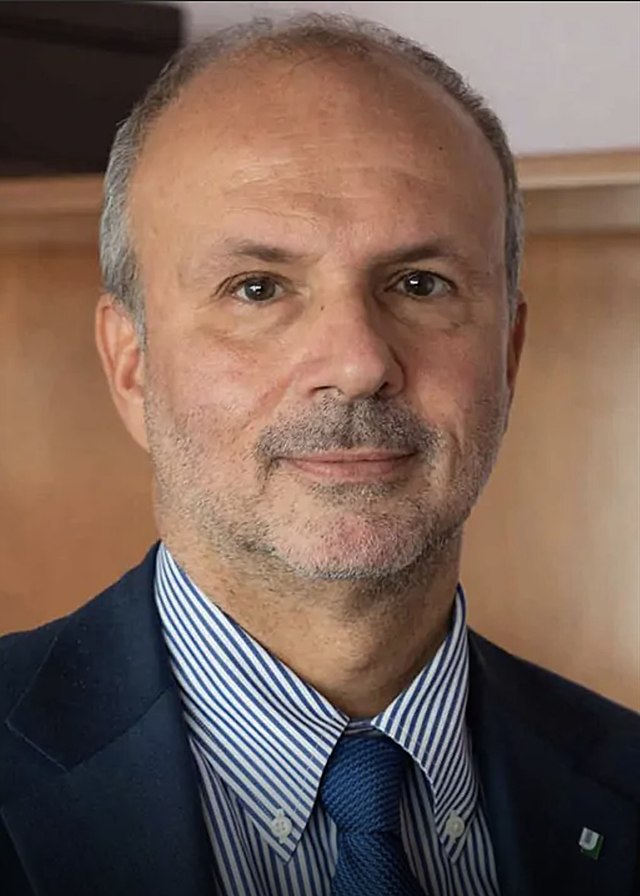
Orazio Schillaci is a prominent figure in the fields of medicine, academia, and politics in Italy. Born in Rome on April 27, 1966, Schillaci has had a distinguished career that has spanned decades, culminating in his appointment as the Minister of Health in Italy under the government led by Giorgia Meloni in 2022. This article delves into the life and achievements of Orazio Schillaci, exploring the key moments that have defined his career and contributed to his rising fame.
Early Life and Education
Orazio Schillaci was born into a family with deep roots in Calabria, Italy. His father hailed from Reggio Calabria, while his mother was from Amantea, a small town in the province of Cosenza. This southern Italian heritage played a significant role in shaping Schillaci’s character and values, instilling in him a strong sense of dedication and a commitment to excellence.
Schillaci’s academic journey began at the prestigious University of Rome “La Sapienza,” where he graduated in 1990 with a degree in Medicine and Surgery. His passion for medical science led him to specialize in nuclear medicine, a field that combines medicine with advanced imaging technology to diagnose and treat diseases. In 1994, Schillaci completed his specialization in nuclear medicine, marking the beginning of his journey as a medical researcher and educator.
Academic Career and Contributions
Orazio Schillaci’s academic career is marked by his relentless pursuit of knowledge and his contributions to the field of nuclear medicine. He began his professional career as a researcher at the University of L’Aquila, where he worked until 2001. During this time, he also earned a Ph.D. in functional imaging, further solidifying his expertise in the field.
In 2001, Schillaci moved to the University of Rome “Tor Vergata,” where he took on the role of Associate Professor of Nuclear Medicine. His dedication to his field quickly earned him a reputation as a leading expert in medical imaging, particularly in the areas of cardiology, oncology, neurology, and infectious diseases. Schillaci’s research focused on the use of molecular imaging techniques, including PET (Positron Emission Tomography) and SPECT (Single Photon Emission Computed Tomography), to diagnose and monitor various diseases, including Parkinson’s disease and Alzheimer’s disease.
By 2007, Schillaci had been promoted to Full Professor, and in 2008, he was appointed as the Director of the School of Specialization in Nuclear Medicine at “Tor Vergata.” His leadership and expertise were further recognized when he became a member of the Higher Health Council, Italy’s top advisory body on public health, from 2006 to 2009.
Leadership at “Tor Vergata” and Beyond
The 2010s marked a period of significant leadership roles for Orazio Schillaci. From 2011 to 2019, he served as the Vice Dean and later the Dean of the Faculty of Medicine and Surgery at the University of Rome “Tor Vergata.” During his tenure, Schillaci played a pivotal role in advancing the university’s medical programs and enhancing its reputation both nationally and internationally.
In 2018, Schillaci was appointed as the Director of the Department of Oncohematology at the “Tor Vergata” Polyclinic, further expanding his influence in the medical field. His leadership was instrumental in positioning “Tor Vergata” as one of Italy’s leading medical institutions. In 2019, Schillaci’s contributions were recognized when he was appointed as the Rector of the University of Rome “Tor Vergata,” a position he held until 2022. Under his leadership, the university achieved significant milestones, including being ranked among the top 350 universities globally and securing the seventh position in Italy according to the World University Ranking 2022 by the Times Higher Education.
Minister of Health: A New Chapter
Orazio Schillaci’s career took a significant turn in 2022 when he was appointed as the Minister of Health in the government led by Giorgia Meloni. This appointment came at a critical time, as Italy, like the rest of the world, was grappling with the challenges posed by the COVID-19 pandemic. Schillaci’s extensive experience in medicine and public health made him an ideal candidate to lead the country’s health ministry during such a turbulent period.
On October 21, 2022, Schillaci was officially sworn in as the Minister of Health, succeeding Roberto Speranza. His appointment was met with widespread approval, given his non-partisan stance and his focus on scientific and evidence-based decision-making. Schillaci’s approach to public health has been characterized by a commitment to transparency, collaboration, and the use of cutting-edge medical research to inform policy decisions.
Contributions to Medical Research and Publications
Throughout his career, Orazio Schillaci has been a prolific contributor to medical research. He has authored or co-authored over 220 publications, many of which have been cited more than 4,700 times in academic literature. His research has had a profound impact on the field of nuclear medicine, particularly in the development and application of imaging techniques to diagnose and treat complex diseases.
Schillaci’s work has not only advanced scientific knowledge but also improved clinical practices in areas such as oncology, neurology, and cardiology. His research on the use of PET and SPECT imaging in detecting and monitoring neurological conditions, such as Parkinson’s and Alzheimer’s disease, has been particularly influential. Additionally, his studies on the use of these imaging techniques in oncology have provided valuable insights into the early detection and treatment of various cancers.
Legacy and Impact
Orazio Schillaci’s legacy is one of dedication to the advancement of medical science and the betterment of public health. His contributions to the field of nuclear medicine have not only advanced scientific knowledge but have also improved the quality of care for patients with complex diseases. As an academic leader, Schillaci has played a pivotal role in shaping the future of medical education in Italy, ensuring that the next generation of doctors and researchers is well-equipped to meet the challenges of modern healthcare.
As Minister of Health, Schillaci has the opportunity to further influence public health policy in Italy, ensuring that decisions are based on the latest scientific research and that the healthcare system is equipped to respond to current and future challenges. His focus on transparency, collaboration, and evidence-based decision-making will undoubtedly leave a lasting impact on Italy’s healthcare system.
Conclusion
Orazio Schillaci is a remarkable figure whose contributions to medicine, academia, and public health have made him a prominent leader in Italy. From his early days as a medical student to his current role as Minister of Health, Schillaci’s career has been characterized by a commitment to excellence and a passion for advancing medical science. His leadership at the University of Rome “Tor Vergata” and his contributions to medical research have left an indelible mark on the field of nuclear medicine. As he continues to lead Italy’s health ministry, Orazio Schillaci’s legacy will be one of innovation, dedication, and a tireless commitment to improving public health.


