
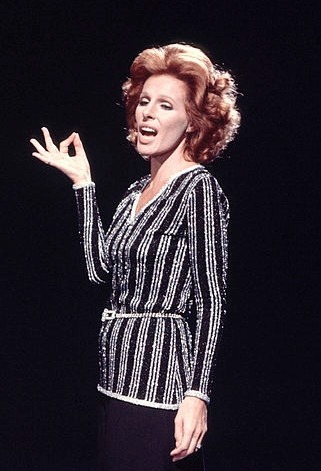
Ornella Vanoni, born on September 22, 1934, in Milan, Italy, is one of the most enduring and influential figures in Italian music and entertainment. Her career, spanning over six decades, has seen her evolve from a theater actress to a renowned singer with a repertoire that includes some of the most memorable songs in Italian popular music. Vanoni’s life and career are marked by a blend of sophistication, artistry, and a relentless pursuit of excellence, making her a true icon in the Italian cultural landscape.
Early Life and Career Beginnings
Ornella Vanoni was born into a well-to-do family in Milan. From an early age, she exhibited a unique blend of curiosity and timidity, a combination that would later define her artistic persona. Despite her reserved nature, Vanoni was drawn to the performing arts, particularly theater. Her early foray into acting led her to enroll in the Piccolo Teatro di Milano, a prestigious theater school directed by Giorgio Strehler, one of Italy’s most celebrated theater directors.
Strehler, who would later become Vanoni’s partner, recognized her potential not only as an actress but also as a singer. He introduced her to the works of Bertolt Brecht and the genre of Canzoni della mala (songs of the underworld), which she performed with a distinctively dark and haunting style. These early performances set the stage for her future success, as they showcased her ability to convey deep emotion through both acting and singing.
The Rise to Fame: The 1960s and 1970s
The 1960s marked a pivotal period in Vanoni’s career. Her meeting with singer-songwriter Gino Paoli in 1960 resulted in both a passionate love affair and a fruitful artistic collaboration. Paoli wrote several songs for Vanoni, including the timeless classic “Senza fine,” which became a massive hit and established her as a leading figure in the Italian music scene. This era also saw Vanoni balancing her work in theater with her growing success in music, a duality that she managed with remarkable skill.
In the mid-1960s, Vanoni’s career took a significant turn when she decided to focus entirely on music. She achieved considerable success with hits like “La musica è finita” and “L’appuntamento,” the latter of which became one of her signature songs. These tracks not only showcased her vocal prowess but also her ability to interpret lyrics with profound sensitivity, making her a favorite among Italian audiences.
In 1973, Vanoni founded her own record label, Vanilla, and moved to Rome, where she began a long-lasting collaboration with producer Sergio Bardotti. This partnership resulted in some of her most critically acclaimed works, including the 1976 album “La voglia, la pazzia, l’incoscienza e l’allegria,” a collaboration with Brazilian musicians Vinicius de Moraes and Toquinho. This album, blending Italian and Brazilian sounds, is considered a classic and further solidified Vanoni’s status as an international artist.
Artistic Evolution and Continued Success
The late 1970s and early 1980s saw Vanoni embracing a more sophisticated and refined image, often referred to as “La Signora della Canzone” (The Lady of the Song). During this period, she worked with a variety of artists and producers, exploring different musical genres and themes. Her albums “Ricetta di donna” (Recipe for a Woman) and “Uomini” (Men) reflect her maturity as an artist, as she began writing her own lyrics and delving into more introspective themes.
Vanoni’s collaboration with Gino Paoli was rekindled in 1984 with a successful tour and the live album “Insieme” (Together). The pair’s chemistry, both personal and professional, captivated audiences and led to the release of the iconic song “Ti lascio una canzone” (I’ll Leave You a Song), which became another staple in Vanoni’s extensive catalog.
The 1980s also saw Vanoni expanding her artistic horizons by returning to the theater. In 1985, she starred alongside Giorgio Albertazzi in the play “Commedia d’amore” (Love Comedy) by Bernard Slade. This return to her theatrical roots was well-received and demonstrated her versatility as a performer.
International Recognition and Later Career
By the mid-1980s, Ornella Vanoni had become a symbol of Italian culture, admired not only in Italy but also internationally. Her 1986 project “Ornella e…” saw her collaborating with some of the world’s leading jazz musicians, including George Benson, Herbie Hancock, and Gil Evans. The album, which featured Italian classics reinterpreted with a jazz twist, was a bold and ambitious project that further highlighted Vanoni’s willingness to experiment and push the boundaries of her music.
As the years went on, Vanoni continued to evolve artistically. In the 1990s, she worked with producer Mario Lavezzi, who helped shape a new sound for her, leading to the release of the gold-certified album “Stella nascente” (Rising Star) in 1992. This period also saw her collaborating with a new generation of artists, including the experimental producer-arranger Beppe Quirici and jazz trumpeter Paolo Fresu, resulting in the critically acclaimed album “Argilla” in 1998.
Legacy and Influence
Ornella Vanoni’s influence on Italian music and culture is undeniable. Over the years, she has become a mentor and inspiration to many younger artists. Her ability to reinvent herself while maintaining the essence of her artistry has allowed her to remain relevant in a constantly changing industry. Vanoni’s work is characterized by a deep emotional resonance, an innate elegance, and a commitment to artistic integrity.
Even as she entered the 21st century, Vanoni showed no signs of slowing down. In 2009, she participated in the Sanremo Music Festival, Italy’s most prestigious music competition, where she performed alongside the young singer Simona Molinari. The following year, she released the album “Più di te,” which featured covers of songs by contemporary Italian songwriters, including Biagio Antonacci and Pino Daniele.
In 2013, Vanoni announced that “Meticci,” an album of original songs, would be her final album of new material. Despite this announcement, she continued to perform and record, demonstrating her enduring passion for music. In 2018, she returned to the Sanremo stage, performing the song “Imparare ad amarsi” (Learning to Love Each Other) with Bungaro and Pacifico, which earned her widespread acclaim.
Personal Life and Cultural Impact
Throughout her career, Ornella Vanoni has been known not only for her artistic achievements but also for her personal life, which has often been the subject of public interest. Her relationships, particularly with Gino Paoli, have been well-documented, and her ability to navigate the complexities of fame and personal life with grace has endeared her to fans across generations.
Vanoni’s style, both in music and fashion, has made her a trendsetter and a symbol of Italian elegance. Collaborations with fashion designers like Gianni Versace have further cemented her status as a cultural icon. Her distinctive voice, characterized by its rich, velvety tone, and her ability to convey deep emotion through song have made her one of Italy’s most beloved performers.
Conclusion
Ornella Vanoni’s journey from a young actress in Milan to a celebrated singer and cultural icon is a testament to her talent, determination, and artistic vision. Her contributions to Italian music and theater have left an indelible mark on the cultural landscape, and her influence continues to be felt by new generations of artists. As she continues to perform and inspire, Vanoni’s legacy as “La Signora della Canzone” remains secure, and her music will undoubtedly continue to resonate with audiences for years to come.


