
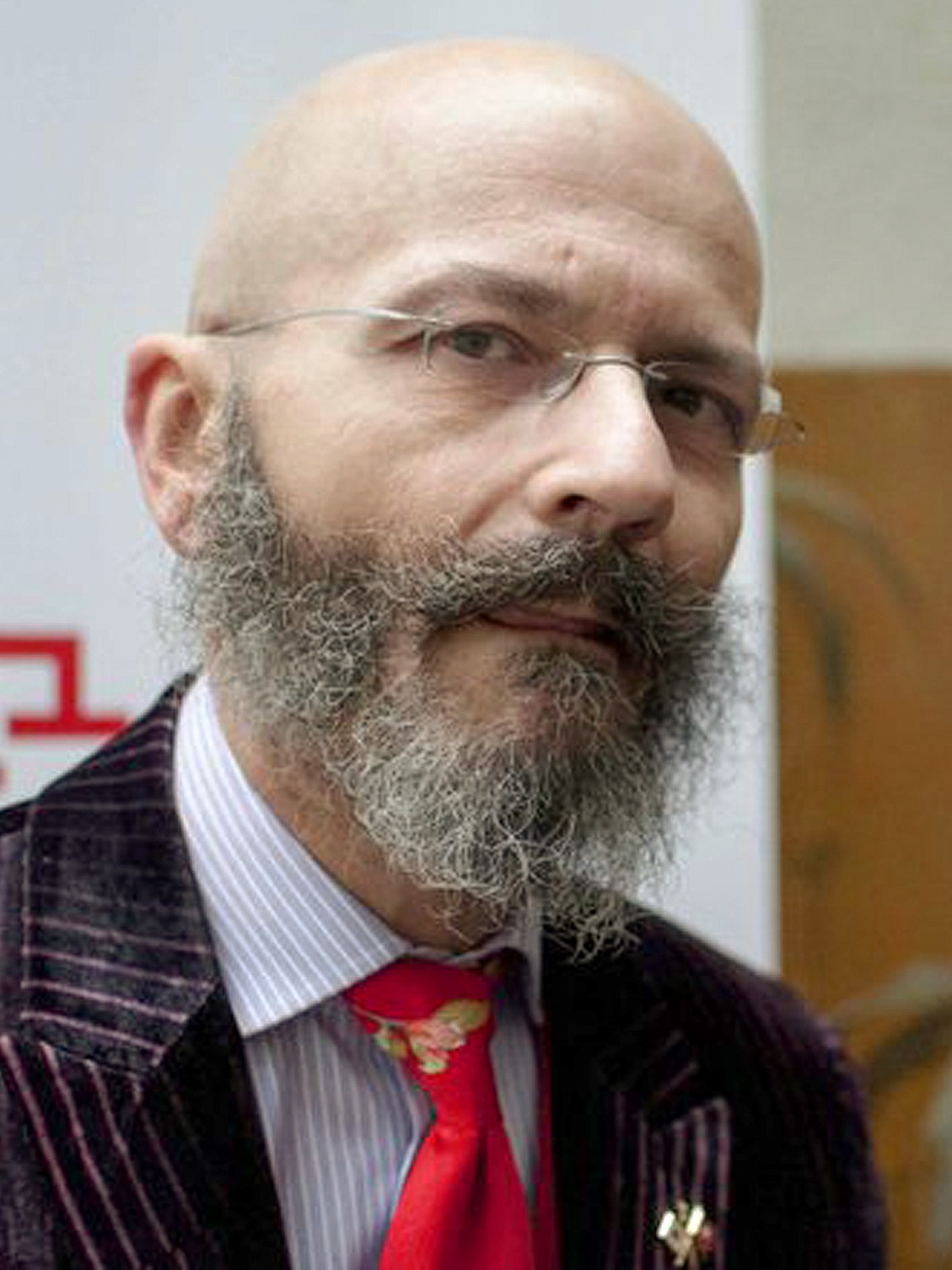
Oscar Giannino is a notable figure in Italian journalism and politics, recognized for his sharp economic commentary and his involvement in various political movements. Born on September 1, 1961, in Turin, Italy, Giannino has had a multifaceted career that spans across journalism, political activism, and public commentary. His life and career are marked by both achievements and controversies, making him a complex and intriguing personality in the Italian public sphere.
Early Life and Political Beginnings
Oscar Giannino was born into a politically aware family in Turin, a city known for its industrial base and political activism. From a young age, Giannino was exposed to the political and economic discussions that would later shape his career. He pursued his education with a keen interest in politics and economics, which would become the cornerstone of his professional life.
Giannino’s political career began in earnest in the early 1980s when he joined the Italian Republican Party (PRI). His involvement with the PRI was not just superficial; by 1984, he had risen to the position of Secretary of the Youth Federation of the PRI. This role provided him with early leadership experience and a deep understanding of the inner workings of political organizations. His tenure as secretary lasted until 1987, after which he took on the role of spokesperson and became a member of the National Directorate of the PRI. He held these positions until 1994, during which time he honed his skills in political communication and strategy.
Transition to Journalism
Oscar Giannino’s shift from active politics to journalism was a natural progression, given his deep understanding of political and economic issues. He began his journalism career at “La Voce Repubblicana,” the official newspaper of the PRI, where he quickly rose through the ranks to become the editor-in-chief in 1988. This role allowed him to influence the party’s narrative and communicate its policies to a broader audience.
In 1992, Giannino became a registered journalist, formally solidifying his place in the Italian media landscape. His journalistic endeavors were not confined to party lines; he expanded his work to include broader political and economic commentary. He joined the editorial team of “Liberal,” a publication founded by Ferdinando Adornato, which was known for its intellectual discourse on politics and society. Giannino’s contributions to “Liberal” further established him as a respected voice in Italian journalism.
By the mid-1990s, Giannino had left the PRI, marking a significant shift in his career from active political engagement to a more observational role as a journalist and commentator. This transition allowed him to critique and analyze political and economic developments without the constraints of party allegiance.
Rising Influence in Economic Journalism
Oscar Giannino’s expertise in economic matters became increasingly evident as he took on roles in various prestigious publications. In 1999, he was appointed the head of the economics section of “Il Foglio,” a newspaper directed by Giuliano Ferrara. “Il Foglio” was known for its influence on Italian politics, often setting the agenda for national debates. Giannino’s work here solidified his reputation as an expert in economic journalism, where he provided in-depth analysis of Italy’s economic policies and their broader implications.
His career continued to evolve as he moved to “Il Riformista” in 2004, where he served as the deputy director under Antonio Polito. This position further expanded his influence, allowing him to shape the newspaper’s editorial stance on economic and political issues. Giannino’s work during this period was characterized by his ability to dissect complex economic topics and present them in a way that was both accessible and informative to the general public.
In 2007, Giannino took on the role of director of “LiberoMercato,” the financial and economic supplement of “Libero,” a newspaper directed by Vittorio Feltri. This position allowed him to reach a wider audience with his economic insights. However, his tenure at “LiberoMercato” was short-lived; he left the position in 2009 due to disagreements with the publisher.
Political Activism and Public Commentary
Despite moving away from active politics, Oscar Giannino never completely severed his ties with political movements. In 2007, he renewed his membership with the Italian Republican Party and became a member of its National Council. His involvement with the party continued, and in 2011, he joined the National Directorate of the PRI.
Giannino’s political activism extended beyond party politics. In collaboration with the Bruno Leoni Institute, a think tank focused on economic and public policy, he launched “Chicago-blog.it” in the mid-2000s. This blog became a platform for him and other journalists to discuss and analyze current economic and political issues. The blog’s name was a nod to the Chicago School of Economics, reflecting Giannino’s affinity for free-market principles and economic liberalism.
In addition to his work in print and online journalism, Giannino expanded his reach to radio. In June 2009, he began hosting “Nove in punto, la versione di Oscar” on Radio 24, the radio station of “Il Sole 24 Ore,” Italy’s leading financial newspaper. The program, which aired at 9:00 AM on weekdays, became popular for its sharp and insightful commentary on current events, particularly those related to economics and politics. Giannino’s ability to engage listeners with his articulate and often provocative analysis made the show a staple for many Italians interested in understanding the complexities of their country’s economic landscape.
Public Controversies and the Decline Party
Oscar Giannino’s career has not been without its controversies. In July 2012, he was instrumental in founding the movement “Fermare il Declino” (Stop the Decline), which aimed to address Italy’s economic and political stagnation. The movement quickly gained traction, and by December of the same year, it had evolved into a full-fledged political party named “Fare” (To Do). Giannino’s leadership in this movement was seen as a bold step towards addressing the systemic issues that had plagued Italy for decades.
However, Giannino’s political aspirations were marred by a scandal that broke just days before the 2013 general elections. It was revealed that Giannino had falsely claimed to have earned a master’s degree and two additional degrees, qualifications that were prominently listed in his official biography. This revelation caused a media uproar and led to Giannino’s resignation as the leader of “Fare” on February 20, 2013. Although he remained a candidate in the elections, the scandal severely damaged his credibility and the party’s prospects.
Giannino later explained the discrepancy as a misunderstanding, but the damage was done. The incident highlighted the intense scrutiny that public figures face and the potential consequences of embellishing one’s credentials. Despite this setback, Giannino continued to be a prominent voice in Italian media, though his political ambitions were significantly curtailed.
Personal Life and Philanthropy
Oscar Giannino’s personal life is marked by his dedication to both his family and philanthropic endeavors. In 2011, he married Margherita Brindisi in a civil ceremony in Rome, officiated by Giorgia Meloni, who was then Italy’s Minister for Youth Policies. The marriage was a private affair, reflecting Giannino’s preference for keeping his personal life out of the public eye.
One of the lesser-known aspects of Giannino’s life is his commitment to helping cancer patients. This cause is particularly close to his heart, as he has been personally affected by the disease. Giannino’s involvement in this area goes beyond financial contributions; he actively participates in initiatives that support cancer patients and their families, demonstrating a deep empathy and commitment to social causes.
Publications and Intellectual Contributions
Throughout his career, Oscar Giannino has authored several publications that reflect his deep understanding of economics, politics, and international relations. His works include “La politica estera della DC” (1982), which examines the foreign policy of the Christian Democratic Party, and “L’Europa delle culture” (1996), a discussion on the cultural integration within the European Union.
In 2007, Giannino published “Contro le tasse. Perché abbattere le imposte si può, si deve e non è affatto di destra” (Against Taxes. Why Reducing Taxes is Possible, Necessary, and Not Right-Wing). This book is particularly significant as it encapsulates Giannino’s economic philosophy, advocating for tax reduction as a means to stimulate economic growth and reduce government intervention in the market.
Giannino’s writings are characterized by a clear and persuasive style, making complex economic and political ideas accessible to a broad audience. His ability to distill intricate concepts into understandable arguments has made his books popular among readers interested in economics and public policy.
Legacy and Ongoing Influence
Oscar Giannino’s career is a testament to the impact that one individual can have on public discourse. Despite the controversies that have marked his journey, Giannino remains a respected figure in Italian journalism and a significant voice in discussions about the country’s economic and political future.
His work continues to influence public opinion, particularly through his radio program and his writings. Giannino’s analysis of economic issues is particularly valued in a country that has faced significant economic challenges over the past few decades. His advocacy for free-market principles and reduced government intervention resonates with many Italians who are frustrated with the status quo.
Giannino’s legacy is one of intellectual rigor and a commitment to public service, even in the face of personal and professional challenges. His career serves as a reminder of the importance of integrity in public life, as well as the potential for redemption and continued influence despite setbacks.
As Oscar Giannino continues to contribute to public discourse through his commentary and publications, his influence on Italian society remains strong. His career, with all its highs and lows, offers valuable lessons on the complexities of public life and the enduring importance of informed and principled debate.


