
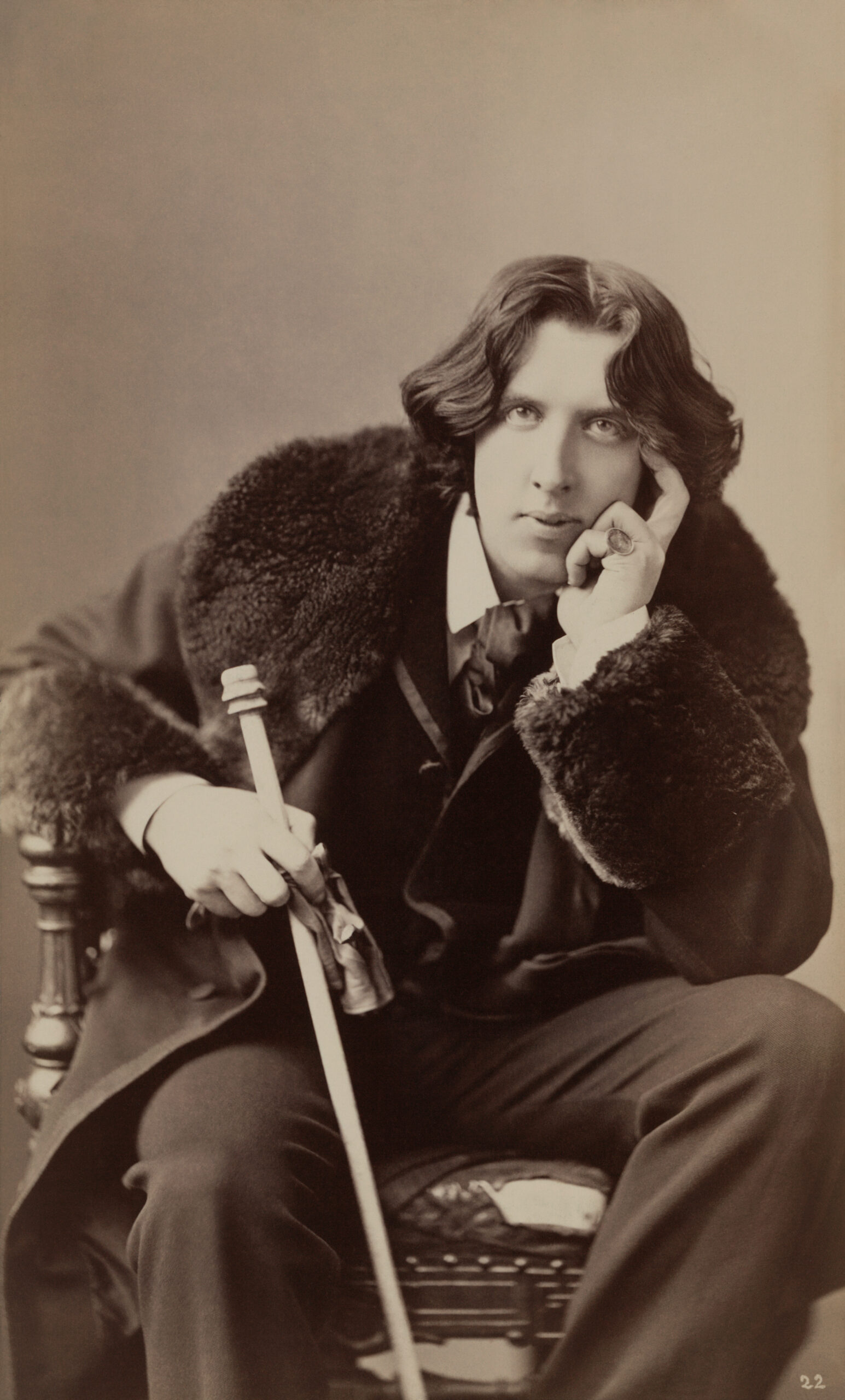
Oscar Wilde, a name synonymous with wit, flamboyance, and literary genius, was a man whose life and works continue to captivate the world. Born Oscar Fingal O’Flahertie Wills Wilde on October 16, 1854, in Dublin, Ireland, Wilde was the second of three children in a family steeped in intellectual and cultural pursuits. His father, Sir William Wilde, was a renowned surgeon and author, while his mother, Jane Francesca Elgee, was a poet and ardent Irish nationalist. This unique upbringing undoubtedly influenced Wilde’s future endeavors in literature and the arts, making him one of the most celebrated figures of the Victorian era.
Early Life and Education
Wilde’s early education was marked by exceptional academic achievements. He attended the prestigious Portora Royal School in Enniskillen, where he excelled in classics. His love for literature and the arts was further nurtured during his time at Trinity College in Dublin, where he won the Berkeley Gold Medal for his work in Greek. Wilde’s academic prowess earned him a scholarship to Magdalen College, Oxford, in 1874, where he continued to distinguish himself, winning the Newdigate Prize for his poem “Ravenna” in 1878.
At Oxford, Wilde was introduced to the aesthetic movement by two of the era’s most prominent intellectuals, Walter Pater and John Ruskin. Their teachings profoundly influenced Wilde’s artistic sensibilities, leading him to embrace the concept of “art for art’s sake.” This philosophy would become a cornerstone of his work and public persona, as he sought to challenge the conventional moral and artistic standards of the time.
The Aesthetic Movement and Rise to Fame
After completing his studies at Oxford, Wilde moved to London, where he quickly became a prominent figure in the city’s vibrant social and artistic circles. His flamboyant style, sharp wit, and penchant for provocative statements made him a darling of the press and the public alike. Wilde’s first published work, “Poems” (1881), was well-received, establishing him as a rising star in the literary world.
Wilde’s fame continued to grow as he embarked on a lecture tour of the United States in 1882. During this tour, he famously declared, “I have nothing to declare except my genius,” a statement that encapsulated his self-assured persona. The tour was a resounding success, further cementing Wilde’s reputation as a leading figure of the aesthetic movement.
Upon returning to England, Wilde married Constance Lloyd in 1884. The marriage, however, was largely one of convenience, as Wilde struggled with his sexuality in a society that was deeply intolerant of homosexuality. Despite these challenges, the couple had two sons, Cyril and Vyvyan, and Wilde continued to enjoy considerable success as a writer and playwright.
Major Works and Literary Legacy
Wilde’s literary output during the late 1880s and early 1890s was prolific and diverse. He published several collections of fairy tales and essays, including “The Happy Prince and Other Tales” (1888) and “Intentions” (1891), which showcased his gift for storytelling and his keen insights into human nature.
However, it was Wilde’s only novel, “The Picture of Dorian Gray” (1890), that truly secured his place in literary history. The novel, which tells the story of a young man who remains eternally youthful while a portrait of him ages, is a powerful exploration of vanity, hedonism, and the consequences of a life devoted to pleasure. “The Picture of Dorian Gray” was met with mixed reviews upon its publication, with some critics condemning it as immoral. Despite this, the novel has since been recognized as a masterpiece of Gothic fiction and a seminal work of the English literary canon.
In addition to his novel, Wilde achieved great success as a playwright. His most famous plays, “Lady Windermere’s Fan” (1892), “A Woman of No Importance” (1893), “An Ideal Husband” (1895), and “The Importance of Being Earnest” (1895), are considered quintessential examples of the comedy of manners. These plays, characterized by their sparkling dialogue, satirical wit, and incisive social commentary, remain popular to this day and continue to be performed worldwide.
The Trials and Downfall
Despite his literary success, Wilde’s personal life was fraught with difficulties. His close relationship with Lord Alfred Douglas, known as “Bosie,” led to his eventual downfall. In 1895, Wilde was accused of “gross indecency” under the Criminal Law Amendment Act of 1885, which criminalized homosexual acts. The ensuing trials were highly publicized and scandalous, resulting in Wilde’s conviction and a sentence of two years of hard labor.
Wilde’s imprisonment marked the beginning of the end for the once-celebrated author. He was declared bankrupt, and his health deteriorated rapidly during his time in prison. While incarcerated, Wilde wrote “De Profundis,” a long and poignant letter addressed to Bosie, in which he reflected on his life, love, and the suffering he had endured. The letter, published posthumously, is considered one of Wilde’s most moving and introspective works.
Later Life and Death
After his release from prison in 1897, Wilde spent the remaining years of his life in relative obscurity, living in France under the pseudonym Sebastian Melmoth. He briefly reunited with Bosie, but their relationship soon ended in bitterness. Wilde’s final work, “The Ballad of Reading Gaol” (1898), was a haunting poem inspired by his experiences in prison. It is a powerful indictment of the harshness of the Victorian penal system and a testament to Wilde’s enduring compassion for the downtrodden.
Oscar Wilde died of meningitis on November 30, 1900, at the age of 46, in a modest Parisian hotel. He was buried in the Cimetière de Bagneux, and later, his remains were moved to Père Lachaise Cemetery, where his tomb, designed by the sculptor Jacob Epstein, remains a site of pilgrimage for admirers from around the world.
Legacy and Influence
Oscar Wilde’s legacy is one of both triumph and tragedy. His works, with their dazzling wit, biting satire, and deep humanity, continue to be read and revered by audiences around the globe. Wilde’s life, marked by both great success and profound suffering, serves as a reminder of the dangers of living authentically in a world that often punishes those who dare to defy societal norms.
In the years following his death, Wilde’s reputation underwent a dramatic reassessment. Once vilified as a decadent and immoral figure, he is now celebrated as a martyr for artistic freedom and LGBTQ+ rights. Wilde’s writings have inspired countless adaptations in theater, film, and television, ensuring that his voice remains as vibrant and relevant as ever.
Wilde’s aphorisms, many of which are still quoted today, encapsulate his sharp intellect and keen observations on life, love, and society. Phrases like “Be yourself; everyone else is already taken” and “I can resist everything except temptation” reflect the enduring appeal of his unique worldview.
Historical Context and Social Commentary
To fully appreciate Oscar Wilde’s work, it is essential to understand the historical and social context in which he lived. The Victorian era, with its strict moral codes and rigid class structure, provided the perfect backdrop for Wilde’s satirical critiques of society. His plays and writings often expose the hypocrisy and superficiality of the upper classes, while also challenging the repressive norms that governed gender and sexuality.
Wilde’s embrace of aestheticism and his rejection of conventional morality were bold statements in a time when conformity was highly valued. His works often blur the line between art and life, encouraging readers and audiences to question their own beliefs and values. In this way, Wilde’s contributions to literature and culture extend far beyond his immediate context, offering timeless insights into the human condition.
Conclusion
Oscar Wilde was a man of extraordinary talent and complexity. His life, though marred by scandal and tragedy, was also marked by brilliance and creativity. As a writer, Wilde left behind a body of work that continues to captivate and inspire. As a cultural icon, he remains a symbol of the struggle for individual freedom and the right to live one’s life authentically.
Wilde’s story is one of resilience in the face of adversity, a testament to the power of art to transcend the limitations of the time. In celebrating Oscar Wilde, we celebrate not only his literary achievements but also his courage in challenging the status quo and his enduring influence on the world of letters and beyond.


