
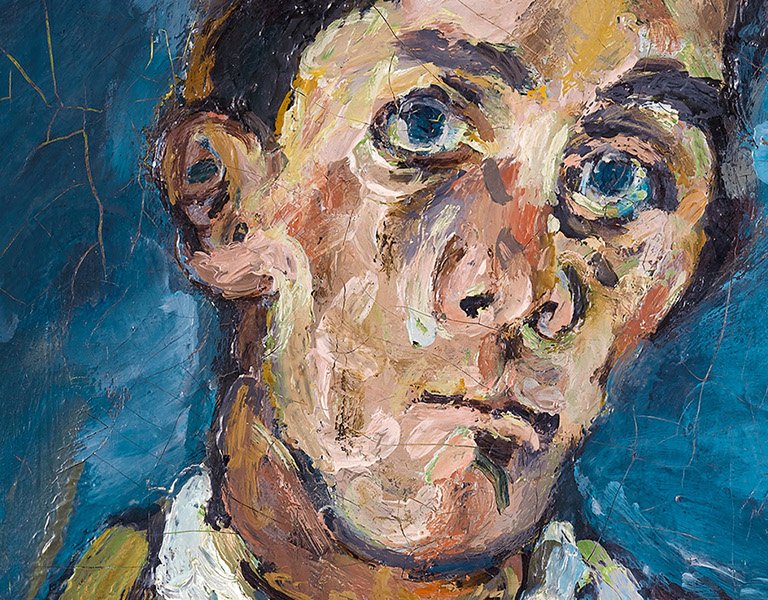
Oskar Kokoschka, born on March 1, 1886, in the small town of Pöchlarn, Austria, is a towering figure in the history of modern art. As one of the leading exponents of Viennese Expressionism, Kokoschka’s work is characterized by its intense emotional depth, vibrant color palette, and dramatic portrayal of the human condition. His life and career were marked by significant historical events, personal struggles, and a relentless pursuit of artistic truth. This article delves into the life, artistic achievements, and enduring legacy of Oskar Kokoschka, exploring the nuances of his work and the context in which he created his most famous pieces.
Early Life and Artistic Beginnings
Oskar Kokoschka was born into a family with a unique heritage. His grandmother and mother were said to possess a special sensitivity, with stories circulating about their near-mystical abilities to sense danger. One such story tells of Kokoschka’s mother, who, during a visit to a friend, suddenly felt that her son was in peril and rushed home just in time to prevent a mishap. Whether or not these tales are true, they contribute to the mythos surrounding Kokoschka’s life, suggesting an early connection to the emotional intensity that would later define his art.
Despite his family’s financial struggles, Kokoschka’s artistic talents emerged at a young age. At 14, he began painting, drawn to figurative art with a particular interest in primitive and non-Western forms, including African, Japanese, and other East Asian art. This early exposure to diverse artistic traditions would later influence his unique style, which often blended Western and non-Western aesthetics.
Kokoschka’s family moved to Vienna, where he attended elementary and middle school. His talent earned him a scholarship to the School of Applied Arts in Vienna, where he further developed his artistic skills. During this period, Kokoschka was heavily influenced by Gustav Klimt, a leading figure of the Vienna Secession. His early works, including illustrations and book covers, were often in line with Klimt’s style, characterized by intricate patterns and a focus on decorative elements.
Rise to Prominence: The Viennese Expressionism Movement
By 1908, Oskar Kokoschka had begun to make a name for himself in the Viennese art scene. He published his first poem, “The Dreaming Boys,” a beautifully illustrated children’s book dedicated to Klimt. The book’s illustrations reflected the influence of Klimt, but they also hinted at the more expressive and emotionally charged style that Kokoschka would later develop.
Kokoschka’s association with the Wiener Werkstätte, a collective of artists, architects, and designers, was instrumental in his early career. He created postcards, illustrations, and book covers for the group, which helped to establish his reputation as a versatile and innovative artist. However, it was his friendship with the architect Adolf Loos that truly propelled his career. Loos, who was an advocate for modernist principles and a critic of the ornamental excesses of the time, introduced Kokoschka to influential clients, leading to numerous portrait commissions.
In 1910, Kokoschka began a close collaboration with the Berlin avant-garde magazine Der Sturm, which played a crucial role in promoting his work beyond Austria. His participation in group exhibitions, such as the one organized by the gallery of Paul Cassirer in Berlin, further established his reputation as a leading figure in the emerging Expressionist movement.
The Alma Mahler Affair and Emotional Turmoil
One of the most significant and tumultuous periods in Kokoschka’s life was his relationship with Alma Mahler, the widow of composer Gustav Mahler. Alma Mahler was a muse to many artists, composers, and intellectuals of the time, including Klimt, Walter Gropius, and Franz Werfel. Kokoschka’s passionate and stormy affair with Alma deeply influenced his art, leading to some of his most famous and emotionally intense works.
Their relationship, however, was fraught with difficulties. Alma was a complex and enigmatic figure, and her involvement with multiple prominent men created tensions that eventually led to the couple’s breakup. The emotional impact of this separation on Kokoschka was profound, and it is reflected in works such as The Bride of the Wind (1914), a powerful allegory of their relationship that remains one of Kokoschka’s most celebrated paintings.
War, Injury, and Artistic Evolution
With the outbreak of World War I in 1914, Oskar Kokoschka’s life took another dramatic turn. He enlisted in the Austrian cavalry but was seriously wounded in battle, sustaining injuries to his head that had long-lasting effects on his health. After being discharged in 1916, Kokoschka returned to Vienna, where he continued to paint and teach. His experiences during the war, including the trauma of combat and the physical pain from his injuries, deepened the emotional intensity of his work.
Following his recovery, Kokoschka traveled extensively across Europe, visiting Berlin, Dresden, and Zurich, where he became associated with the Dada movement. His participation in the Dada exhibition in Zurich in 1917, alongside artists like Max Ernst and Wassily Kandinsky, marked a period of experimentation in his art. Although Kokoschka never fully embraced Dada’s anti-art stance, his involvement with the movement reflects his willingness to explore new ideas and challenge conventional artistic norms.
The Dresden Years and Maturity in Style
The post-war years saw Oskar Kokoschka settle in Dresden, where he found a new circle of friends, including writers and actors, who shared his artistic vision. Dresden became a fertile ground for Kokoschka’s creativity, and he produced a significant body of work during this time, including numerous paintings and watercolors. His style matured, moving away from the more decorative elements of his early work toward a more direct and expressive approach.
Kokoschka’s portraits from this period are particularly notable for their psychological depth and intensity. He had a remarkable ability to capture the inner life of his subjects, often depicting them with distorted features and exaggerated expressions that conveyed their emotional state. This period also saw Kokoschka’s growing interest in landscape painting, inspired by his travels throughout Europe and North Africa.
Political Turmoil and Exile
The 1930s were a turbulent time for Oskar Kokoschka, both personally and politically. The rise of Nazism in Germany and Austria posed a direct threat to his life and work. The Nazis labeled Kokoschka’s art as “degenerate,” a term they used to condemn works that did not conform to their ideology. In 1937, his paintings were removed from museums and galleries in Germany and Austria, and Kokoschka was forced to flee.
He sought refuge in Prague, where he painted several notable cityscapes, capturing the historic beauty of the city with a sense of foreboding as Europe edged closer to war. In Prague, Kokoschka met and married Olda Palkovská, a young woman who would become his lifelong companion.
As the threat of Nazi occupation loomed, Kokoschka moved to London in 1938, where he continued to paint and became an outspoken critic of fascism. His works from this period reflect his deep concern for the political situation in Europe, as well as his personal sense of exile and loss.
Post-War Career and Legacy
After World War II, Oskar Kokoschka settled in Switzerland, where he lived on the shores of Lake Geneva. Despite the challenges of age and declining health, Kokoschka remained active as an artist, teacher, and public intellectual. He taught at the International Summer Academy in Salzburg and continued to produce politically charged works, including pieces protesting the Greek military junta and the Soviet invasion of Czechoslovakia.
Kokoschka’s later years were marked by recognition and retrospectives of his work. In 1962, the Tate Gallery in London held a major exhibition of his paintings, which helped to secure his place in the pantheon of 20th-century art. In 1973, the Oskar Kokoschka Archive was established in his birthplace, Pöchlarn, to preserve and promote his legacy.
Kokoschka continued to paint until the end of his life, passing away on February 22, 1980, at the age of 94 in Montreux, Switzerland. His death marked the end of an era in modern art, but his influence continues to be felt in the work of contemporary artists who share his commitment to emotional expression and social commentary.
The Artistic Legacy of Oskar Kokoschka
Oskar Kokoschka’s work is celebrated for its raw emotional power, innovative use of color, and bold departure from traditional forms of representation. As a key figure in the Viennese Expressionist movement, Kokoschka’s influence extended beyond Austria and Germany, impacting artists across Europe and beyond. His portraits are particularly renowned for their ability to convey the psychological depth of his subjects, often revealing the darker, more complex aspects of the human psyche.
Kokoschka’s willingness to engage with the political issues of his time also sets him apart as an artist. His works often reflect his deep concern for the state of the world, whether it was the rise of fascism in Europe, the threat of totalitarianism, or the broader struggles for human rights and freedom. This engagement with social and political issues has made Kokoschka an enduring symbol of artistic resistance and moral courage.
Conclusion
Oskar Kokoschka’s life and work represent a unique blend of artistic innovation, emotional intensity, and political engagement. From his early days in Vienna to his final years in Switzerland, Kokoschka remained true to his vision, creating art that challenged the viewer to confront the complexities of the human condition. His legacy as a pioneer of Expressionism and a voice of conscience in troubled times continues to inspire new generations of artists and art lovers.
As we reflect on the life and career of Oskar Kokoschka, we are reminded of the power of art to transcend time and place, to speak to the deepest aspects of our humanity, and to challenge us to see the world in new and transformative ways.


