
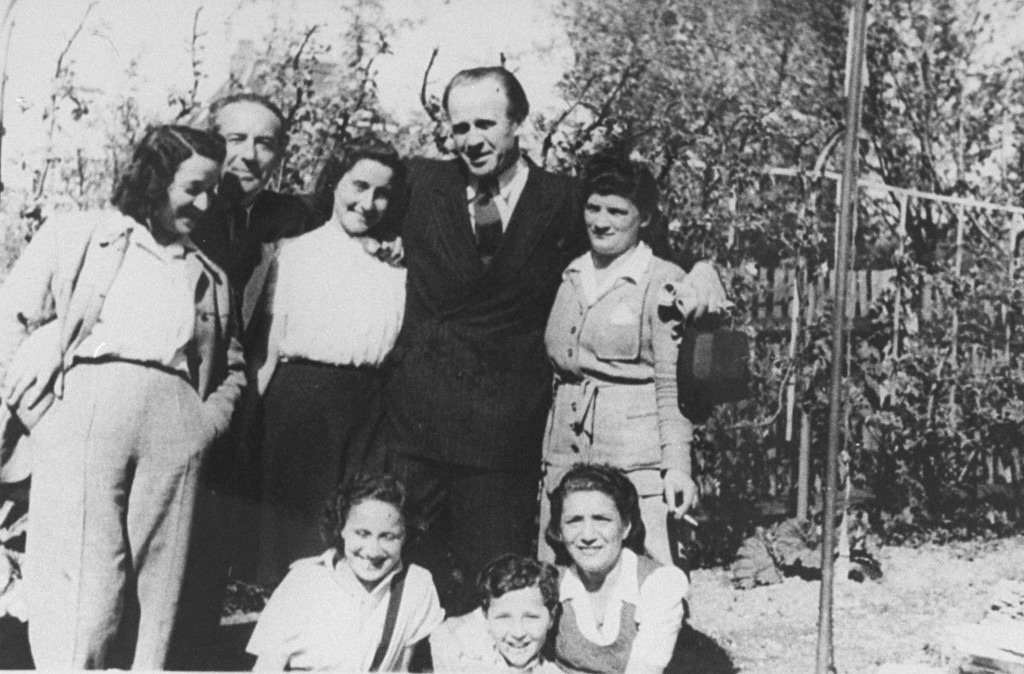
Oskar Schindler, born on April 28, 1908, in Zwittau, Moravia (then part of the Austro-Hungarian Empire, now in the Czech Republic), is a name synonymous with heroism and moral courage during one of history’s darkest periods. Known for his role in saving over a thousand Jews from the horrors of the Holocaust, Schindler’s story is one of transformation, from a businessman and opportunist to a savior who risked everything to protect human lives. This article delves into the life, achievements, and legacy of Oskar Schindler, offering a detailed exploration of his early years, wartime activities, and post-war life, while also considering the broader historical context and nuances that shaped his actions.
Early Life and Education: The Formation of a Controversial Figure
Oskar Schindler was born into a German-speaking Catholic family in Zwittau, Moravia. His father, Johann Schindler, was a successful businessman, and his mother, Franziska Luser, was a homemaker. Schindler’s early years were marked by relative affluence, but his life took a turbulent turn during his adolescence. He attended a technical school but was expelled in 1924 for forging his report card. This event was indicative of the rebellious and opportunistic streak that would characterize much of his early life.
After completing his education, albeit without the prestigious Abitur diploma that would have allowed him to attend university, Schindler worked for his father’s business. However, the economic difficulties of the post-World War I era, combined with his father’s struggles with alcoholism, led to the family business’s collapse. Schindler’s early experiences of financial instability and moral ambiguity would later play a role in his complex personality during the Nazi era.
The Path to Nazism: Schindler’s Early Political Involvement
In the 1930s, Oskar Schindler’s life was marked by a series of personal and professional challenges. He married Emilie Pelzl in 1928, but his marriage, like many aspects of his life, was fraught with difficulties. He engaged in various business ventures, none of which were particularly successful, and his personal life was marred by infidelity and alcohol abuse.
Schindler’s political inclinations also began to take shape during this period. In 1935, he joined the Sudeten German Party, a pro-Nazi organization that sought the annexation of the Sudetenland by Germany. This political alignment was motivated more by opportunism than ideology, as Schindler sought to gain favor with the rising Nazi power. His involvement with the Nazis deepened in 1936 when he became a spy for the Abwehr, the German military intelligence agency. Schindler’s work for the Abwehr involved gathering information on Czechoslovak military installations, a task that put him at significant personal risk but also aligned him with the Nazi regime.
In July 1938, Schindler was arrested by the Czechoslovak authorities for espionage but was released later that year following the Munich Agreement, which ceded the Sudetenland to Germany. By November 1939, Schindler had officially joined the Nazi Party, solidifying his ties to the regime.
The War Years: Schindler’s Transformation and the Rescue of the Jews
The outbreak of World War II marked a significant turning point in Oskar Schindler’s life. As the Nazis invaded Poland in September 1939, Schindler moved to Kraków, where he took over an enamelware factory, Deutsche Emailwarenfabrik (DEF), previously owned by Jewish businessmen. Initially, Schindler’s motives were purely financial; he saw an opportunity to profit from the war by producing goods for the German military.
However, as the war progressed, Schindler witnessed the brutal treatment of Jews in Kraków, particularly during the liquidation of the Kraków Ghetto in 1943. This experience profoundly affected him, leading to a dramatic shift in his priorities. Schindler began to use his factory as a means of protecting Jews from deportation to concentration camps. He employed Jewish workers, arguing to Nazi officials that their labor was essential to the war effort. This strategy allowed him to shelter more than 1,200 Jews, who came to be known as the “Schindlerjuden” or “Schindler’s Jews.”
One of the most significant events in Schindler’s rescue efforts occurred in 1944 when he negotiated with Amon Goeth, the commandant of the Plaszow concentration camp, to transfer his Jewish workers to a new factory in Brünnlitz, in Czechoslovakia. This move was crucial in saving their lives, as it took them out of the immediate reach of the Nazi killing machine. Schindler’s actions during this period were not without personal risk; he frequently bribed Nazi officials and used his own money to buy supplies and food for his workers.
Schindler’s most dramatic intervention came when a train carrying his female workers was mistakenly redirected to Auschwitz. Upon learning of this, Schindler rushed to the death camp, where he used a combination of bribes and persuasion to secure the release of the women and bring them safely to Brünnlitz. This act of courage further solidified his reputation as a savior of Jews during the Holocaust.
Post-War Life: The Decline of a Hero
The end of World War II brought mixed fortunes for Oskar Schindler. He was celebrated by the Jews he had saved, but his post-war life was marked by financial difficulties and personal struggles. Schindler and his wife Emilie fled to Argentina in 1949, where they attempted to start a new life as farmers. However, the venture was unsuccessful, and Schindler filed for bankruptcy in 1958.
By this time, Schindler’s marriage had also deteriorated, and he returned to Germany alone. Despite his heroic actions during the war, Schindler struggled to find stable employment. He attempted to restart his business career, but each endeavor ended in failure. His financial difficulties were compounded by his continued struggles with alcohol, and he spent his later years relying on financial support from Jewish organizations and the “Schindlerjuden” he had saved.
In 1962, Schindler made his first visit to Israel, where he was welcomed as a hero by the Jewish community. He was honored with the title “Righteous Among the Nations” by Yad Vashem, Israel’s official memorial to the victims of the Holocaust. Despite this recognition, Schindler’s later years were marked by poverty and declining health. He died on October 9, 1974, in Hildesheim, Germany, at the age of 66. In accordance with his wishes, he was buried in Jerusalem on Mount Zion, the only member of the Nazi Party to be honored in this way.
Legacy and Cultural Impact: The Schindler’s List Phenomenon
Oskar Schindler’s story might have remained a relatively obscure chapter in the history of the Holocaust if not for the efforts of Australian author Thomas Keneally, who published the novel “Schindler’s Ark” in 1982. The book, based on extensive interviews with “Schindlerjuden,” brought Schindler’s story to a global audience and was later adapted into the 1993 film “Schindler’s List,” directed by Steven Spielberg.
The film was a critical and commercial success, winning seven Academy Awards, including Best Picture and Best Director. Liam Neeson’s portrayal of Schindler highlighted the complexity of his character—a man driven by personal flaws and moral ambiguities, yet capable of extraordinary compassion and bravery. The film also brought attention to the broader issues of the Holocaust, human rights, and the moral responsibilities of individuals in times of crisis.
“Schindler’s List” has since become an iconic representation of Holocaust memory and education, with Schindler’s story serving as a powerful example of the impact that one person’s actions can have in the face of overwhelming evil. The film’s success also sparked renewed interest in the study of the Holocaust and the stories of those who resisted Nazi persecution, ensuring that Schindler’s legacy would be remembered by future generations.
Conclusion
Oskar Schindler’s life is a testament to the complexities of human nature and the capacity for change. Born into a world of privilege and shaped by a life of moral ambiguity, Schindler ultimately rose to the challenge of his time, risking everything to save over a thousand Jews from certain death. His actions during the Holocaust have earned him a place among history’s greatest humanitarians, even as his post-war life reminds us of the difficulties faced by those who confront evil and survive.
Schindler’s story continues to inspire and educate, serving as a powerful reminder of the impact that one individual can have in the face of injustice. As we reflect on his life, we are reminded of the importance of moral courage, the complexities of human motivation, and the enduring need to stand up for what is right, even in the darkest of times.


