
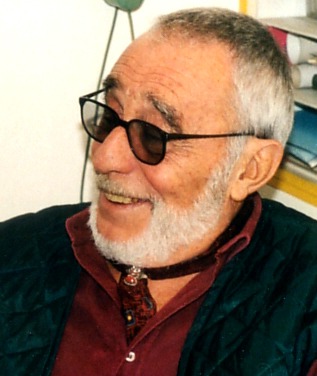
Osvaldo Cavandoli, better known by his artistic name “Cava,” was born on January 1, 1920, in Maderno sul Garda (now Toscolano Maderno), Italy. Although his birthplace was a small town, Cavandoli spent most of his life in Milan, where he became one of the most influential figures in the world of animation. Best known for creating the iconic character “La Linea,” Cavandoli’s work transcended borders, gaining international recognition for its simplicity, humor, and innovative style. This article explores the life, career, and enduring legacy of Osvaldo Cavandoli, a pioneer in animation whose influence is still felt today.
Early Life and Technical Training
Osvaldo Cavandoli’s early life was shaped by the industrial environment of Northern Italy. He attended a vocational school, where he received training that would later prove invaluable in his career as an animator. At the age of 18, Cavandoli began working as a technical draftsman for Alfa Romeo, a prestigious automotive company based in Arese. His technical skills and attention to detail were further honed at Cemsa in Saronno, a company that produced railway carriages before converting to a wartime factory during World War II.
The experience Cavandoli gained as a draftsman equipped him with the ability to design and engineer the cameras and equipment he would later use in his animation projects. During these early years, Cavandoli also began publishing political satire cartoons, showcasing his budding talent for drawing and humor.
World War II disrupted Cavandoli’s life, as it did for many Italians. Due to a childhood accident that left him blind in one eye, Cavandoli was not eligible for military service. To avoid being conscripted by German forces, he went into hiding, a period that undoubtedly influenced his later work, where themes of resilience and creativity under pressure would emerge.
Introduction to Animation and Early Career
With the end of World War II, Osvaldo Cavandoli found a new direction in his career. He was hired by the Pagot brothers, pioneers in Italian animation who were seeking staff for a new animated film project. This opportunity marked the beginning of Cavandoli’s lifelong passion for animation. He started as an in-betweener, working on the production of the short film “Lalla, piccola Lalla…” (1947) and the feature-length “I fratelli Dinamite” (1949). These films were among the first color animated movies in Italian cinema, giving Cavandoli invaluable experience in the emerging field of animation.
However, when Studio Pagot closed in 1950, Cavandoli decided to strike out on his own. He founded Pubblifilm, a company dedicated to producing animated commercials. Despite his innovative ideas, Pubblifilm struggled to compete in the highly competitive advertising market and eventually closed. Undeterred, Cavandoli partnered with his friend Ugo Moroni to open a new studio, Pupilandia, specializing in puppet animation. Together, they produced around 20 films for various cinematic advertisements, but as television began to replace cinema as the dominant medium for advertising, demand for such films waned, leading to the dissolution of Pupilandia in 1956.
The Carosello Era: Success in Advertising
The mid-1950s marked a turning point in Cavandoli’s career. He began working for various production studios, creating “finalini” (end pieces) for commercials featured in Carosello, Italy’s most popular television advertising program. Carosello was unique in that it featured mini-episodes of storytelling that concluded with a brief advertisement, a format that allowed animators like Cavandoli to flex their creative muscles.
In 1965, Cavandoli returned to character animation, working on commercials for La Mucca Carolina, an iconic character for the Invernizzi dairy company, alongside Pier Luigi De Mas and Giuseppe Laganà. He also collaborated with Marco Biassoni on the Gran Pavese commercials, creating animations that were both entertaining and memorable. These experiences further refined Cavandoli’s skills in blending storytelling with commercial appeal.
The Birth of “La Linea”
By the late 1960s, Osvaldo Cavandoli was ready to create something entirely his own. In 1969, he developed a character that would become one of the most recognizable figures in animation history: “La Linea.” The concept was simple yet ingenious—a character drawn from a single, continuous line. Cavandoli proposed the character to several advertising agencies before Emilio Lagostina, an art collector and the owner of Lagostina cookware, recognized its potential. Lagostina adopted La Linea as the mascot for their brand, and the character quickly became a household name, thanks to its appearances on Carosello.
La Linea’s appeal lay in its simplicity and the universality of its humor. The character, a grumpy, ever-complaining man, navigates a world that is literally drawn around him, often finding himself at odds with the very line that forms his existence. The minimalist design allowed for rapid animation, which was crucial for television advertising, and the character’s antics resonated with audiences both in Italy and internationally.
Cavandoli described his approach to creating La Linea: “I sought to simplify because I loved to create beautiful movement rather than just drawing for the sake of drawing. So I began experimenting with something that would allow me to express myself quickly.” This philosophy of prioritizing motion and humor over intricate design became the hallmark of La Linea.
International Recognition and Later Works
As La Linea’s popularity soared, Cavandoli repackaged the character’s commercial segments into three-minute shorts, stripping them of any direct advertising references. These shorts found a receptive audience across Europe and beyond, particularly in countries like Germany, France, and even the Soviet Union, where the character’s universal appeal transcended language barriers.
However, in Italy, La Linea faced challenges due to its strong association with the Lagostina brand. The Italian state television network, RAI, was reluctant to air the non-commercial shorts, fearing they would be perceived as indirect advertising. Despite this, Cavandoli’s character continued to enjoy success abroad, and new episodes were commissioned over the years, ensuring La Linea’s place in the pantheon of animation.
Between 1983 and 1985, Cavandoli expanded his repertoire by directing several episodes of “Pimpa,” a popular animated series about a talking dog with red polka dots, based on the comic strip by Altan. This work further cemented Cavandoli’s reputation as a versatile animator capable of appealing to audiences of all ages.
In 1997, La Linea made a brief return to Italian television, appearing in a Pinocchio-themed opening sequence for a program hosted by Gad Lerner on RAI. This appearance demonstrated the character’s enduring appeal and the public’s affection for Cavandoli’s creation.
Legacy and Final Years
Osvaldo Cavandoli’s contributions to animation were widely recognized in his later years. In 2006, he was honored at the Annecy International Animation Film Festival, where he was celebrated as one of the world’s greatest humorists and animators. The festival’s opening ceremony was a fitting tribute to a man whose work had entertained and inspired millions.
Cavandoli passed away on March 3, 2007, in his Milan apartment, leaving behind a legacy that continues to influence animators and entertain audiences worldwide. His work, particularly La Linea, is studied in animation schools and admired for its innovation, simplicity, and universal humor.
The Enduring Appeal of “La Linea”
“La Linea” remains a cultural icon, celebrated for its minimalist design and the way it revolutionized animation. The character’s ability to convey emotion and humor with just a single line is a testament to Cavandoli’s genius. The series has been broadcast in over 40 countries, translated into multiple languages, and remains popular on platforms like YouTube, where new generations continue to discover the character.
Cavandoli’s approach to animation was ahead of its time, focusing on movement, timing, and the power of simplicity long before these concepts became standard in the industry. His work laid the groundwork for future animators who sought to combine artistic innovation with commercial viability.
Conclusion
Osvaldo Cavandoli’s life and career are a testament to the power of creativity and perseverance. From his humble beginnings as a technical draftsman to his rise as an internationally acclaimed animator, Cavandoli’s journey was marked by a passion for storytelling and an unyielding commitment to his craft. His creation, “La Linea,” continues to be a beloved figure in the world of animation, a character that transcends language and cultural barriers to bring joy to audiences around the globe.
As we reflect on Cavandoli’s contributions to the world of animation, it is clear that his work will continue to inspire and entertain for generations to come. His ability to distill complex emotions and humor into the simplest of forms is a reminder of the universal power of art, and his legacy as a pioneer in animation is secure.


