
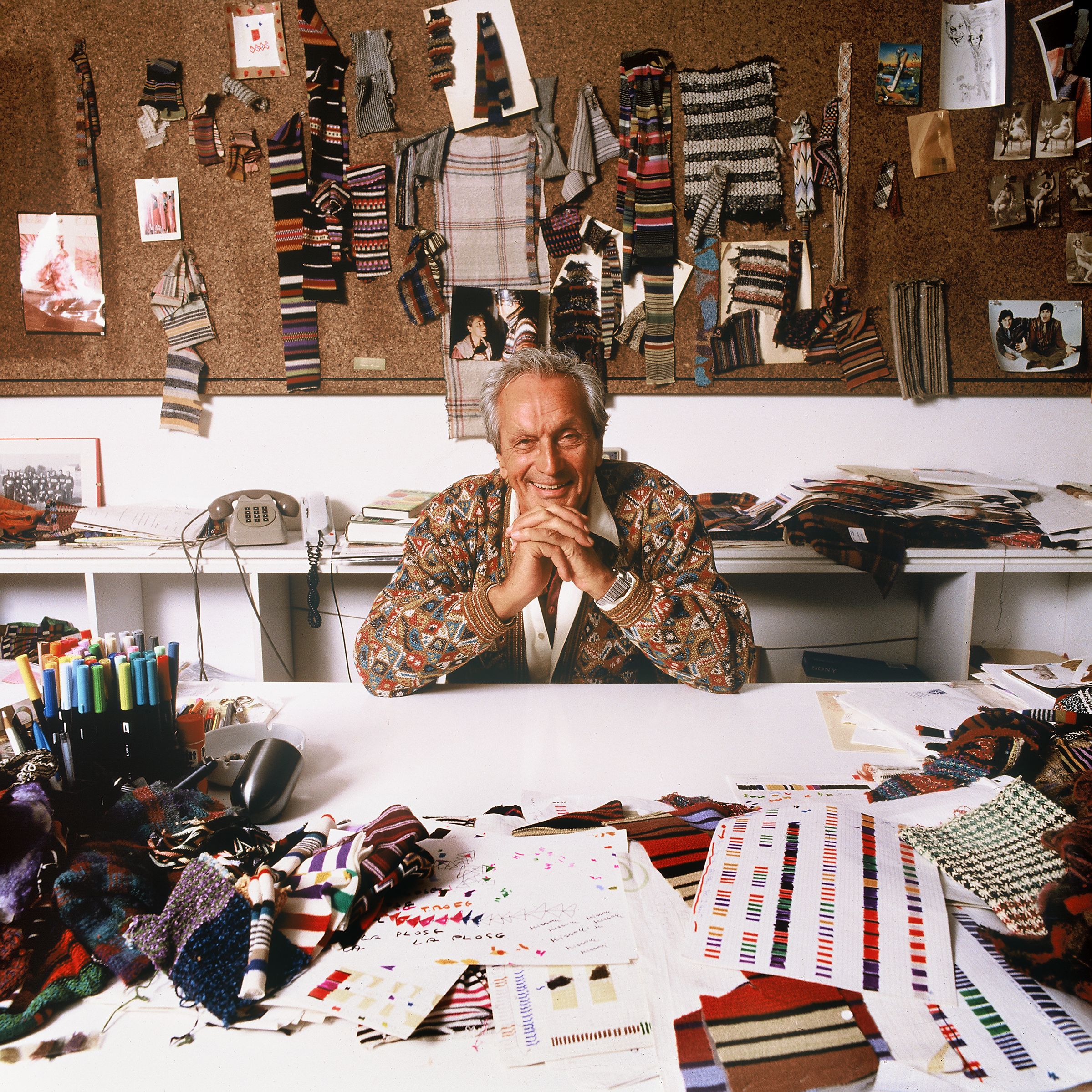
Ottavio Missoni, born on February 11, 1921, in Ragusa of Dalmatia (now Dubrovnik, Croatia), is a name that resonates deeply within the world of fashion and athletics. Known primarily as a fashion designer who revolutionized knitwear with his vibrant patterns and unique designs, Missoni’s life was a tapestry woven with threads of athleticism, creativity, and entrepreneurship. His journey from an athlete to a globally recognized fashion icon is one of perseverance, innovation, and an unwavering commitment to his craft. This article delves into the life of Ottavio Missoni, his rise to fame, his contributions to the world of fashion, and the historical and cultural context that shaped his legacy.
Early Life and Athletic Beginnings
Ottavio Missoni was born into a culturally rich and diverse environment. His father, Vittorio Missoni, was of Friulian descent, and his mother, de’ Vidovich, hailed from an ancient and noble Dalmatian family from Sebenico. These diverse cultural influences played a significant role in shaping Missoni’s aesthetic sensibilities, which would later become evident in his work as a fashion designer.
From a young age, Missoni displayed a passion for sports, particularly athletics. His dedication to track and field saw him rise quickly through the ranks, and by 1935, he was wearing the Italian national colors, specializing in the 400 meters and 400-meter hurdles. His athletic prowess earned him eight Italian national titles and international recognition, including a gold medal at the World Student Championships in Vienna in 1939.
However, the outbreak of World War II disrupted his promising athletic career. Missoni served in the Italian military during the war and participated in the Battle of El Alamein. Unfortunately, he was captured by Allied forces and spent four years in a prisoner of war camp in Egypt. These years of hardship and survival would profoundly influence his later life, instilling in him a resilience and determination that would serve him well in his post-war endeavors.
Post-War Years: A Return to Athletics and the Beginnings of a Fashion Empire
After the war, Ottavio Missoni returned to Italy, where he resumed his athletic career. He competed in the 1948 London Olympics, reaching the finals in the 400-meter hurdles and securing a sixth-place finish. He also participated as a member of the Italian 4×400 meter relay team. These achievements marked the pinnacle of his athletic career, but they also signaled a turning point, as Missoni began to explore new avenues for his talents.
In the years following the war, Missoni moved to Milan, where he worked sporadically as a model for photo novels, a popular medium at the time. It was in Milan’s vibrant cultural scene that he met Rosita Jelmini, a woman who would become his life partner and business collaborator. Rosita came from a family that owned a successful shawl and embroidered fabric business in Golasecca, Varese. Their shared passion for textiles and design laid the foundation for what would become one of the most iconic fashion brands in the world.
In 1953, Ottavio and Rosita Missoni married and soon after established a small knitwear workshop in Trieste. Partnering with Giorgio Oberwerger, a close friend and fellow athlete, they began producing high-quality knitwear. The workshop’s early successes led the couple to relocate their operations to Sumirago, Varese, where they focused entirely on building their brand. Rosita took on the role of designer, while Ottavio, with his eye for color and pattern, contributed to the development of the distinctive Missoni aesthetic.
The Birth of the Missoni Brand: Innovation and Success
The Missoni brand began to gain traction in the early 1960s, with their designs appearing in major fashion magazines. The breakthrough came in 1962 when the Missonis began using the Rachel knitting machine, initially designed for making shawls, to create lightweight, colorful garments. This innovation led to the creation of the iconic Missoni zigzag pattern, characterized by its vibrant colors and intricate designs. The brand’s aesthetic, blending traditional craftsmanship with modern design, quickly set it apart in the fashion world.
The 1960s were a period of rapid growth for the Missoni brand. The couple’s unique approach to knitwear caught the attention of influential figures in the fashion industry, leading to collaborations with top designers and appearances in prestigious fashion shows. In 1967, Missoni made their debut at the Palazzo Pitti in Florence, where their collection was met with critical acclaim. However, an unexpected wardrobe malfunction, where models appeared braless due to the transparency of the knitwear under the lights, caused a minor scandal. Despite the controversy, the show solidified Missoni’s reputation as an innovative and daring brand.
The 1970s saw the continued expansion of the Missoni empire. In 1976, the first Missoni boutique opened in Milan, offering a full range of the brand’s products. The boutique’s success was followed by further expansion into international markets, with stores opening in major fashion capitals around the world. Missoni’s designs, known for their distinctive patterns and luxurious materials, became synonymous with Italian fashion and elegance.
Cultural Impact and Legacy
Ottavio Missoni’s influence extended beyond the fashion world. His approach to design was deeply rooted in his cultural heritage and personal experiences. The vibrant colors and intricate patterns that defined Missoni’s aesthetic were a reflection of the landscapes and cultures that shaped his early life. The brand’s commitment to quality and craftsmanship also reflected the values instilled in Missoni by his family and upbringing.
Missoni’s contributions to fashion were recognized with numerous awards and honors. In 1983, Ottavio Missoni designed the costumes for the premiere of “Lucia di Lammermoor” at La Scala, one of Italy’s most prestigious opera houses. His work in fashion was further acknowledged in 1986 when he was awarded the title of Commendatore of the Italian Republic, one of the highest honors in Italy.
Despite his success, Ottavio Missoni remained humble and down-to-earth. He often joked about fashion, saying, “To dress badly, you don’t need to follow fashion, but it helps.” This light-hearted approach to his work endeared him to many and contributed to the brand’s enduring appeal. The French painter Balthus once described Missoni as the “Master of Color,” a title that perfectly encapsulated his genius for blending hues and patterns in a way that was both innovative and timeless.
Later Years and Personal Struggles
The Missoni brand continued to flourish throughout the 1980s and 1990s, with the next generation of the Missoni family gradually taking on more prominent roles within the company. Ottavio and Rosita’s children, Vittorio, Luca, and Angela, each brought their unique talents to the family business, ensuring its continued success.
However, the Missoni family was not without its share of tragedies. On January 4, 2013, Vittorio Missoni, Ottavio and Rosita’s eldest son, disappeared along with five others when their plane vanished over the Los Roques archipelago in Venezuela. The incident was a devastating blow to the Missoni family and the fashion world. The loss of Vittorio, who had been a key figure in the company’s international expansion, marked a dark chapter in the brand’s history.
The grief of losing his son took a toll on Ottavio Missoni’s health. In April 2013, he was hospitalized for heart failure. Despite his resilience and the strength he had shown throughout his life, Ottavio Missoni passed away on May 9, 2013, at the age of 92, at his home in Sumirago. His death marked the end of an era, but his legacy lives on through the Missoni brand and the countless lives he touched through his work.
The Enduring Legacy of Ottavio Missoni
Ottavio Missoni’s life and career are a testament to the power of creativity, innovation, and perseverance. From his early days as a champion athlete to his rise as a fashion icon, Missoni’s journey was characterized by a relentless pursuit of excellence and a deep passion for his craft. His contributions to fashion, particularly in the realm of knitwear, have left an indelible mark on the industry, and his influence can still be seen in the designs of today.
The Missoni brand, now led by the next generation of the Missoni family, continues to thrive, maintaining the values and aesthetic principles that Ottavio and Rosita established over half a century ago. The brand’s commitment to quality, craftsmanship, and innovation ensures that the Missoni legacy will endure for many years to come.
In a world where fashion is often fleeting, Ottavio Missoni’s work stands as a reminder of the enduring power of creativity and the importance of staying true to one’s roots. His life story, filled with triumphs, challenges, and unwavering dedication, serves as an inspiration to aspiring designers, entrepreneurs, and anyone who dares to dream big.


