
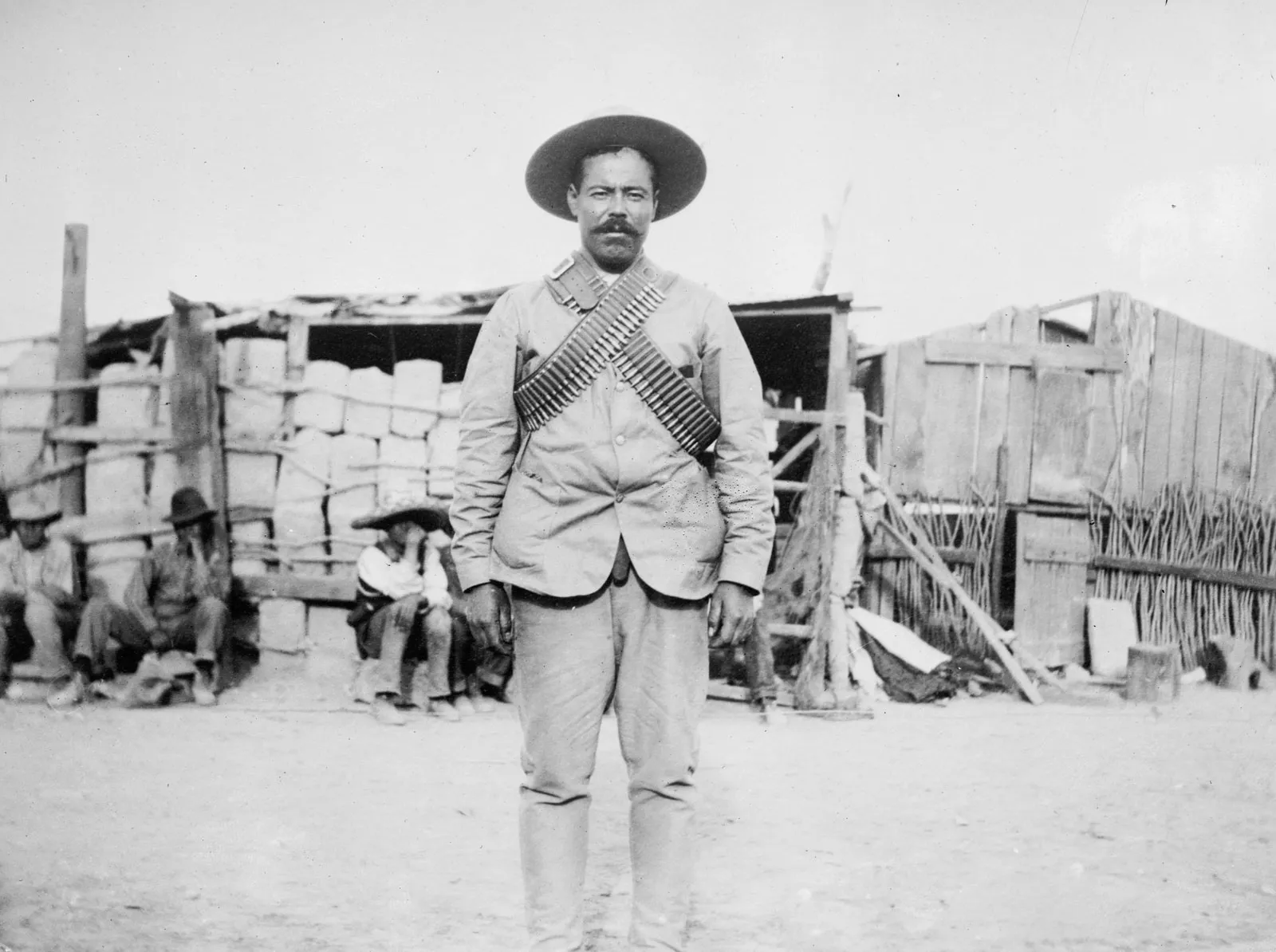
Pancho Villa, born José Doroteo Arango Arámbula on June 5, 1878, in San Juan del Rio, Durango, Mexico, is one of the most emblematic figures of the Mexican Revolution. His life, marked by a blend of outlaw activity and revolutionary leadership, has been the subject of much debate and interpretation. His name is often synonymous with the struggle against oppression and the fight for justice, making him a symbol of both the complexities and contradictions of revolutionary movements.
Early Life and Background
Pancho Villa’s early life was far from the revolutionary path that would later define him. Born into a poor peasant family, Villa faced the harsh realities of rural life in Mexico during the late 19th century. The social inequalities and oppressive landownership structures of the time were pivotal in shaping his worldview. These formative experiences are crucial in understanding the motivations behind his later actions as a revolutionary leader.
Villa’s transition from a humble peasant to a notorious bandit is a narrative filled with both hardship and resilience. His early involvement in banditry, often portrayed as a response to personal injustices, set the stage for his emergence as a revolutionary figure. This period of his life has been romanticized in many ways, casting him as a Mexican Robin Hood who stole from the rich to aid the poor. However, it’s important to recognize that Villa’s outlaw years were also a survival strategy in a country where law and order were often tools of the powerful.
The Mexican Revolution and Villa’s Rise to Power
The Mexican Revolution, which began in 1910, was a response to the 30-year dictatorship of Porfirio Díaz. The revolution was a complex conflict driven by a range of social, economic, and political factors. For Villa, it was an opportunity to channel his anger and skills as a guerrilla fighter into a cause that resonated with the broader struggles of the Mexican peasantry.
Villa’s participation in the revolution was not merely the work of a bandit looking for legitimacy. He quickly became a leader of a formidable guerrilla force in the northern state of Chihuahua. His military campaigns during this period were characterized by swift and brutal tactics, which earned him both admiration and fear. Villa’s forces played a crucial role in the defeat of the Díaz regime, contributing significantly to the victory of the liberal-progressive faction led by Francisco Madero.
However, Villa’s relationship with Madero’s government was complex. Initially, Villa supported Madero, who represented the aspirations of the middle and lower classes against the entrenched elites. But the relationship soured, particularly after Madero’s assassination in 1913. This event marked a turning point in Villa’s life, as it deepened his distrust of political elites and fueled his commitment to the revolutionary cause.
Villa’s Role in the Post-Revolutionary Period
After Madero’s death, Mexico descended into a period of intense internal conflict. Villa found himself at odds with Venustiano Carranza, another revolutionary leader who Villa perceived as too moderate and too willing to compromise with the very forces the revolution sought to overthrow. Villa’s insistence on radical reforms, particularly in land redistribution, put him in direct conflict with Carranza’s government.
In alliance with another revolutionary leader, Emiliano Zapata, Villa continued to push for the fulfillment of the revolutionary ideals that had inspired the uprising. Together, Villa and Zapata represented the more radical, agrarian-focused wing of the revolution, in contrast to the more moderate, urban-oriented faction led by Carranza. This period was marked by a series of battles and political maneuvers as different factions vied for control of the country.
Despite some early successes, Villa’s forces eventually suffered significant defeats, particularly at the hands of General Álvaro Obregón, a skilled military tactician who supported Carranza. The defeat at the Battle of Celaya in 1915 was a devastating blow to Villa’s ambitions and marked the beginning of his decline as a military leader.
The Later Years and Villa’s Assassination
After his military defeats, Villa retreated into a more isolated form of guerrilla warfare. His activities during this period were less about grand military campaigns and more about survival and maintaining a presence in the ongoing revolutionary struggles. Villa’s decline in military power did not diminish his symbolic importance, however. He remained a figure of resistance and a reminder of the unfulfilled promises of the revolution.
In 1920, Villa agreed to lay down arms in exchange for amnesty from the government of Adolfo de la Huerta. This agreement allowed Villa to retire to a quiet life on a ranch in Durango. However, his retreat from public life was short-lived. On July 20, 1923, Villa was assassinated in Parral, Chihuahua, under circumstances that remain controversial to this day.
Villa’s assassination was officially attributed to a personal vendetta, a common explanation for politically motivated killings in that era. However, many historians believe that Villa’s death was orchestrated by political elites who feared his continued influence among the rural poor and his potential to inspire further unrest. The exact motives behind his assassination remain a topic of debate, but it is clear that his death marked a significant turning point in the history of the Mexican Revolution.
Villa’s Legacy and Historical Interpretation
Pancho Villa’s legacy is as complex as the man himself. On one hand, he is celebrated as a hero of the Mexican Revolution, a champion of the poor, and a symbol of resistance against oppression. On the other hand, his methods, which included acts of violence and retribution, have led to a more nuanced evaluation of his role in history.
The debate over Villa’s legacy reflects broader questions about the nature of revolution and the role of violence in achieving social change. Villa’s actions, like those of many revolutionary leaders, were driven by a combination of personal motives, social injustices, and political aspirations. His life and career raise important questions about the costs and consequences of revolutionary movements.
In the years following his death, Villa’s image has been shaped by a variety of narratives, from the romanticized hero to the brutal bandit. His story has been told and retold in countless books, films, and songs, each interpretation reflecting the values and concerns of the time. In contemporary Mexico, Villa is both a national hero and a reminder of the unfinished business of the revolution.
Conclusion: Pancho Villa’s Enduring Influence
Pancho Villa’s life is a testament to the power of individual agency in the face of structural oppression. His rise from a peasant background to a leader of one of the most significant revolutionary movements of the 20th century underscores the potential for change even in the most challenging circumstances. However, his story also highlights the limits of such change, particularly when faced with the entrenched power structures that Villa fought against.
Villa’s legacy continues to inspire and provoke debate, both in Mexico and beyond. His life and actions offer valuable lessons about the complexities of social change, the role of violence in political movements, and the ways in which history is remembered and interpreted. As a figure of both admiration and controversy, Pancho Villa remains a central figure in the history of the Mexican Revolution and a symbol of the ongoing struggle for justice and equality.


