
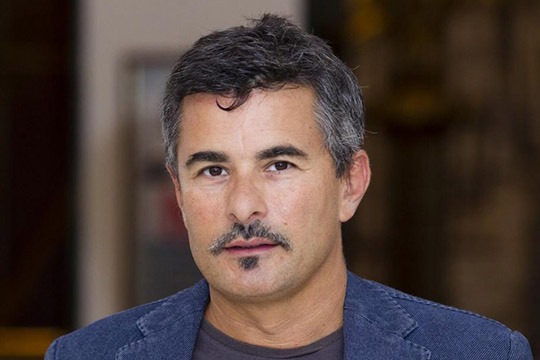
Paolo Genovese is a celebrated Italian film director and screenwriter, renowned for his ability to craft engaging narratives that resonate with audiences both in Italy and internationally. Born on August 20, 1966, in Rome, Italy, Genovese has made a significant impact on contemporary Italian cinema through his unique storytelling style and his keen insight into the complexities of human relationships. His journey from advertising to becoming one of Italy’s most respected filmmakers is a testament to his creativity, determination, and deep understanding of the cinematic art form.
Early Life and Education: Foundations of a Filmmaker
Paolo Genovese was born and raised in Rome, where he attended the prestigious Liceo Ginnasio Statale “Giulio Cesare,” one of the oldest high schools in the city, known for its rigorous academic standards. His early education laid the foundation for his later pursuits in both the arts and academia. Genovese continued his studies at the Sapienza University of Rome, where he earned a degree in Economics and Commerce. Although his formal education was rooted in economics, Genovese’s passion for storytelling and visual arts ultimately guided him toward a career in film.
Genovese’s diverse educational background has been instrumental in shaping his approach to filmmaking. The analytical skills he developed during his economics studies have contributed to his ability to construct tightly woven narratives, while his exposure to classical literature and history during high school has provided him with a deep well of cultural references to draw from in his work.
Early Career: The Transition from Advertising to Cinema
Paolo Genovese began his professional career in the advertising industry, where he worked as an author and director of commercials for McCann Erickson Italia in Milan. This period was crucial in honing his skills as a visual storyteller. Working in advertising allowed Genovese to master the art of conveying complex ideas succinctly, a skill that would later become a hallmark of his filmmaking style.
It was during his time in advertising that Genovese forged a creative partnership with Luca Miniero, another filmmaker who would go on to achieve significant success in the Italian film industry. Together, Genovese and Miniero co-directed several commercials and short films, most notably the short film Incantesimo napoletano (Neapolitan Spell). This collaboration marked Genovese’s first major foray into the world of cinema.
Incantesimo napoletano was a significant turning point for Genovese. The short film, which utilized footage shot by a fellow advertising professional, was re-edited and expanded into a full-length feature film in 2002. The movie was met with critical acclaim, winning a David di Donatello award and two Golden Globes, signaling Genovese’s arrival as a promising new voice in Italian cinema.
Breakthrough in Cinema: Defining a New Era of Italian Comedy
Following the success of Incantesimo napoletano, Genovese continued to collaborate with Miniero on several projects. In 2003, they released Nessun messaggio in segreteria (No Messages on the Answering Machine), a comedy-drama featuring a star-studded cast that included Carlo Delle Piane, Pierfrancesco Favino, and Valerio Mastandrea. The film further solidified Genovese’s reputation as a director capable of blending humor with poignant social commentary.
By 2005, Genovese had transitioned into television, directing the popular series Nati ieri (Born Yesterday), which starred Sebastiano Somma and Vittoria Belvedere. His ability to navigate both television and film underscored his versatility as a storyteller. In 2007, he experimented with a unique format by co-directing Viaggio in Italia – Una favola vera (Journey in Italy – A True Tale) with Miniero. This project, which aired in 20 mini-episodes on the TV show Ballarò, showcased Genovese’s willingness to push the boundaries of traditional storytelling.
Solo Success and the Birth of Iconic Films
The turning point in Paolo Genovese’s career came in 2009 when he embarked on a solo directing project with the film Immaturi (The Immature). The film was a critical and commercial success, marking Genovese’s emergence as a solo director capable of carrying a major film. Immaturi is a comedy that tells the story of a group of adults who are forced to retake their high school final exams 20 years after initially graduating due to a bureaucratic error. The film’s blend of humor and nostalgia resonated with audiences, leading to a sequel, Immaturi – Il viaggio (The Immature: The Trip), in 2012.
What made Immaturi stand out was Genovese’s meticulous attention to detail. He consulted with legal experts to ensure that the film’s premise—adults being forced to retake their exams—was plausible, even if unlikely. He also worked closely with a sexologist to develop the character traits of Ambra Angiolini’s role, ensuring that the portrayal was both accurate and relatable. This dedication to authenticity is a hallmark of Genovese’s work, where he strives to create stories that are both entertaining and grounded in reality.
During this period, Genovese also directed La banda dei Babbi Natale (The Santa Claus Gang) in 2010, a holiday comedy featuring the iconic Italian comedy trio Aldo, Giovanni, and Giacomo. The film was a massive box office success, grossing over 20 million euros and further cementing Genovese’s status as one of Italy’s leading directors.
The 2010s: Exploring New Themes and International Recognition
In the years that followed, Paolo Genovese continued to explore new themes and genres, solidifying his reputation as a director who could handle a wide range of subject matter. In 2012, he released Una famiglia perfetta (A Perfect Family), a dark comedy about a wealthy but lonely man who hires a group of actors to pose as his family for Christmas. The film, starring Sergio Castellitto, received multiple nominations at the David di Donatello Awards, Italy’s equivalent of the Oscars. Although it did not achieve the commercial success of some of his earlier films, it was praised for its originality and depth.
Genovese’s next major success came in 2014 with Tutta colpa di Freud (Blame Freud), a romantic comedy that follows the lives of a psychologist and his three daughters as they navigate the complexities of love and relationships. The film, which starred Marco Giallini, Vittoria Puccini, and Vinicio Marchioni, was well-received by audiences and critics alike, showcasing Genovese’s ability to blend humor with heartfelt emotion.
In 2016, Genovese reached a new pinnacle in his career with the release of Perfetti sconosciuti (Perfect Strangers). The film revolves around a group of friends who, during a dinner party, decide to play a game where they must share all incoming messages and calls on their phones. The game quickly spirals out of control, revealing hidden secrets and testing the limits of their relationships. Perfetti sconosciuti was a massive success, both in Italy and internationally, winning multiple awards, including two David di Donatello awards, two Ciak d’oro awards, a Golden Globe, and a Nastro d’Argento. The film’s central theme—that everyone has three lives: a public life, a private life, and a secret life—resonated with audiences worldwide, leading to numerous remakes in other countries.
Genovese’s ability to tap into universal themes of trust, betrayal, and human vulnerability made Perfetti sconosciuti a standout in his filmography. The film’s success also highlighted Genovese’s skill in creating ensemble casts that deliver powerful, nuanced performances.
Recent Work: Expanding Horizons and Continued Success
Building on the success of Perfetti sconosciuti, Paolo Genovese continued to explore complex human emotions and moral dilemmas in his subsequent work. In 2017, he directed The Place, a psychological drama inspired by the television series The Booth at the End by Christopher Kubasik. The film explores the concept of moral choices, as a mysterious man in a cafe offers to fulfill people’s deepest desires in exchange for them completing challenging tasks. The Place further demonstrated Genovese’s ability to craft thought-provoking narratives that challenge audiences to reflect on their own values and decisions.
In addition to his work in film, Genovese has also been recognized for his contributions to the broader cultural landscape. In 2018, he was awarded the International Artistic and Cinematographic Vincenzo Crocitti Award in the category of “Special Award for Directing.” That same year, he served as a member of the jury for the official section at the 75th Venice International Film Festival, one of the most prestigious film festivals in the world.
Legacy and Influence: A Pioneer of Modern Italian Cinema
Paolo Genovese’s career is marked by a remarkable ability to evolve and adapt, constantly pushing the boundaries of Italian cinema. His films often blend humor with deep social commentary, creating stories that are both entertaining and thought-provoking. Genovese’s work has played a significant role in shaping modern Italian cinema, and his influence extends beyond the borders of Italy, with several of his films being remade and adapted internationally.
Genovese’s dedication to his craft, his willingness to tackle complex and often uncomfortable subjects, and his ability to create characters that resonate with audiences have made him a key figure in contemporary cinema. As a director, he has consistently demonstrated a unique ability to balance commercial success with artistic integrity, earning him both critical acclaim and popular recognition.
Conclusion: Paolo Genovese’s Continued Impact on Cinema
Paolo Genovese’s journey from the world of advertising to becoming one of Italy’s most renowned filmmakers is a testament to his talent, creativity, and dedication to storytelling. Over the years, he has created a diverse body of work that includes comedies, dramas, and psychological thrillers, each marked by his signature blend of humor, insight, and emotional depth.
As Genovese continues to explore new themes and challenge audiences with his films, his legacy as a pioneer of modern Italian cinema is secure. Whether through the exploration of human relationships, the examination of moral dilemmas, or the crafting of intricate narratives, Paolo Genovese remains a vital and influential voice in the world of film.


