
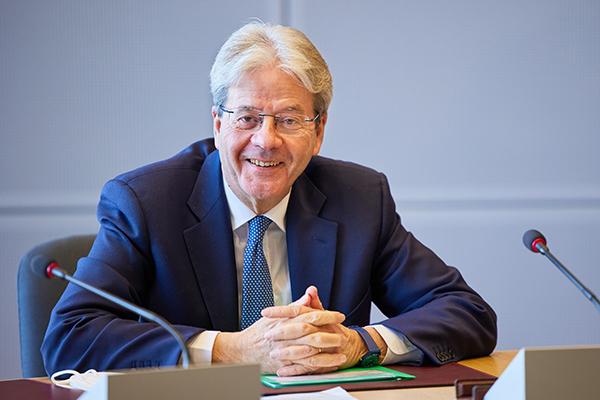
Paolo Gentiloni is a prominent figure in Italian and European politics, known for his calm demeanor, diplomatic skill, and deep commitment to public service. Over the years, he has held several key positions in the Italian government, including that of Prime Minister, and has been a significant player on the European stage as the European Commissioner for Economy. This article delves into Gentiloni’s life, career, and the pivotal moments that have defined his legacy.
Early Life and Background
Paolo Gentiloni Silveri was born on November 22, 1954, in Rome, Italy. He hails from a distinguished lineage, being a descendant of the Gentiloni Silveri family, nobility with roots in the regions of Filottrano, Cingoli, and Macerata. His upbringing was marked by a strong Catholic education, reflecting the values of his family. He attended a Montessori school and later the prestigious Liceo Tasso in Rome. It was during his high school years that Gentiloni first became involved in political activism, participating in student protests and aligning himself with leftist movements.
In November 1970, as a teenager, Gentiloni took part in a student occupation and soon after ran away to Milan to join a political demonstration. This event marked the beginning of his engagement with the broader student movement in Italy, particularly the Movimento Studentesco (Student Movement), led by Mario Capanna. When this movement merged with Democrazia Proletaria, Gentiloni chose to remain with the Movimento Lavoratori per il Socialismo (Workers’ Movement for Socialism), which later integrated into the Partito di Unità Proletaria per il Comunismo (Proletarian Unity Party for Communism).
Gentiloni pursued higher education at the prestigious Sapienza University of Rome, where he graduated with a degree in Political Science. During this time, he became more deeply involved in left-wing activism and began writing for various publications, including Fronte Popolare and Pace e Guerra, both of which were associated with the Italian left.
Early Career in Journalism and Environmental Advocacy
Paolo Gentiloni’s early career was rooted in journalism and environmental activism. In 1984, he became the director of La Nuova Ecologia, the monthly magazine of Legambiente, Italy’s foremost environmental organization. This role allowed him to build a strong network within the environmental movement and the broader leftist political sphere. It was during this period that Gentiloni developed a close relationship with Francesco Rutelli, a key figure in Italian politics who would later become the mayor of Rome.
Gentiloni’s work with Legambiente and his directorship of La Nuova Ecologia solidified his reputation as a committed environmentalist and a skilled communicator. He officially became a professional journalist in 1990, further enhancing his profile in the Italian media landscape.
Entry into Politics and Rise to Prominence
Paolo Gentiloni’s entry into formal politics came through his association with Francesco Rutelli. When Rutelli was elected mayor of Rome in 1993, Gentiloni left his role at La Nuova Ecologia to become Rutelli’s spokesperson. This position provided Gentiloni with invaluable experience in public administration and political strategy.
In 2001, Gentiloni made the leap into electoral politics, successfully running for a seat in the Italian Parliament as a member of Democrazia è Libertà – La Margherita, a centrist party that he helped found. As a Member of Parliament, Gentiloni was involved in key legislative committees, including the IX Commission (Transport, Post, and Telecommunications) and the RAI Oversight Committee. His expertise in communications and media was further recognized in 2005 when he was appointed President of the RAI Oversight Committee, overseeing the public broadcaster’s operations.
Minister of Communications: The Gentiloni Reform
Gentiloni’s first major national role came in 2006 when he was appointed Minister of Communications in the second government of Prime Minister Romano Prodi. As Minister, Gentiloni sought to address some of the most pressing issues in the Italian media landscape, particularly the dominance of private broadcasters in the television market.
One of Gentiloni’s most notable initiatives was the “Gentiloni Reform,” a proposed bill that aimed to reduce the maximum advertising time allowed on television networks from 18% to 16% and mandated that one channel each from the RAI and Mediaset networks transition to digital terrestrial broadcasting by 2009. Although the bill did not pass, it highlighted Gentiloni’s commitment to media reform and his willingness to challenge entrenched interests.
Founding the Democratic Party and Continued Political Career
In 2007, Gentiloni was one of the 45 founding members of the Democratic Party (Partito Democratico), a center-left party that emerged from the merger of several smaller parties, including La Margherita and the Democrats of the Left. The formation of the Democratic Party marked a significant moment in Italian politics, as it sought to unify the center-left under a single banner.
Following the collapse of Prodi’s government in 2008, Gentiloni was re-elected to Parliament, serving during the XVI Legislature. He continued to focus on issues related to media and telecommunications, serving on the same committees he had previously been a part of. In 2009, he also became the President of the Democratic Party’s ICT Forum, further establishing his role as an expert in media and technology policy.
Foreign Minister and Diplomatic Achievements
Paolo Gentiloni’s political career reached new heights in 2014 when he was appointed Minister of Foreign Affairs and International Cooperation in the government of Prime Minister Matteo Renzi. This role placed Gentiloni at the forefront of Italy’s foreign policy, dealing with critical international issues, including the rise of the Islamic State, the crisis in Libya, and the European Union’s response to the migration crisis.
One of Gentiloni’s first acts as Foreign Minister was to establish contact with Italian marines Salvatore Girone and Massimiliano Latorre, who had been detained in India since 2012 following a maritime incident. This move underscored Gentiloni’s commitment to resolving high-stakes international disputes involving Italian citizens.
In February 2015, Gentiloni made headlines when he announced that Italy was prepared to combat the Islamic State in Libya if necessary. This statement was part of a broader Italian strategy to stabilize Libya and address the threats posed by terrorism in the region. Gentiloni’s tenure as Foreign Minister was marked by his diplomatic efforts to strengthen Italy’s role in the Mediterranean and its relationships with key global partners.
Prime Minister of Italy
Paolo Gentiloni’s ascent to the highest office in Italy came in December 2016, following the resignation of Matteo Renzi after the defeat in the constitutional referendum. President Sergio Mattarella entrusted Gentiloni with forming a new government, recognizing his experience, diplomatic skills, and ability to navigate Italy’s complex political landscape.
As Prime Minister, Gentiloni focused on continuing the economic and institutional reforms initiated by Renzi, while also addressing pressing issues such as immigration, economic growth, and Italy’s relationship with the European Union. His government maintained a steady course, avoiding major upheavals and ensuring continuity during a period of political uncertainty.
Gentiloni’s tenure as Prime Minister lasted until June 1, 2018, when a new government was formed following the 2018 general election. Despite the challenges, including managing Italy’s fragile economy and the ongoing migration crisis, Gentiloni was widely respected for his pragmatic approach and calm leadership.
European Commissioner for Economy
In September 2019, Paolo Gentiloni was appointed as the European Commissioner for Economy, a role that placed him at the heart of the European Union’s economic policy-making. This position involves overseeing the EU’s economic policies, including fiscal policy, economic governance, and the implementation of the European Green Deal.
Gentiloni’s appointment came at a critical time for the EU, as it grappled with the economic fallout from Brexit, the challenges posed by digital transformation, and the urgent need for sustainable development. His experience as Italy’s Prime Minister and Foreign Minister equipped him well for this role, where he continues to play a key role in shaping the EU’s economic future.
Legacy and Impact
Paolo Gentiloni’s career is a testament to his enduring commitment to public service and his ability to adapt to the evolving challenges of national and international politics. From his early days as a leftist activist to his leadership roles in the Italian government and the European Commission, Gentiloni has consistently demonstrated a deep understanding of the issues facing his country and the broader European community.
His legacy as Prime Minister is one of stability and continuity, ensuring that Italy remained a key player in the European Union during a time of political and economic uncertainty. As European Commissioner for Economy, Gentiloni continues to influence the direction of EU policy, particularly in areas related to economic sustainability and digital innovation.
Conclusion
Paolo Gentiloni’s journey from a young political activist to one of Italy’s most respected statesmen is a story of dedication, resilience, and service. His contributions to Italian and European politics have left a lasting impact, and his ongoing work as European Commissioner for Economy ensures that his influence will continue to be felt for years to come. As we reflect on Gentiloni’s life and career, it is clear that his commitment to public service and his ability to navigate the complexities of modern politics make him a figure of enduring significance in Italy and beyond.


