
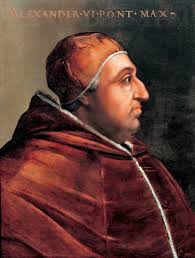
Papa Alessandro VI, born Roderic Llançol Borja y Borya and later Italianized as Rodrigo Borgia, stands out as one of the most controversial figures in the history of the Catholic Church. His papacy, which began in 1492, was marked by a blend of remarkable political acumen, nepotism, and moral ambiguity. This article delves into the life, age, fame, and significant highlights of Pope Alexander VI, offering detailed insights and historical context to better understand his complex legacy.
Early Life and Rise to Power
Birth and Early Education
Rodrigo Borgia was born on January 1, 1431, in Xativa, near Valencia, Spain. His early life was significantly influenced by his family’s connections within the Church. His uncle, Alonso Borgia, who would later become Pope Callixtus III, played a crucial role in Rodrigo’s ascent within the ecclesiastical hierarchy. Young Rodrigo was sent to Italy to pursue his education in jurisprudence at the University of Bologna, a prominent center for legal studies.
Cardinal Appointment
At the remarkably young age of 25, Rodrigo Borgia was appointed as a cardinal by his uncle, Pope Callixtus III. This early elevation laid the foundation for his future ambitions. Even after his uncle’s death in 1458, Rodrigo managed to retain his influential position under subsequent popes, showcasing his ability to navigate the complex and often treacherous waters of Vatican politics.
The Path to the Papacy
Life as a Cardinal
As a cardinal, Rodrigo Borgia’s life was anything but pious. Known for his licentious lifestyle, he fathered several illegitimate children, even before his ascent to the papal throne. His prominent position as the Chancellor of the Holy See from 1457 allowed him to amass significant wealth and influence, making him one of the richest cardinals in Rome.
Ascension to Pope
Rodrigo Borgia’s ambition to become pope culminated in 1492, a year marked by Christopher Columbus’s voyage to the New World. His election was marred by allegations of simony, as he was accused of bribing numerous cardinals with promises of promotions and favors. Nevertheless, once elected, Pope Alexander VI quickly began fulfilling these promises, consolidating his power and rewarding his allies.
Papacy: Achievements and Controversies
Political Maneuvering and Alliances
Pope Alexander VI’s tenure was characterized by his astute political maneuvering. One of his earliest challenges came in 1493 when King Charles VIII of France laid claim to the Kingdom of Naples. To counter this threat, Alexander VI allied with the Aragonese rulers of Naples, creating a coalition to defend his territories. This alliance, however, led to conflict with the French, culminating in a brief occupation of Naples by Charles VIII in 1495.
The Bulla Inter Caetera
In 1493, Alexander VI issued the papal bull “Inter Caetera,” which played a pivotal role in the colonial history of the New World. This decree sought to resolve territorial disputes between Spain and Portugal by dividing newly discovered lands outside Europe between them. The bull granted Spain the rights to territories west of a line drawn 100 leagues west of the Cape Verde islands, effectively excluding Portugal from much of the Americas. This decision was later modified by the Treaty of Tordesillas, which shifted the demarcation line further west, granting Portugal control over Brazil.
Nepotism and Family Influence
One of the most defining aspects of Alexander VI’s papacy was his unabashed nepotism. He appointed his son, Cesare Borgia, as a cardinal at the age of 18. Cesare, however, soon abandoned the clerical life to pursue a career in politics and warfare, becoming the Duke of Valentinois. Alexander VI’s favoritism extended to his other children as well, including his daughter Lucrezia Borgia, who was used as a pawn in his political alliances through strategic marriages.
The French Invasion and the League of Venice
The latter part of Alexander VI’s papacy was dominated by the French invasion of Italy. In response to Charles VIII’s aggressive expansion, Alexander VI formed the League of Venice in 1495, an anti-French coalition comprising the Papal States, Spain, the Holy Roman Empire, Milan, and Venice. This alliance successfully repelled the French, restoring the Aragonese control over Naples.
The Romagna Campaign
Cesare Borgia’s ambitions, supported by his father, led to the Romagna campaign. Cesare sought to carve out a personal dominion in northern Italy, capturing cities like Pesaro, Urbino, Forlì, and Rimini. His ruthless tactics and strategic marriages significantly expanded Borgia influence, although these ambitions were ultimately curtailed by Alexander VI’s death.
Death and Legacy
Controversial Demise
Pope Alexander VI died on August 18, 1503, in Rome, under mysterious circumstances. While the official cause of death was attributed to malaria, rumors of poisoning persisted. Some accounts suggest that the Pope may have accidentally ingested poison intended for another, reflecting the notorious reputation of the Borgia family for using poison to eliminate political rivals.
Historical Impact and Controversy
Alexander VI’s papacy remains one of the most controversial in history. His tenure is often cited as an example of the moral and ethical decay within the Church during the Renaissance. Despite his numerous flaws, Alexander VI’s political acumen and contributions to the geopolitical landscape of his time cannot be overlooked.
Cultural Depictions
The Borgia family’s dramatic rise and fall have been immortalized in various cultural depictions. Alexander VI, in particular, has been portrayed in literature, television, and film, often highlighting the darker aspects of his reign. Niccolò Machiavelli’s “The Prince” provides a vivid account of Cesare Borgia’s exploits, indirectly shedding light on Alexander VI’s influence.
Conclusion
Pope Alexander VI, born Rodrigo Borgia, remains a figure of immense historical significance. His papacy, characterized by political intrigue, nepotism, and moral ambiguity, continues to fascinate historians and the general public alike. While his methods were often questionable, his impact on the Catholic Church and European politics during the Renaissance era is undeniable. Understanding the life and legacy of Alexander VI provides valuable insights into the complexities of power, ambition, and corruption within one of the world’s oldest institutions.
By exploring the nuances and historical context of Alexander VI’s life, we gain a deeper appreciation for the intricate web of relationships and events that shaped his controversial papacy. His story serves as a reminder of the timeless struggle between virtue and vice, power and humility, within the corridors of power.


