
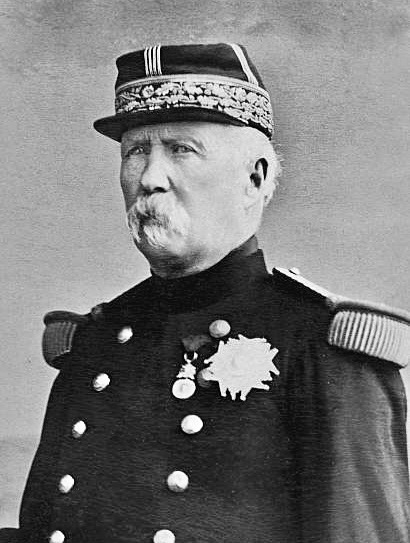
Patrice de Mac-Mahon, a name that resonates with a rich historical legacy, is a figure whose life and career encapsulate the turbulence and transformations of 19th-century Europe. Born on July 13, 1808, in Sully, France, Mac-Mahon was destined to play a significant role in both the military and political spheres of his time. His life story, marked by military valor, political intrigue, and a deep sense of duty, provides a window into an era that shaped modern Europe.
Early Life and Military Career
Marie Edmé Patrice Maurice de Mac-Mahon, the Duke of Magenta, was born into a prominent Catholic Irish family that had sought refuge in France during the turbulent times of the Stuart dynasty in Britain. This lineage of loyalty and service to the crown deeply influenced Mac-Mahon’s upbringing, instilling in him a sense of duty and commitment that would characterize his entire life.
Mac-Mahon’s military career began in the French Army, where he quickly distinguished himself through his bravery and strategic acumen. His early service in Algeria, where he participated in the French colonial campaign, was a proving ground for his leadership skills. By 1858, his success in these campaigns led to his appointment as the Governor of Algeria, a position that solidified his reputation as a capable and effective leader.
The Crimean War and Rise to Prominence
The Crimean War (1853-1856) was a pivotal moment in Mac-Mahon’s career. Sent to Crimea in 1855, he played a crucial role in the siege of Sevastopol, particularly in the Battle of Malakoff, where his leadership was instrumental in the defeat of the Russian forces. This victory not only secured Sevastopol for the Allies but also earned Mac-Mahon the prestigious title of Marshal of France and the Duke of Magenta.
His military successes in Crimea were followed by a significant role in the Italian campaign of 1859, where he led French forces to victory against the Austrians in the Battle of Magenta. This victory was so influential that it not only bolstered his military reputation but also added the title “Duke of Magenta” to his name, a rare and prestigious honor that underscored his importance in the French military hierarchy.
The Franco-Prussian War and the Fall of the Second Empire
Despite his earlier successes, Mac-Mahon’s career was not without its challenges. The Franco-Prussian War (1870-1871) proved to be a turning point, not just for Mac-Mahon but for the entire French nation. As one of the senior commanders of the French Army, Mac-Mahon faced the formidable Prussian military machine under Otto von Bismarck.
The war culminated in the Battle of Sedan in September 1870, where Mac-Mahon’s hesitation and strategic miscalculations led to a disastrous defeat for the French. The loss at Sedan resulted in the capture of Emperor Napoleon III and the collapse of the Second French Empire, marking the beginning of the Third Republic. Although this defeat marred his military record, it did not diminish the respect he commanded within France.
The Presidency and Political Legacy
Following the fall of the Second Empire, France was in a state of political turmoil, with various factions vying for control. In this context, Mac-Mahon, despite his military setback, was seen as a figure of stability and integrity. In 1873, he was elected as the President of the French Republic, becoming the second president of the Third Republic. His election was met with mixed reactions, particularly from those outside France, who viewed his monarchist inclinations with suspicion.
During his presidency, Mac-Mahon faced the delicate task of navigating the complex political landscape of post-imperial France. The annexation of the Papal States by Italy in 1870 had created significant tension, particularly among Catholic nations like France, where there was strong clerical opposition to the unification of Italy. Mac-Mahon, known for his close ties to the Catholic Church, was seen as a potential threat to the new Italian state, and his presidency raised concerns about possible French interference in Italian affairs.
However, Mac-Mahon understood the geopolitical realities of the time. Despite his personal beliefs, he refrained from intervening in Italy, recognizing that any such move would provoke a strong response from Germany, which was allied with Italy in its efforts to curtail the influence of the Catholic Church in state matters. To demonstrate his commitment to non-interference, Mac-Mahon ordered the withdrawal of the French warship “Orénoque” from the port of Civitavecchia, where it had been stationed since 1870 to provide refuge to the Pope if needed.
The Crisis of 1877 and the End of His Presidency
Mac-Mahon’s presidency was marked by a significant political crisis in 1877, which tested the resilience of the nascent Third Republic. In the parliamentary elections of that year, the Republicans secured a majority, challenging Mac-Mahon’s authority. In response, he dissolved the National Assembly and called for new elections, an act that was widely seen as a coup attempt by his opponents.
The 1877 elections, however, resulted in an even stronger Republican victory, forcing Mac-Mahon to confront the reality of his waning influence. Recognizing the futility of further resistance, he resigned from the presidency in January 1879, ending his political career. His resignation marked a decisive moment in French history, as it solidified the dominance of the Republican movement and paved the way for the stabilization of the Third Republic.
Retirement and Death
After his resignation, Mac-Mahon retired to his estate in Montcresson, in the Loire region, where he lived a quiet life until his death on October 16, 1893, at the age of 85. In his memoirs, Mac-Mahon reflected on his life with a sense of humility and loyalty to his country. He famously wrote, “I have remained a soldier, and I can conscientiously say that I have served faithfully one government after another, and when they fell, I regretted them all, except for my own.”
Legacy and Historical Significance
Patrice de Mac-Mahon’s legacy is a complex one, shaped by both his military prowess and his political decisions. As a military leader, he was celebrated for his victories in Crimea and Italy, which earned him a place among the great commanders of his time. His presidency, however, was marked by a struggle to balance his personal beliefs with the demands of a rapidly changing political landscape.
Despite the controversies that surrounded his career, Mac-Mahon is remembered as a man of principle who served his country with honor. His life story offers valuable insights into the challenges faced by leaders during times of political transition, and his experiences continue to resonate in discussions about the role of the military in politics and the nature of leadership.
In the broader context of European history, Mac-Mahon’s life highlights the complexities of the 19th century, a period marked by the decline of empires, the rise of nation-states, and the struggle between tradition and modernity. His career, spanning both the military and political arenas, provides a unique perspective on the forces that shaped modern Europe.
Conclusion
Patrice de Mac-Mahon remains a figure of enduring interest in French history. His life, characterized by military valor, political intrigue, and a deep commitment to his country, offers a rich narrative that reflects the broader historical currents of his time. As we continue to explore the history of the 19th century, Mac-Mahon’s story serves as a reminder of the challenges and complexities faced by those who sought to navigate the turbulent waters of political and social change.


