
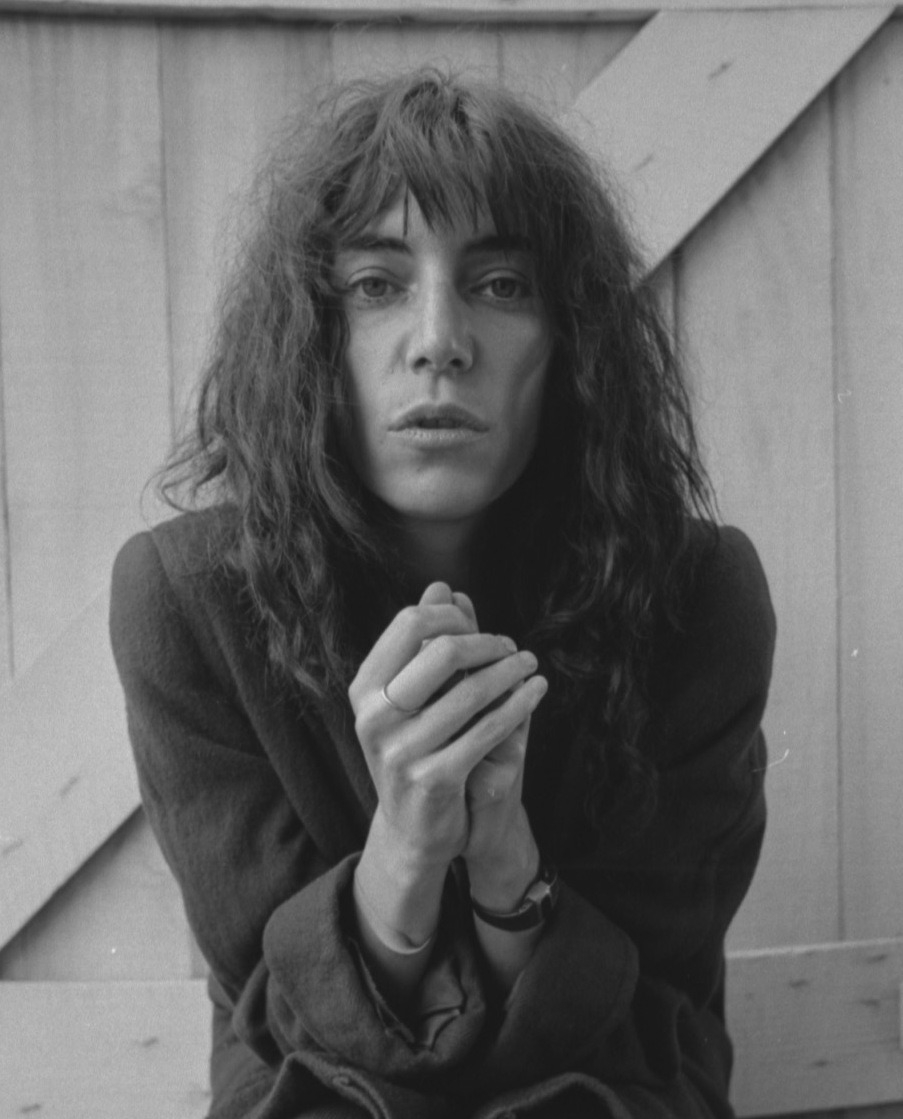
Patti Smith, born Patricia Lee Smith on December 30, 1946, in Chicago, Illinois, is an American singer-songwriter, poet, and visual artist whose work has significantly influenced the music and literary worlds. Often referred to as the “Godmother of Punk,” Smith’s impact transcends genres and generations, making her one of the most iconic and enduring figures in rock history. Her life story is one of artistic innovation, personal resilience, and cultural influence, as she has seamlessly navigated the realms of music, literature, and activism.
Early Life and Influences
Patti Smith’s early life was marked by modest beginnings and a profound sense of individuality. Raised in a working-class family, Smith moved to Philadelphia in her youth before eventually settling in South Jersey. Her upbringing was steeped in a mix of religious teachings and artistic influences, both of which would profoundly shape her worldview and creative output.
From a young age, Smith displayed a deep love for literature and the arts. She was particularly drawn to the works of poets such as Arthur Rimbaud, William Blake, and Allen Ginsberg. These literary influences, combined with her exposure to rock and roll, would later merge into a unique artistic voice that blurred the lines between music and poetry.
Despite the challenges of growing up in a conservative environment, Smith’s rebellious spirit and desire for artistic freedom led her to New York City in 1967. It was in this vibrant and eclectic city that she would begin to forge her path as an artist.
The New York Art Scene
New York City in the late 1960s and early 1970s was a hotbed of artistic experimentation and cultural upheaval. Smith quickly immersed herself in the city’s bohemian art scene, which was populated by artists, writers, and musicians who were pushing the boundaries of creative expression. During this time, she forged important relationships with figures such as Andy Warhol, Sam Shepard, Lou Reed, and Robert Mapplethorpe, the latter of whom would become her lifelong friend and creative collaborator.
Smith’s early years in New York were characterized by a sense of artistic exploration and personal discovery. She initially pursued a career in poetry, performing at various venues around the city. However, it was her growing interest in music that would eventually lead her to a new form of artistic expression. Collaborating with guitarist Lenny Kaye, Smith began to incorporate music into her poetry readings, creating a raw and powerful fusion of spoken word and rock and roll.
Breakthrough with “Horses”
Patti Smith’s breakthrough moment came in 1975 with the release of her debut album, Horses. Produced by John Cale, Horses was a groundbreaking work that defied conventional genre classifications. The album’s opening track, “Gloria,” set the tone with its bold fusion of rock, punk, and poetic lyricism. Smith’s passionate and often visceral vocal delivery, combined with her literary references and punk sensibility, made Horses a seminal work in the emerging punk rock movement.
Horses was not just a musical statement; it was a cultural manifesto. The album challenged the norms of both the music industry and society at large, positioning Smith as a voice for those who felt marginalized or misunderstood. Her androgynous appearance on the album cover, photographed by Robert Mapplethorpe, further reinforced her status as a boundary-breaking artist who refused to conform to traditional gender roles or expectations.
The Godmother of Punk
Following the success of Horses, Patti Smith became a central figure in the burgeoning punk rock scene. Her music, which combined the raw energy of punk with the intellectual depth of poetry, resonated with a generation of young people who were disillusioned with mainstream culture. Smith’s performances were electrifying and often chaotic, embodying the rebellious spirit of punk.
In 1976, she released her second album, Radio Ethiopia, which further solidified her reputation as an innovative and uncompromising artist. The album was a tribute to Arthur Rimbaud, whom Smith considered a kindred spirit and a major influence on her work. While Radio Ethiopia received mixed reviews, it showcased Smith’s willingness to take risks and push the boundaries of her music.
Smith’s collaboration with Bruce Springsteen on the song “Because the Night,” featured on her 1978 album Easter, became one of her most commercially successful releases. The song’s anthemic chorus and passionate lyrics captured the intensity of romantic longing, and it quickly became a staple of Smith’s live performances.
Personal Life and Retreat from the Spotlight
Despite her success, Patti Smith’s life was not without its challenges. In 1979, at the height of her fame, she made the surprising decision to step away from the music industry. Smith married Fred “Sonic” Smith, guitarist of the influential rock band MC5, and the couple moved to Detroit, Michigan, where they started a family. They had two children, Jackson and Jessica, and for a time, Smith devoted herself to domestic life, putting her music career on hold.
The 1980s were a relatively quiet period for Smith in terms of her public output. However, the decade was marked by personal tragedy. In 1994, Fred Smith passed away from a heart attack, a devastating loss that was compounded by the deaths of several of Smith’s close friends and collaborators, including Robert Mapplethorpe and her brother, Todd.
Return to Music and Continued Influence
The loss of her husband marked a turning point for Patti Smith, and she returned to music with a renewed sense of purpose. In 1996, she released the album Gone Again, a deeply introspective work that reflected her grief and resilience. The album was well-received by critics and signaled Smith’s return to the music scene after nearly two decades of relative silence.
In the years that followed, Smith continued to release new music and perform live. Her albums, including Gung Ho (2000), Trampin’ (2004), and Banga (2012), explored themes of spirituality, politics, and social justice, cementing her reputation as an artist who was unafraid to tackle difficult and controversial subjects.
Smith’s influence extended beyond music. Her memoir Just Kids, published in 2010, received widespread acclaim and won the National Book Award for Nonfiction. The memoir, which chronicled her relationship with Robert Mapplethorpe and their early years in New York, resonated with readers for its candid portrayal of artistic life and the bond between two creative souls.
In 2007, Patti Smith was inducted into the Rock and Roll Hall of Fame, a recognition of her significant contributions to music and culture. Her induction speech, in which she honored the memory of her late husband and friends, was a poignant reminder of the personal and artistic journey she had undertaken.
Legacy and Cultural Impact
Patti Smith’s legacy as the “Godmother of Punk” is firmly established, but her influence extends far beyond any single genre. She is a trailblazer who has redefined the role of women in rock music, proving that artistic integrity and commercial success are not mutually exclusive. Her work has inspired countless musicians, poets, and artists who see in her a model of creative authenticity and defiance.
Smith’s ability to blend poetry with music, her commitment to social and political causes, and her refusal to be confined by conventional labels have made her a cultural icon. Her music continues to resonate with new generations of listeners, while her writing and visual art offer further insights into her multifaceted creativity.
In recent years, Smith has continued to engage with the world around her through her art and activism. She remains a vocal advocate for human rights, environmental issues, and peace, using her platform to raise awareness and inspire change.
Conclusion
Patti Smith’s life and career are a testament to the power of artistic expression and the importance of staying true to one’s vision. From her early days as a struggling poet in New York City to her status as a rock legend and cultural icon, Smith has never wavered in her commitment to her art or her beliefs. Her work challenges us to think deeply, to feel passionately, and to live authentically.
As she continues to create and perform, Patti Smith’s influence shows no signs of waning. Her legacy is one of innovation, resilience, and a relentless pursuit of artistic and personal truth. For those who have followed her journey, Patti Smith is not just a musician or a poet; she is a symbol of what it means to live a life dedicated to art and to the pursuit of a higher purpose.


