
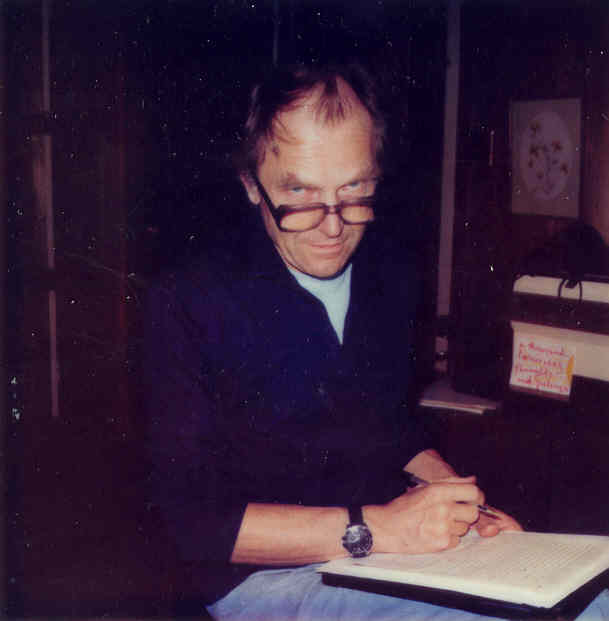
Paul Karl Feyerabend, born on January 13, 1924, in Vienna, Austria, is a figure whose influence on the philosophy of science remains both provocative and enduring. Feyerabend is best known for his advocacy of “epistemological anarchism,” a stance that challenges the very foundations of scientific methodology and argues for a more pluralistic approach to knowledge. His work continues to resonate in contemporary debates about the nature of science, its role in society, and the limits of rationality. This article delves into the life, philosophy, and lasting impact of Paul K. Feyerabend, exploring how his ideas have shaped our understanding of science and its place in the modern world.
Early Life and Academic Background
Born into a middle-class family in Vienna, Paul Feyerabend’s early life was marked by a keen interest in the arts and sciences. His initial academic pursuits were interrupted by World War II, during which he was conscripted into the German army. Feyerabend served on the Eastern Front and was eventually wounded, an experience that left him with a lifelong limp. After the war, Feyerabend returned to Vienna and resumed his studies, eventually earning a doctorate in philosophy under the mentorship of the noted physicist and philosopher Viktor Kraft, a former member of the Vienna Circle.
Feyerabend’s early academic work was influenced by the logical positivism of the Vienna Circle, a group of philosophers who sought to ground scientific knowledge in logical analysis and empirical verification. However, as he continued his studies, Feyerabend grew increasingly critical of this approach, feeling that it was too restrictive and failed to account for the complexity and diversity of scientific practices.
The Shift to Epistemological Anarchism
Feyerabend’s intellectual journey took a significant turn when he moved to England to study at the London School of Economics, where he came under the influence of Karl Popper. Popper’s philosophy of science, which emphasized the falsifiability of scientific theories as the key criterion for scientific progress, had a profound impact on Feyerabend. However, Feyerabend soon began to challenge even Popper’s views, developing his own radical critique of scientific methodology.
In his most famous work, Against Method (1975), Feyerabend argued that there is no single scientific method that guarantees the success or truth of scientific theories. Instead, he claimed that scientific progress often occurs precisely because scientists violate methodological rules. He famously declared that “anything goes” in the pursuit of knowledge, suggesting that the history of science is replete with examples of breakthroughs that occurred by flouting established norms and procedures.
Feyerabend’s “anarchism” in this context does not mean a rejection of all order or structure; rather, it is a rejection of the idea that there is a single, universally applicable method that can be used to generate scientific knowledge. He argued that science should be seen as one among many ways of knowing, and that other forms of knowledge—such as those found in the arts, religion, and traditional cultures—should be given equal consideration.
Key Contributions and Works
Feyerabend’s critique of the scientific method and his defense of pluralism in knowledge production are central themes in his body of work. In addition to Against Method, some of his other significant publications include Science in a Free Society (1978) and Farewell to Reason (1987). These works expand on his criticism of the authoritarianism he perceived in scientific practice and advocate for a more democratic and open-ended approach to knowledge.
In Science in a Free Society, Feyerabend argued that the dominance of science in modern societies is a form of intellectual tyranny, where scientific experts dictate what is considered true or false, often at the expense of other ways of understanding the world. He called for a more inclusive approach that would allow different perspectives—whether they be from non-Western cultures, religious traditions, or alternative forms of inquiry—to coexist and contribute to the collective understanding of reality.
Farewell to Reason further develops Feyerabend’s critique of rationalism, suggesting that the reliance on reason as the sole arbiter of truth is both misguided and limiting. He proposed that reason should be seen as just one tool among many for navigating the world, and that other approaches, including myth, emotion, and tradition, also have valuable roles to play.
The Controversy and Legacy of Feyerabend’s Thought
Paul Feyerabend’s ideas were—and remain—highly controversial. His rejection of a universal scientific method and his defense of epistemological pluralism were seen by many as a threat to the integrity of science. Critics accused him of promoting relativism and undermining the objective pursuit of truth. However, Feyerabend saw his work as a necessary corrective to what he perceived as the dogmatism and elitism of the scientific establishment.
Feyerabend’s work also had a significant impact on the philosophy of science, influencing the development of post-positivist approaches and contributing to the rise of social constructivism and science and technology studies (STS). His ideas encouraged scholars to explore the social, cultural, and historical contexts in which scientific knowledge is produced, and to question the assumption that science is a purely objective and neutral enterprise.
Moreover, Feyerabend’s advocacy for the inclusion of diverse perspectives in the production of knowledge has resonated with broader movements for social justice and decolonization. His work has been cited in discussions about the need to recognize and value indigenous knowledge systems, as well as in debates about the role of science in addressing global challenges such as climate change and public health.
Personal Life and Later Years
Paul Feyerabend was known not only for his intellectual contributions but also for his colorful personality and unconventional lifestyle. He was a passionate and often combative figure, unafraid to challenge established authorities and willing to engage in heated debates with his peers. Despite his reputation as a provocateur, Feyerabend was also known for his warmth and generosity, particularly toward his students.
In the 1960s and 1970s, Feyerabend became involved in the student protest movements that swept across Europe and North America. He sympathized with the calls for greater freedom and democracy in education and was critical of the rigid hierarchies and authoritarian structures that characterized many academic institutions.
Feyerabend’s personal life was marked by a series of relationships and marriages. He was married four times, and his relationships were often as intense and unconventional as his intellectual pursuits. In his later years, Feyerabend’s health began to decline, and he suffered from a series of illnesses that eventually led to his death on February 11, 1994, in his home in Vienna.
The Enduring Impact of Feyerabend’s Philosophy
Paul Feyerabend’s legacy is one of intellectual daring and a relentless questioning of the status quo. His work continues to challenge and inspire scholars, scientists, and thinkers across a wide range of disciplines. While his critiques of science and reason were initially met with skepticism and hostility, they have since gained a broader acceptance as part of the ongoing dialogue about the role of science in society and the nature of knowledge itself.
Feyerabend’s insistence on the importance of diversity in knowledge production and his critique of the authoritarian tendencies within the scientific community remain relevant today. In an era of increasing polarization and debate over the role of science in public life, Feyerabend’s call for a more open and pluralistic approach to knowledge serves as a reminder that the pursuit of truth is not a one-size-fits-all endeavor.
His work challenges us to reconsider our assumptions about what constitutes legitimate knowledge and to be more open to alternative ways of understanding the world. In doing so, Feyerabend has left an indelible mark on the philosophy of science and has contributed to a more inclusive and democratic vision of knowledge.
Conclusion: The Radical Vision of Paul K. Feyerabend
Paul K. Feyerabend was a philosopher who pushed the boundaries of conventional thinking about science, knowledge, and truth. His advocacy for “epistemological anarchism” and his critique of the scientific method were revolutionary in their time and continue to resonate in contemporary discussions about the nature of science and its place in society.
Feyerabend’s work reminds us that the pursuit of knowledge is a complex and multifaceted endeavor, one that cannot be fully captured by rigid methodologies or exclusive claims to truth. By advocating for a more pluralistic and inclusive approach to knowledge, Feyerabend has helped to broaden our understanding of what it means to know and to learn.
As we continue to grapple with the challenges of the 21st century, Feyerabend’s insights into the limits of reason and the importance of diversity in knowledge production are more relevant than ever. His legacy is a testament to the power of questioning, challenging, and expanding our horizons in the quest for understanding.


