
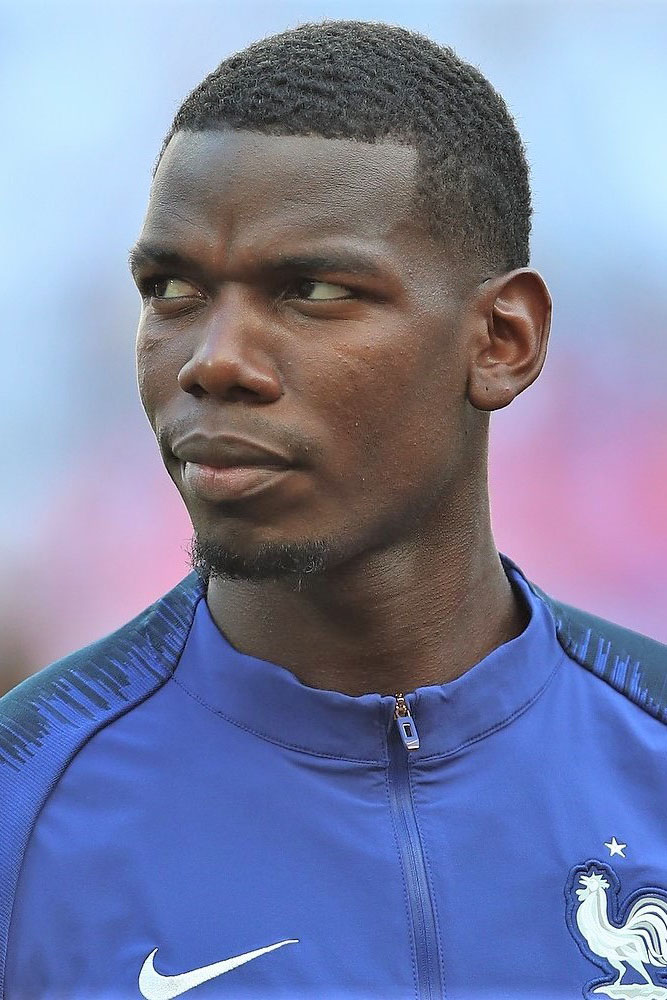
Paul Pogba, born on March 15, 1993, in Lagny-sur-Marne, France, has emerged as one of the most recognizable and influential footballers of his generation. Known for his distinctive style of play, characterized by exceptional skill, strength, and flair, Pogba’s journey from the banlieues of Paris to the world stage is a story of talent, perseverance, and resilience. His career, marked by triumphs and challenges, has solidified his place among football’s elite.
Early Life and Youth Career
Paul Labile Pogba was born to Guinean parents who had immigrated to France in search of better opportunities. He grew up alongside his older twin brothers, Mathias and Florentin, both of whom would also pursue careers in professional football. From a young age, Pogba showed a natural aptitude for the sport, and his parents encouraged his passion by enrolling him in the local football club, Roissy-en-Brie, when he was just six years old.
At Roissy-en-Brie, Pogba’s talent quickly became evident. His performances on the field earned him the nickname “La Pioche,” which translates to “The Pickaxe,” a testament to his ability to break through defenses with his powerful play. Pogba’s early experiences at the club laid the foundation for his future success, as he honed his skills and developed the physical attributes that would later define his playing style.
In 2006, at the age of 13, Pogba moved to Torcy, a more prominent club where he continued to impress. However, it was his time at Le Havre, starting in 2007, that truly set him on the path to professional football. At Le Havre, Pogba captained the under-16 team, leading them to the final of the French national championship. His performances caught the attention of top clubs across Europe, and it wasn’t long before one of the biggest names in football came calling.
Move to Manchester United and Early Professional Career
In 2009, at just 16 years old, Paul Pogba made a significant move to England, joining Manchester United’s youth academy. The transfer was not without controversy, as Le Havre accused Manchester United of offering incentives to Pogba’s family to secure his signature, a claim that United denied. Despite the controversy, Pogba’s move to Manchester United marked the beginning of his professional career.
Under the tutelage of legendary manager Sir Alex Ferguson, Pogba quickly established himself as one of the brightest prospects in United’s academy. He was a key player for the under-18 team that won the FA Youth Cup in 2011, showcasing his talent and earning a promotion to the reserve team. Pogba’s performances in the reserves were equally impressive, and he was soon knocking on the door of the first team.
Pogba made his first-team debut for Manchester United on September 20, 2011, in a League Cup match against Leeds United. He made his Premier League debut a few months later, on January 31, 2012, in a victory against Stoke City. However, despite his evident talent, Pogba found first-team opportunities limited at United, particularly after the return of veteran midfielder Paul Scholes from retirement. Frustrated by the lack of playing time, and under the guidance of his agent, Mino Raiola, Pogba decided not to renew his contract with Manchester United, setting the stage for a significant career move.
Juventus and the Rise to Stardom
In the summer of 2012, Paul Pogba signed with Juventus, moving to the Italian giants on a free transfer. This move would prove to be a turning point in his career, as he quickly became an integral part of a Juventus team that dominated Italian football for the next several years.
Pogba made his Serie A debut on September 22, 2012, in a 2-0 victory against Chievo. Just a few weeks later, he made his UEFA Champions League debut, coming on as a substitute in a match against Shakhtar Donetsk. Pogba’s first goal for Juventus came on October 20, 2012, in a 2-0 win over Napoli, where he showcased his long-range shooting ability with a stunning strike.
Throughout the 2012-2013 season, Pogba’s performances continued to improve, and he quickly became a fan favorite at Juventus. His physical presence, combined with his technical skills and vision, made him a standout performer in midfield. Pogba’s breakthrough season was capped by his first Serie A title, as Juventus clinched the Scudetto with three games to spare. However, his season ended on a sour note as he received a three-match ban for spitting at an opponent, an incident that highlighted his fiery temperament.
The following season, 2013-2014, saw Pogba take his game to another level. He was instrumental in Juventus’ Supercoppa Italiana victory over Lazio, where he scored the opening goal in a 4-0 rout. Pogba continued to deliver match-winning performances in Serie A, including scoring the decisive goal in the Turin derby against Torino and netting a crucial winner against Parma. His performances earned him the prestigious European Golden Boy award, recognizing him as the best young player in Europe.
Under the guidance of manager Antonio Conte, and later Massimiliano Allegri, Pogba continued to develop into one of the most complete midfielders in world football. He played a crucial role in Juventus’ domestic dominance, helping the club win multiple Serie A titles and Coppa Italia trophies. In the 2014-2015 season, Pogba added another Scudetto and Coppa Italia to his collection, while also helping Juventus reach the UEFA Champions League final, where they were defeated by Barcelona.
International Success with France
Paul Pogba’s success at the club level was mirrored by his achievements with the French national team. Pogba had been a standout performer at youth level for France, winning the FIFA U-20 World Cup in 2013, where he was awarded the tournament’s Best Player.
Pogba made his senior debut for France in 2013 and was a key figure in their run to the quarterfinals of the 2014 FIFA World Cup in Brazil. However, it was in the 2018 FIFA World Cup in Russia where Pogba truly announced himself on the global stage. As a key member of Didier Deschamps’ squad, Pogba played a pivotal role in France’s march to the final. His performances were characterized by his ability to dictate play from midfield, break up opposition attacks, and contribute goals.
In the World Cup final against Croatia, Pogba scored a crucial goal as France secured a 4-2 victory, claiming their second World Cup title. Pogba’s performances throughout the tournament were widely praised, and he was hailed as one of the best players in the world.
Return to Manchester United and Challenges
In 2016, after four highly successful years with Juventus, Paul Pogba made a sensational return to Manchester United in a then-world record transfer deal worth €105 million. The move was seen as a statement of intent from United, who were looking to re-establish themselves as a dominant force in English football.
Pogba’s return to Old Trafford was met with great expectations, and he quickly became the focal point of the team’s midfield. Under manager José Mourinho, Pogba helped United win the EFL Cup and the UEFA Europa League in his first season back at the club. However, despite these successes, Pogba’s time at Manchester United was often marred by inconsistency and off-field issues.
Pogba’s relationship with Mourinho became strained, and the midfielder found himself in and out of the starting lineup. Despite flashes of brilliance, including standout performances against Manchester City and in the 2018-2019 season, Pogba struggled to deliver consistently at the level expected of him. Injuries also took their toll, limiting his impact on the pitch.
In 2022, after six years back at Manchester United, Pogba’s contract expired, and he once again left the club on a free transfer. His departure marked the end of a tumultuous second spell at United, where his undeniable talent was often overshadowed by injuries, controversy, and inconsistency.
Return to Juventus and Recent Challenges
In July 2022, Paul Pogba returned to Juventus, hoping to reignite his career at the club where he had previously enjoyed so much success. However, his second stint in Turin got off to a difficult start. Pogba suffered a meniscus injury during pre-season, which required surgery and sidelined him for several months. This injury, combined with further setbacks, limited his playing time during the 2022-2023 season.
Pogba’s return to the pitch in February 2023 was met with high expectations, but further injuries prevented him from regaining his best form. These challenges also forced him to miss the 2022 FIFA World Cup, where France reached the final without him. To compound his difficulties, Pogba faced an anti-doping suspension in the 2023-2024 season after testing positive for testosterone.
Legacy and Impact
Despite the challenges and controversies that have marked his career, Paul Pogba remains one of the most talented and influential footballers of his generation. His ability to dominate midfield, combined with his flair and creativity, has made him a global icon. Pogba’s impact extends beyond the pitch, as he is also known for his vibrant personality, fashion sense, and philanthropic efforts.
Pogba’s journey from the streets of Lagny-sur-Marne to the heights of world football is a testament to his resilience and determination. While his career has been marked by ups and downs, there is no denying the impact he has had on the game. As he continues to navigate the challenges of professional football, Pogba’s legacy as one of the most talented and enigmatic players of his era remains secure.


