
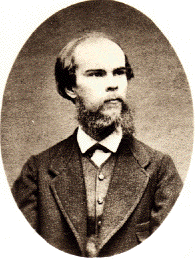
Paul Verlaine is a name that resonates through the corridors of French literature, echoing with the melancholy of a life filled with passion, creativity, and turmoil. Born on March 30, 1844, in Metz, France, Verlaine became one of the most celebrated poets of the 19th century, known for his delicate, musical verse and his tumultuous personal life. His contributions to the Symbolist movement and his complex relationship with fellow poet Arthur Rimbaud have cemented his legacy as a pivotal figure in literary history. This article delves into the life, fame, and enduring impact of Paul Verlaine, exploring the nuances and historical context that shaped his work and his legacy.
Early Life and Education
Paul Marie Verlaine was born into a modest bourgeois family. His father, Nicolas-Auguste Verlaine, was a captain in the French army, and his mother, Elisa-Stéphanie Dehée, had experienced several miscarriages before Paul’s birth. This sense of fragility and the shadow of death loomed over Verlaine’s early life, possibly influencing the somber tone of his later poetry. At the age of six, Verlaine’s family moved to Paris, where he was enrolled in the Institution Landry, a private school. Though his academic performance was unremarkable, Verlaine developed a deep love for literature during these years.
In 1862, after obtaining his baccalaureate in letters, Verlaine enrolled at the Faculty of Law in Paris, in accordance with his father’s wishes. However, the academic world did not hold his interest for long. The vibrant literary scene of Paris was far more appealing, and Verlaine soon abandoned his studies to pursue a career in writing. During this period, he frequented the literary cafés and salons of Paris, where he mingled with other young poets and intellectuals who would shape his career and his life.
The Emergence of a Poet
Paul Verlaine’s literary career began in earnest in 1866 with the publication of his first collection of poems, “Poèmes saturniens” (Saturnian Poems). The collection was heavily influenced by the works of Charles Baudelaire, particularly “Les Fleurs du mal” (The Flowers of Evil), and marked Verlaine as a rising star in the world of French poetry. His early work was characterized by its exploration of melancholia, introspection, and the darker aspects of human experience.
Verlaine’s participation in the Parnassian movement, a literary group that emphasized formal structure and eschewed the emotional excesses of Romanticism, further honed his poetic style. He contributed to the first volume of “Le Parnasse contemporain,” an anthology of contemporary poetry that sought to revive classical forms and ideals in modern literature. Despite the success of his early work, Verlaine’s life was far from stable. His emotional volatility, exacerbated by his growing dependence on alcohol, would soon lead to a series of personal and professional crises.
Marriage and the Commune of Paris
In 1870, Verlaine married Mathilde Mauté, a young woman from a respectable family. Their union was initially happy, and Verlaine dedicated his next collection of poems, “La Bonne Chanson” (The Good Song), to his wife. The poems in this collection are notably more optimistic and tender than his earlier work, reflecting the joy and hope he found in his new marriage.
However, the couple’s happiness was short-lived. The birth of their son, Georges, in 1871 coincided with the outbreak of the Paris Commune, a radical socialist uprising that Verlaine supported. His involvement in the Commune cost him his job as a civil servant, plunging the family into financial hardship. The political upheaval and Verlaine’s increasing alcohol consumption began to strain his marriage, and it was during this turbulent time that he first encountered the young poet Arthur Rimbaud.
The Rimbaud Affair: Passion and Destruction
Arthur Rimbaud, a rebellious and brilliant poet, entered Verlaine’s life in 1871, sending him some of his early poems. Impressed by Rimbaud’s talent and intrigued by his unconventional lifestyle, Verlaine invited the young poet to Paris. The two quickly developed a close and intense relationship, marked by both intellectual camaraderie and destructive passion. Their affair scandalized Parisian society and contributed to the breakdown of Verlaine’s marriage.
In 1872, Verlaine abandoned his wife and child to travel with Rimbaud, first to England and then to Belgium. During this period, Verlaine composed some of his most significant work, including the collection “Romances sans paroles” (Songs Without Words), which reflects the emotional turmoil and aesthetic experimentation of his time with Rimbaud. However, the relationship between the two poets was increasingly volatile, fueled by jealousy, alcohol, and violence.
The affair came to a dramatic and tragic end in July 1873 when, during a heated argument in Brussels, a drunken Verlaine shot Rimbaud in the hand. The injury was minor, but the incident led to Verlaine’s arrest and subsequent imprisonment for two years. The trial and imprisonment marked a low point in Verlaine’s life, but they also provided him with the time for reflection and a return to his Catholic faith, which deeply influenced his later work.
Redemption and Literary Triumph
While in prison, Verlaine experienced a religious conversion, which brought a sense of peace and purpose to his troubled life. This spiritual renewal is reflected in his next major work, “Sagesse” (Wisdom), a collection of poems that explore themes of repentance, forgiveness, and divine grace. Upon his release from prison in 1875, Verlaine attempted to rebuild his life, but the scars of his past were not easily healed.
Verlaine’s post-prison years were marked by a series of personal tragedies and professional struggles. He briefly reconciled with his wife, but their reunion was short-lived, and they divorced in 1885. He also formed a close, paternal bond with a young farmhand named Lucien Létinois, whom he adopted. Létinois’s untimely death in 1883 devastated Verlaine, and he expressed his grief in the collection “Amour” (Love), published in 1888.
Despite these hardships, Verlaine continued to write prolifically, producing some of his most mature and reflective work during this period. In 1884, he published “Les Poètes maudits” (The Accursed Poets), a series of essays on contemporary poets, including Stéphane Mallarmé and Tristan Corbière, as well as Rimbaud. The book helped to solidify Verlaine’s reputation as a leading figure in French literature.
Decline and Death: The Final Years
In the final decade of his life, Verlaine’s health and circumstances continued to deteriorate. He became increasingly dependent on alcohol, which led to further legal troubles and periods of imprisonment. His relationship with his mother, with whom he lived after his release from prison, became increasingly strained, culminating in a violent incident in which Verlaine attempted to strangle her. This outburst led to another brief stint in jail.
Despite his personal decline, Verlaine’s literary reputation continued to grow. In 1894, he was crowned “Prince of Poets” by a group of young writers, a title that recognized his contributions to French poetry and his influence on a new generation of poets. However, this honor did little to alleviate his financial difficulties or improve his health.
Verlaine spent his final years in poverty, living in squalid conditions and relying on the charity of friends and admirers. His last works, including the collections “Hombres” and “Femmes,” were characterized by their frank and often erotic exploration of sexuality, reflecting the increasingly raw and unfiltered nature of his later poetry.
Paul Verlaine died on January 8, 1896, at the age of 52, his body ravaged by alcohol and illness. His funeral was attended by a large crowd of admirers, and in a strange and symbolic turn of events, a statue of Poetry atop the Paris Opéra lost its arm and lyre the night after his burial, as if to mark the passing of one of France’s greatest poets.
Legacy: The Enduring Influence of Paul Verlaine
Paul Verlaine’s life was one of contradictions—of beauty and ugliness, of spiritual yearning and earthly desires, of creative brilliance and personal destruction. His poetry, marked by its musicality, emotional depth, and exploration of the human soul’s darker aspects, has left an indelible mark on the world of literature.
Verlaine’s influence extends beyond his own time, shaping the works of later poets and writers who admired his ability to express complex emotions with simplicity and grace. His role in the Symbolist movement, which sought to transcend the literal meanings of words to evoke deeper emotional and spiritual truths, has made him a key figure in the development of modern poetry.
Today, Verlaine is remembered not only for his poetic contributions but also for his turbulent life, which serves as a cautionary tale of the destructive power of passion and addiction. Yet, despite his many flaws, Verlaine’s work continues to inspire readers with its beauty, honesty, and profound insight into the human condition.
Paul Verlaine remains a towering figure in French literature, a poet whose life and work embody the complexities of the human spirit. His legacy is one of both triumph and tragedy, a reflection of the man himself—at once a genius and a lost soul, whose words continue to resonate with those who seek to understand the depths of the human heart.


