
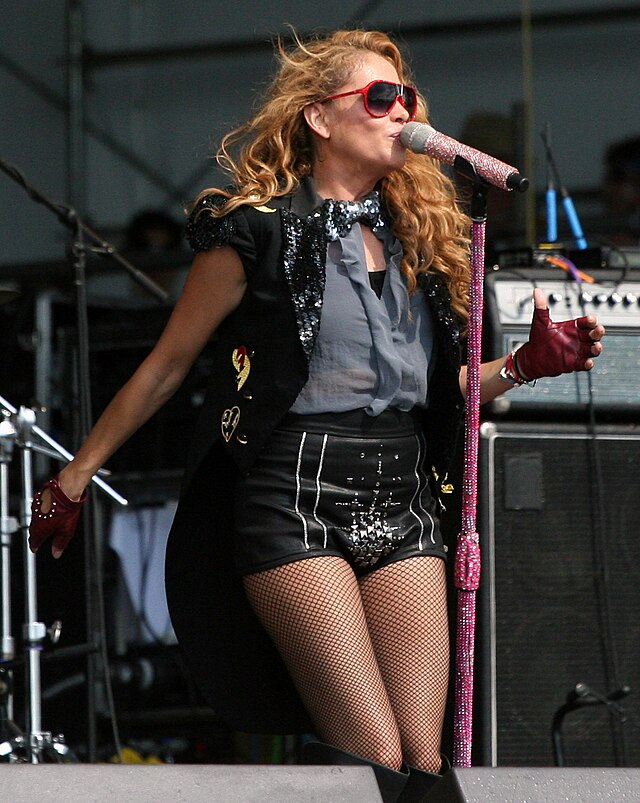
Paulina Rubio, born on June 17, 1971, in Mexico City, is one of the most celebrated figures in Latin pop music. Known as “La Chica Dorada” (The Golden Girl), Rubio has carved out an impressive career that spans multiple decades, making her a household name in the Spanish-speaking world and beyond. Her journey from a teen pop star in Mexico to an international music icon is a testament to her talent, determination, and adaptability.
Early Life and Entry into Show Business
Paulina Rubio was born into a family with entertainment in their blood. Her mother, Susana Dosamantes, was a renowned Mexican actress, which exposed Paulina to the world of show business from a young age. Inspired by her mother’s career, Paulina showed an early interest in performing arts. At a tender age, she enrolled in “El Centro de Capacitation de Televisa,” a prominent arts school in Mexico City. Here, she honed her skills in acting, singing, and dancing, laying the foundation for her future career.
Rubio’s first major break came when she joined the popular teen pop group Timbiriche at the age of 10. Timbiriche was one of the most successful pop groups in Mexico during the 1980s, and being a part of it provided Paulina with invaluable experience in the music industry. She remained with the group for nearly a decade, during which she gained immense popularity and honed her stage presence. Her time with Timbiriche also helped her develop a strong fan base, which would prove crucial when she eventually embarked on her solo career.
The Start of a Solo Career
In 1991, Paulina Rubio decided to pursue a solo career, a move that would eventually establish her as a significant force in Latin pop music. Her debut solo album, La Chica Dorada, released in 1992, was a nod to her nickname and quickly became a hit in Latin America. The album featured a mix of pop and dance tracks, showcasing Rubio’s versatility as an artist. Despite its success in Spanish-speaking countries, La Chica Dorada did not initially gain traction outside of these regions, mainly because Rubio continued to sing exclusively in Spanish at a time when Latin music had not yet broken into the global market.
Rubio’s persistence in sticking to her Spanish roots, even when the global market was not yet receptive, speaks to her commitment to her cultural identity. This decision, however, limited her early international exposure. Nevertheless, she continued to release albums that resonated with her Latin American audience, with 24 Kilates (1993) and El Tiempo Es Oro (1995) both performing well in the region.
Breaking Through to International Fame
The late 1990s and early 2000s were transformative years for Latin music, with artists like Ricky Martin, Shakira, and Enrique Iglesias paving the way for Latin pop’s global success. Paulina Rubio capitalized on this momentum, releasing her most successful album to date, Paulina, in 2000. The album was a blend of Latin pop, dance, and rock, featuring hit singles like “Lo Haré Por Ti,” “Y Yo Sigo Aquí,” and “El Último Adiós.” Paulina was a massive success, selling over 2 million copies worldwide and earning multiple gold and platinum certifications.
Paulina marked Rubio’s transition from a regional star to a global pop icon. The album’s success was driven not only by its catchy tunes but also by Rubio’s charismatic stage presence and glamorous image. She became a regular on the cover of major magazines, including Rolling Stone, which featured her on the cover of its July 2001 issue. The album also earned her several Latin Grammy nominations, further cementing her status as one of Latin music’s leading ladies.
Expanding Her Reach: English-Language Ventures
Building on the success of Paulina, Rubio set her sights on the English-speaking market. In 2002, she released her first English-language album, Border Girl. The album was an ambitious project that combined Latin pop with English-language pop and dance music, aiming to appeal to a broader audience. The lead single, “Don’t Say Goodbye,” received significant airplay on American radio stations and was accompanied by a high-energy music video that showcased Rubio’s signature style.
Border Girl marked a significant milestone in Rubio’s career, as it introduced her to audiences in the United States and Europe. The album’s success demonstrated Rubio’s ability to cross cultural and linguistic barriers, solidifying her place in the international music scene. While Border Girl did not achieve the same level of commercial success as Paulina, it nonetheless expanded her fan base and established her as a versatile artist capable of thriving in both Spanish and English markets.
Continued Success and Reinvention
Throughout the 2000s and 2010s, Paulina Rubio continued to release successful albums and singles, maintaining her status as one of Latin pop’s most enduring stars. Her 2004 album, Pau-Latina, was another commercial success, featuring hit singles like “Te Quise Tanto” and “Algo Tienes.” The album showcased Rubio’s continued evolution as an artist, blending Latin rhythms with contemporary pop production.
Rubio’s ability to reinvent herself while staying true to her roots has been a key factor in her longevity. She has consistently embraced new musical trends without losing sight of the elements that made her a star in the first place. Her 2006 album, Ananda, featured collaborations with renowned producers and artists, resulting in a fresh sound that resonated with both longtime fans and new listeners. The album included the hit single “Ni Una Sola Palabra,” which topped the charts in several countries and further solidified Rubio’s status as a pop icon.
In 2009, Rubio released Gran City Pop, an album that was both a commercial and critical success. The album featured a mix of pop, rock, and dance tracks, with lyrics that reflected Rubio’s experiences living in various cities around the world. The lead single, “Causa y Efecto,” became an instant hit, topping the charts in multiple countries and earning Rubio several awards.
Personal Life and Media Presence
Paulina Rubio’s personal life has often been the subject of media scrutiny, particularly her high-profile relationships and marriages. In 2007, she married Spanish businessman Nicolás Vallejo-Nágera, a union that attracted significant media attention. The couple had a son, Andrea Nicolás, in 2010, but their marriage ended in a highly publicized divorce in 2013. Rubio’s personal life, much like her career, has been characterized by both triumphs and challenges, all of which have played out in the public eye.
Despite the ups and downs in her personal life, Rubio has remained a resilient and influential figure in the entertainment industry. She has used her platform to advocate for various causes, including women’s rights and environmental conservation. Rubio’s commitment to these causes has further endeared her to fans, who admire her not only for her music but also for her activism.
The Enduring Appeal of Paulina Rubio
Paulina Rubio’s career is a testament to her versatility, resilience, and enduring appeal. Over the course of three decades, she has evolved from a teen pop sensation in Mexico to a global music icon, all while staying true to her cultural roots. Her ability to navigate the ever-changing music industry, adapt to new trends, and connect with audiences across different cultures and languages is a testament to her talent and determination.
Rubio’s influence extends beyond her music. She is a fashion icon, known for her bold and glamorous style, and a trendsetter who has inspired countless fans around the world. Her image as “La Chica Dorada” is not just a nickname but a brand that represents confidence, beauty, and empowerment.
In recent years, Rubio has continued to release new music, collaborate with other artists, and perform around the world. Her 2020 single “Ya No Me Engañas” was well-received by fans and critics alike, proving that Rubio remains a relevant and vital force in the music industry. She has also hinted at the possibility of releasing a new album, which has generated significant excitement among her fan base.
Legacy and Future Prospects
As Paulina Rubio looks to the future, her legacy as one of Latin pop’s most iconic figures is secure. She has paved the way for other Latin artists to achieve international success, breaking down barriers and expanding the reach of Latin music. Her influence can be seen in the careers of younger artists who have followed in her footsteps, and her music continues to inspire new generations of fans.
Rubio’s ability to stay relevant in an industry that is constantly evolving is a testament to her talent, work ethic, and adaptability. She has navigated the challenges of fame, the pressures of the music industry, and the ups and downs of her personal life with grace and resilience. As she continues to evolve as an artist and a public figure, there is little doubt that Paulina Rubio will remain a powerful force in the world of music and entertainment.
Paulina Rubio’s story is one of perseverance, talent, and the relentless pursuit of her dreams. From her early days with Timbiriche to her current status as a global pop icon, Rubio has consistently defied expectations and broken new ground. Her journey serves as an inspiration to aspiring artists everywhere, demonstrating that with hard work, determination, and a clear vision, anything is possible.


