
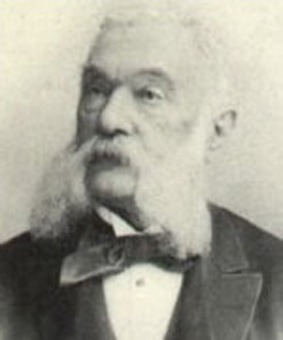
Pellegrino Artusi, born on August 4, 1820, in Forlimpopoli, Italy, is celebrated as one of the most influential figures in the history of Italian cuisine. His seminal work, “La scienza in cucina e l’arte di mangiar bene” (“The Science of Cooking and the Art of Eating Well”), published in 1891, has become a cornerstone of Italian culinary tradition. This article explores Artusi’s life, achievements, and the historical context that made his contributions so significant.
Early Life and Family Tragedy
Artusi was born into a well-off family in Forlimpopoli, a small town in the Emilia-Romagna region. His early education took place at the seminary in Bertinoro, after which he joined his father’s business as a grocer. However, his life took a dramatic turn due to a traumatic event. In 1851, the infamous bandit Stefano Pelloni, known as “Il Passatore,” raided the Artusi home. The robbery and assault had severe repercussions, leading to the mental breakdown of Artusi’s sister, Gertrude, who was subsequently institutionalized.
Following this incident, the Artusi family relocated to Florence. There, Pellegrino pursued a career as a financial intermediary, achieving significant success. This financial stability allowed him to indulge in his passions for literature and gastronomy.
Literary Pursuits and Culinary Passion
Artusi’s initial forays into the literary world included the self-published works “Il Mio Carso” and “Memorie di un Mercante di Firenze.” However, it was his deep love for cooking that led to his lasting legacy. After retiring from business in 1865, Artusi dedicated himself to compiling a cookbook that would reflect the diverse culinary traditions of Italy.
His magnum opus, “La scienza in cucina e l’arte di mangiar bene,” was first published at his own expense in 1891. The book initially sold about a thousand copies but eventually went through 32 editions by 1932, cementing its place as a quintessential Italian cookbook. Artusi’s work was revolutionary because it provided a comprehensive collection of 790 recipes from various Italian regions, unifying the country’s culinary traditions at a time when Italy was still solidifying its national identity.
The Impact of “La scienza in cucina e l’arte di mangiar bene”
Artusi’s cookbook was more than a mere collection of recipes; it was a cultural artifact that played a significant role in the unification of Italy. By documenting and standardizing recipes from different regions, Artusi helped create a cohesive national cuisine. His approach was meticulous and scientific, reflecting his belief that cooking was both an art and a science. Each recipe was presented with clear instructions, anecdotes, and reflections, making the book not only practical but also entertaining.
One of the most notable aspects of Artusi’s work was his emphasis on using simple, accessible ingredients to create delicious and sophisticated dishes. This philosophy resonated with a wide audience, from professional chefs to home cooks. His recipes covered a broad spectrum, including appetizers, soups, meats, vegetables, and desserts, along with detailed notes on preparation techniques and ingredients.
Personal Anecdotes and Artusi’s Style
Artusi’s engaging writing style and personal anecdotes contributed to the book’s enduring popularity. For example, he recounts an episode in Livorno where he fell ill after eating a minestrone soup. Initially attributing his stomach pain to the soup, he later learned that his illness was due to a cholera outbreak in the city. This incident led him to perfect his own version of minestrone, reflecting his methodical and adaptive approach to cooking.
Artusi’s ability to weave personal stories with practical cooking advice made his book accessible and relatable. He had a knack for addressing his readers directly, creating a sense of camaraderie and trust. This personable approach, combined with his thoroughness, ensured that “La scienza in cucina e l’arte di mangiar bene” remained a staple in Italian households.
Artusi’s Legacy and Continued Influence
Artusi lived a relatively quiet and celibate life in Florence, where he passed away on March 30, 1911, at the age of 90. He left behind a legacy that has continued to influence Italian cuisine and culture. In his hometown of Forlimpopoli, the cultural center “Casa Artusi” stands as a testament to his contributions, hosting events like the “Festa Artusiana,” which celebrates Italian food and culinary heritage.
Artusi’s work has inspired countless chefs and food enthusiasts around the world. His emphasis on the importance of tradition, simplicity, and quality ingredients continues to resonate in contemporary culinary practices. His book has been translated into multiple languages, spreading his culinary philosophy globally.
Historical Context and National Unity
The publication of Artusi’s cookbook came at a pivotal time in Italian history. The late 19th century was a period of significant transformation as Italy moved towards unification. In this context, Artusi’s work can be seen as part of a broader cultural movement aimed at forging a unified Italian identity. By bringing together diverse regional recipes into a single volume, Artusi’s cookbook symbolized the merging of Italy’s varied culinary traditions into a cohesive national cuisine.
Artusi’s impact extended beyond the kitchen. His work contributed to the broader cultural and social integration of Italy, promoting a sense of shared identity and heritage. This was particularly important in a country that had been politically fragmented for centuries. Through his meticulous documentation and engaging storytelling, Artusi helped Italians recognize and celebrate their common culinary heritage.
Conclusion
Pellegrino Artusi’s life and work epitomize the intersection of culture, cuisine, and national identity. His contributions to Italian culinary arts have left an indelible mark, influencing generations of chefs and home cooks. “La scienza in cucina e l’arte di mangiar bene” remains a beloved and indispensable resource, reflecting Artusi’s enduring legacy.
Artusi’s story is a testament to the power of food as a unifying force. His ability to blend personal anecdotes with practical advice made his work accessible and enjoyable, ensuring its lasting popularity. As Italy continues to evolve, Artusi’s contributions remind us of the importance of preserving and celebrating culinary traditions.
Artusi’s influence extends far beyond the pages of his cookbook. His work has become a symbol of Italian culture and identity, illustrating how food can connect people and communities. Through his meticulous documentation and engaging storytelling, Pellegrino Artusi has secured his place in history as a pioneer of Italian cuisine.


