
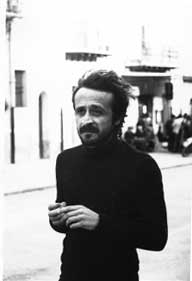
Giuseppe “Peppino” Impastato was born on January 5, 1948, in Cinisi, a small town near Palermo, Sicily. His life, tragically cut short at the age of 30, is a compelling tale of defiance against the entrenched mafia culture that dominated his hometown and much of Sicily. Peppino’s journey from a young man born into a mafia family to a fearless anti-mafia activist and martyr has left an indelible mark on Italian history and continues to inspire movements against organized crime worldwide.
Early Life and Family Background
Peppino Impastato was born into a family deeply entwined with the Sicilian mafia. His father, Luigi Impastato, was closely associated with local mafia bosses, including Cesare Manzella, who was his brother-in-law and a significant figure in the criminal underworld. Manzella was heavily involved in drug trafficking and was eventually killed in a mafia ambush in the 1960s. This environment of crime and violence surrounded Peppino from an early age.
Despite his family’s connections to the mafia, Peppino grew up with a strong sense of justice, which was at odds with the values of those around him. This internal conflict became apparent during his teenage years. The assassination of his uncle and the pervasive criminality in his community deeply affected him, leading to a break with his father and his eventual estrangement from the family. This break was not just personal but symbolic of Peppino’s rejection of the mafia’s stranglehold on his life and his community.
Political Awakening and Activism
Peppino’s political awakening began in his teenage years. While attending high school in Partinico, he joined the Italian Socialist Party of Proletarian Unity (PSIUP) in 1965, a leftist political movement that opposed the mafia’s influence and fought for workers’ rights. His involvement in the PSIUP marked the beginning of his activism, as he founded a small newspaper, L’idea socialista (The Socialist Idea), through which he voiced his opposition to the mafia and its corrupting influence on society.
This early activism laid the groundwork for Peppino’s later, more radical activities. He was deeply influenced by the social movements of the 1960s and 1970s, including the student protests and labor strikes that swept across Italy. In 1968, he became involved in the student and workers’ struggles, participating in occupations and protests. However, his activism was not without challenges. His family’s mafia ties made him a target, and he faced threats and ostracism from both his community and his own relatives.
Despite these pressures, Peppino continued to push forward. He broke away from the PSIUP after its youth wing was dissolved and became involved with local communist groups, where he focused on issues affecting the working class and rural populations. His activism extended to defending the rights of farmers, particularly those whose lands were being seized to build a third runway at Palermo’s airport—an endeavor driven by mafia interests.
Radio Aut: A Voice Against the Mafia
In 1975, Peppino founded Musica e Cultura (Music and Culture), a cultural organization that became a hub for young people in Cinisi. The group organized theater productions, music events, and debates, providing an alternative to the mafia-dominated culture that pervaded the region. This organization soon became a breeding ground for anti-mafia sentiment and activism.
A year later, in 1976, Peppino established Radio Aut, a self-funded, independent radio station that became his most potent tool in the fight against the mafia. Through Radio Aut, Peppino exposed the criminal activities of local mafia bosses, particularly Gaetano Badalamenti, one of the most powerful mafiosi in Sicily. Badalamenti, who controlled the airport in Palermo, was heavily involved in international drug trafficking, and Peppino’s broadcasts relentlessly criticized and mocked him.
One of the station’s most famous programs was Onda Pazza (Crazy Wave), a satirical show that used humor to ridicule the mafia and the corrupt politicians who were in league with them. Peppino’s fearless journalism and sharp wit drew in a wide audience, making him a local hero among those who sought to resist the mafia’s influence. However, it also made him a target for the very forces he was challenging.
Political Involvement and Election Campaign
By 1978, Peppino’s activism had reached its peak. He decided to run for a seat on the Cinisi municipal council as a candidate for the Democrazia Proletaria (Proletarian Democracy) party. His campaign focused on exposing the mafia’s control over local politics and land development, particularly their involvement in the airport expansion project, which had devastated local farmland and displaced many families.
Peppino’s candidacy was a direct challenge to the mafia’s dominance in Cinisi. His campaign involved organizing a photographic exhibition that documented the environmental destruction and corruption caused by mafia-backed development projects. This exhibition was a powerful visual indictment of the mafia’s grip on the region and highlighted Peppino’s commitment to social justice and environmental protection.
Despite the dangers, Peppino remained undeterred, continuing to speak out against the mafia even as threats to his life intensified. His courage and commitment to his cause made him an inspiration to many, but it also sealed his fate.
Assassination and Aftermath
On the night of May 8, 1978, just days before the municipal election, Peppino Impastato was brutally murdered. His killers placed explosives along the railway tracks near Cinisi, and his body was blown apart in an attempt to stage his death as a suicide bombing. The mafia hoped to silence Peppino’s voice and discredit his work by making it appear as though he had died while attempting a terrorist act.
However, the attempt to smear Peppino’s name failed. His death, far from erasing his legacy, became a rallying point for anti-mafia activists across Italy. The same week, Italy was gripped by the discovery of the body of former Prime Minister Aldo Moro, who had been kidnapped and killed by the Red Brigades, a far-left terrorist group. While the Moro case dominated national headlines, Peppino’s death did not go unnoticed.
Despite initial attempts by authorities to dismiss Peppino’s murder as an accident or suicide, his family, particularly his mother, Felicia, and his brother, Giovanni, fought tirelessly to ensure that the truth came to light. They rejected the official narrative and demanded justice, eventually succeeding in reopening the investigation into Peppino’s death.
In 1984, after years of legal battles, the Palermo Court officially recognized that Peppino Impastato had been murdered by the mafia. This ruling was a significant victory for his family and the anti-mafia movement. It took until the early 2000s for full justice to be served: Vito Palazzolo, a local mafia figure, was sentenced to 30 years in prison for his role in the murder, and Gaetano Badalamenti, the mafia boss Peppino had so courageously denounced, was sentenced to life imprisonment.
Legacy and Cultural Impact
Peppino Impastato’s life and death have left a profound legacy, both in Italy and beyond. He is remembered as a symbol of resistance against the mafia and the corrupt systems that enable organized crime. His story has been immortalized in various forms of media, most notably in the 2000 film I cento passi (The Hundred Steps), directed by Marco Tullio Giordana. The title refers to the short distance between Peppino’s home and the house of Gaetano Badalamenti, symbolizing the proximity of power and oppression that Peppino sought to challenge.
The film brought Peppino’s story to a wider audience, highlighting his courage and the costs of standing up against the mafia. It also underscored the broader social and political issues surrounding organized crime in Italy, issues that continue to resonate today.
In addition to his portrayal in film, Peppino’s legacy is preserved through the ongoing work of anti-mafia organizations and activists who continue to fight for justice and transparency in Italy. The Casa Memoria Felicia e Peppino Impastato, a museum and cultural center established in his family home in Cinisi, serves as a place of remembrance and education, ensuring that future generations understand the significance of his life and struggle.
Peppino’s name has also been invoked by various social and political movements across Italy. His life serves as a reminder of the importance of standing up against injustice, even in the face of overwhelming odds. He is celebrated as a hero not just for what he did, but for what he represents: the power of individual courage to challenge systemic evil.
Conclusion
Peppino Impastato’s life is a story of extraordinary courage, conviction, and sacrifice. Born into a world where the mafia held sway over every aspect of life, he chose a different path—one that led him to challenge the very foundations of the society in which he lived. His unwavering commitment to justice, his fearless denunciation of the mafia, and his ultimate martyrdom have made him an enduring symbol of resistance.
Today, Peppino Impastato is remembered not only as a victim of the mafia but as a beacon of hope for those who continue to fight against organized crime and corruption. His life and legacy remind us that the fight for justice is often fraught with danger, but it is also one that can inspire and empower others to take a stand.
Peppino’s story is more than just a historical account; it is a call to action, urging each of us to confront the injustices in our own lives and communities with the same courage and determination that he showed. In a world where the struggle against organized crime and corruption continues, Peppino Impastato’s life serves as a powerful example of what it means to live—and die—for one’s principles.


