
Introduction
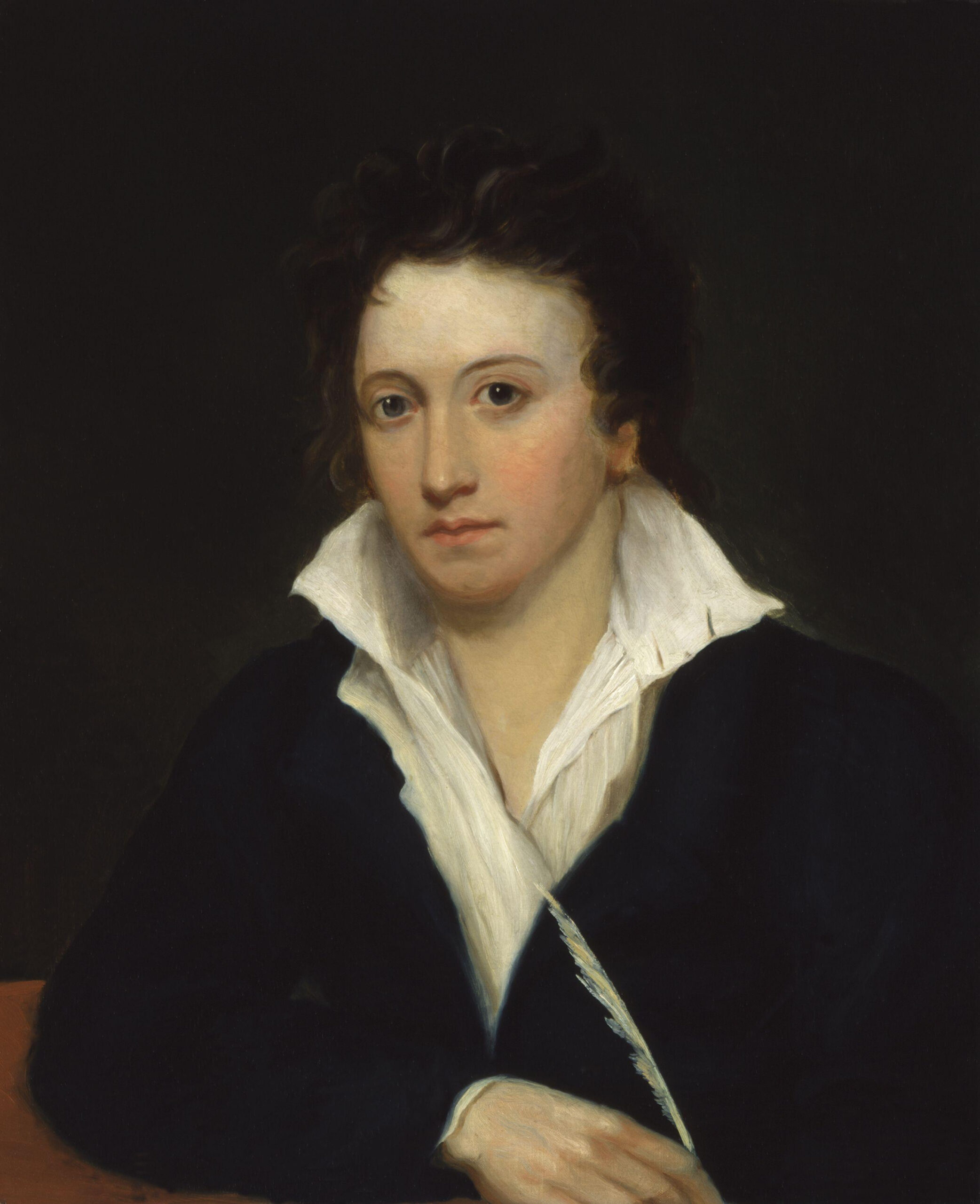
Percy Bysshe Shelley, one of the most revered poets of the Romantic era, is often celebrated for his revolutionary ideas and impassioned literary works. Born into privilege but driven by a relentless quest for intellectual and creative freedom, Shelley’s life was marked by controversy, personal tragedy, and a profound influence on the literary world. This article delves into the life of Percy Bysshe Shelley, exploring his early years, literary achievements, the impact of his works, and the enduring legacy he left behind.
Early Life and Background
Percy Bysshe Shelley was born on August 4, 1792, in Field Place, Warnham, Sussex, England, into an aristocratic family. His father, Timothy Shelley, was a Member of Parliament, and his mother, Elizabeth Pilfold, hailed from a wealthy Sussex family. Shelley’s privileged upbringing, however, did not prevent him from developing a deep-seated disdain for the social and political institutions of his time. From an early age, Shelley exhibited a rebellious nature, coupled with a passion for learning and an affinity for literature.
Shelley’s education began at the Syon House Academy in Isleworth, where he displayed an impressive aptitude for classical studies, particularly Greek and Latin. However, he found the rigid and often harsh environment of formal education stifling, describing his time at the academy as a “perfect hell.” This aversion to authority and traditional structures would become a recurring theme throughout his life.
Academic Rebellion and Expulsion from Oxford
In 1804, Shelley was sent to Eton College, one of England’s most prestigious schools. At Eton, Shelley’s unconventional ideas and disdain for the rigid social hierarchy often put him at odds with both his peers and his teachers. It was during this time that Shelley began to explore radical political and philosophical ideas, influenced by the Enlightenment thinkers who championed reason, science, and individual liberty.
Shelley’s time at Eton was marked by increasing isolation and a growing preoccupation with literature. He was particularly drawn to the works of Gothic writers and began writing poetry and prose that reflected his fascination with the supernatural and the macabre. His early writings hinted at the themes that would later define his work: the rejection of tyranny, the exploration of human suffering, and the quest for personal and societal liberation.
In 1810, Shelley entered the University of Oxford, where his rebellious spirit reached new heights. It was at Oxford that Shelley penned a pamphlet titled “The Necessity of Atheism,” which he distributed anonymously. The pamphlet, which questioned the existence of God and criticized organized religion, caused an uproar and led to Shelley’s expulsion from the university in 1811. This event marked a turning point in Shelley’s life, as he severed ties with his family and embarked on a path that would define him as a radical thinker and a revolutionary poet.
Personal Life and Marriages
Following his expulsion from Oxford, Shelley married Harriet Westbrook, a 16-year-old schoolgirl with whom he had become infatuated. The marriage was initially one of passion and idealism, but it soon became strained due to Shelley’s restless nature and his growing disenchantment with traditional domestic life. The couple had two children, but by 1814, Shelley had fallen in love with Mary Godwin, the daughter of the radical philosopher William Godwin and the feminist writer Mary Wollstonecraft.
Shelley and Mary eloped to Europe, embarking on a journey that would take them to Switzerland, France, and Italy. Their relationship was intense and unconventional, marked by mutual intellectual respect and shared radical ideals. During this period, Shelley wrote some of his most significant works, including “Alastor, or The Spirit of Solitude” (1816), which reflects his growing preoccupation with isolation and the human condition.
The relationship between Shelley and Mary was not without its challenges. In 1816, Harriet Westbrook, Shelley’s first wife, committed suicide, an event that cast a shadow over Shelley’s life and led to a scandal in England. Shelley and Mary eventually married, but they continued to live a peripatetic and often financially precarious existence, moving frequently across Europe in search of creative inspiration and political refuge.
Literary Achievements and Philosophical Ideals
Shelley’s literary career was marked by a profound commitment to exploring themes of human suffering, social injustice, and the pursuit of personal and political freedom. His works are characterized by their lyrical beauty, philosophical depth, and passionate advocacy for reform.
One of Shelley’s most famous works, “Ode to the West Wind” (1819), is a powerful expression of his desire for revolutionary change and his belief in the transformative power of nature. The poem, with its vivid imagery and dynamic structure, captures the essence of Shelley’s Romantic idealism and his conviction that art and poetry could serve as catalysts for social and political transformation.
In 1818, Shelley published “The Revolt of Islam,” a narrative poem that explores themes of revolution and the struggle against oppression. Although the poem was initially met with mixed reviews, it has since been recognized as a significant work that reflects Shelley’s deep-seated belief in the power of collective action to bring about social change.
Another major work from this period is “Prometheus Unbound” (1820), a lyrical drama that reinterprets the myth of Prometheus, the Titan who defied the gods to bring fire to humanity. In Shelley’s version, Prometheus represents the spirit of resistance against tyranny, and the play is a powerful allegory of the triumph of human will over oppression.
Later Years and Tragic Death
The final years of Shelley’s life were spent in Italy, where he continued to write prolifically and engage with the radical intellectual circles of the time. Despite his increasing isolation from the English literary establishment, Shelley produced some of his most enduring works during this period, including “The Cenci” (1819), a tragedy that explores themes of power, corruption, and moral decay.
Shelley’s life was tragically cut short on July 8, 1822, when he drowned in a boating accident off the coast of La Spezia, Italy. He was just 29 years old. Shelley’s death was a profound loss to the literary world, but his legacy lived on through his works and the influence he had on subsequent generations of poets and writers.
Legacy and Influence
Percy Bysshe Shelley’s legacy is one of enduring influence and inspiration. His works have been celebrated for their lyrical beauty, intellectual depth, and commitment to social and political reform. Shelley is often regarded as one of the greatest poets of the English Romantic movement, alongside figures such as Lord Byron and John Keats, both of whom were close friends and contemporaries.
Shelley’s influence extends beyond his poetry. His radical ideas on social justice, personal liberty, and the role of the artist in society have had a lasting impact on generations of thinkers and activists. Shelley’s works continue to be studied and revered for their exploration of themes that remain relevant in the modern world, including the struggle for human rights, the critique of institutional power, and the pursuit of individual freedom.
In particular, Shelley’s defense of atheism and his rejection of traditional religious and political authority have resonated with subsequent generations of free thinkers and reformers. His works have been cited as inspiration by figures as diverse as Mahatma Gandhi, Karl Marx, and Oscar Wilde, all of whom found in Shelley’s writings a powerful articulation of the principles of justice, equality, and human dignity.
Conclusion
Percy Bysshe Shelley was a poet, philosopher, and revolutionary who left an indelible mark on the literary and intellectual landscape of his time. His life was one of passionate commitment to the ideals of freedom, justice, and human progress, and his works continue to inspire and challenge readers around the world.
Shelley’s legacy is a testament to the enduring power of art and poetry to speak to the deepest concerns of humanity and to advocate for a better, more just world. As we reflect on Shelley’s life and works, we are reminded of the importance of challenging the status quo, of standing up for what we believe in, and of using our creative talents to make a difference in the world.


