
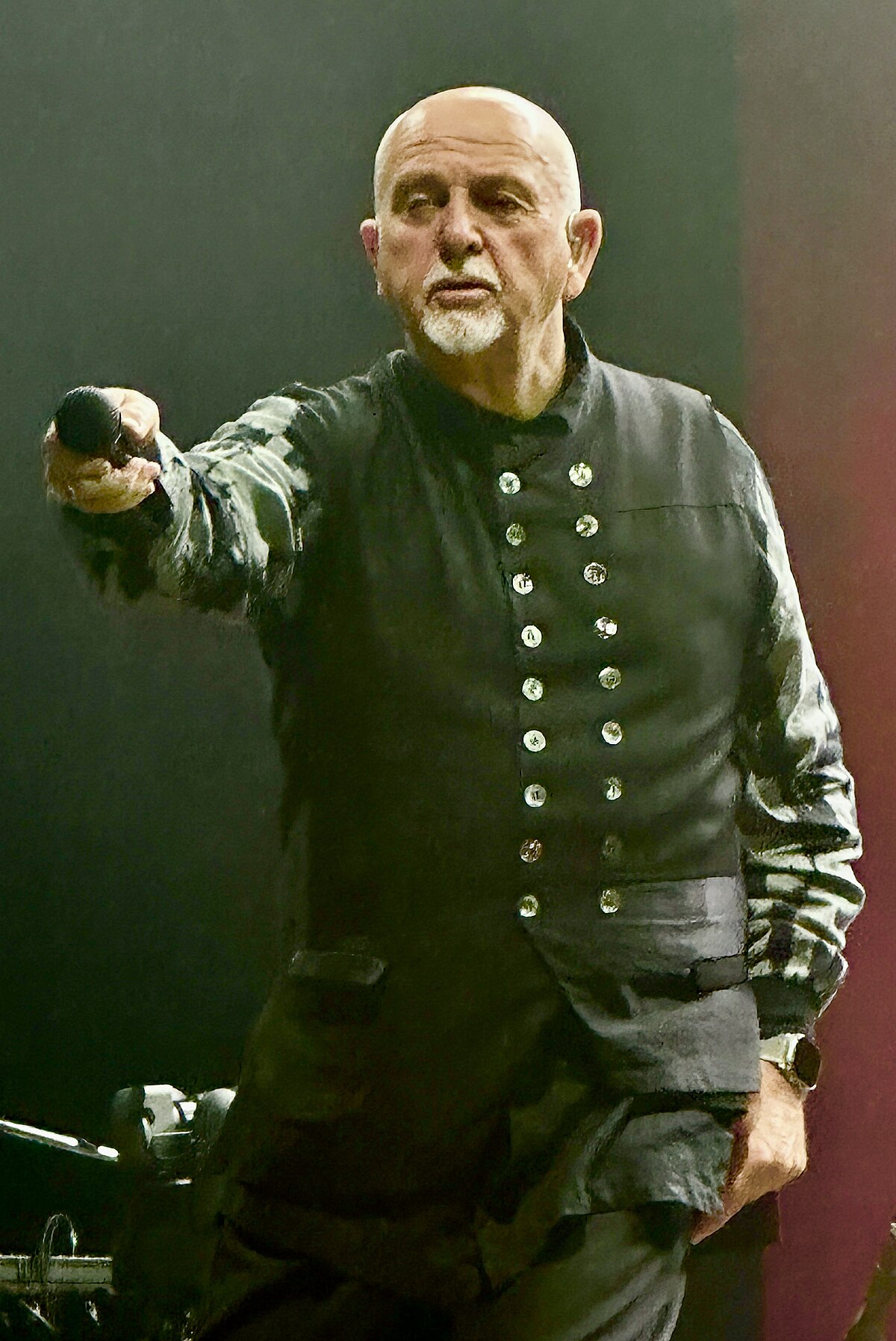
Peter Gabriel, born on February 13, 1950, in Cobham, Surrey, England, is a name synonymous with innovative music, visionary art, and boundary-pushing performances. As a pioneer in the world of rock, pop, and world music, Gabriel has carved out a unique niche that has garnered him worldwide fame. His journey from a small English village to the international stage is a testament to his unrelenting creative spirit and his ability to continually reinvent himself.
Early Life: A Childhood Rooted in Imagination
Peter Gabriel’s early years were spent in the English countryside, far removed from the urban hustle that often breeds rock legends. Raised in a rural setting, young Peter was known for his vivid imagination, often visualizing elaborate battle scenes in the fields near his home. This imaginative spirit, coupled with a deep love for music, laid the foundation for his future career.
His parents, recognizing his potential, encouraged him to pursue a well-rounded education. They enrolled him in piano lessons, hoping that the instrument’s rich history and complexity would steer him toward a classical music career. However, Gabriel was drawn to more rhythmic expressions of music, particularly the drums. His early fascination with rhythm would later evolve into a deep exploration of various musical styles, particularly ethnic music, which became a hallmark of his later work.
Musical Influences and the Genesis of a Career
Gabriel’s musical tastes during his formative years were eclectic and global. He was influenced by the soulful sounds of Otis Redding, James Brown, and Nina Simone, as well as the innovative rock of the Beatles, the Bluesbreakers, and the Rolling Stones. His first concert experience was seeing John Mayall’s Bluesbreakers, which left a lasting impression on him. These influences would later manifest in the diverse sonic landscapes of his music.
Gabriel attended a private college, an experience that he later described as stifling to his creativity. The rigid and disciplined environment of the college was at odds with his artistic inclinations. Despite this, his passion for music flourished, serving as a creative outlet during these years.
During summer vacations, Gabriel often visited his grandfather’s Victorian house, a setting that would inspire one of his early songs, “Musical Box.” It was here that he and his sister Anna would rummage through old trunks filled with vintage costumes, an experience that ignited his love for theatrical performance. This passion for drama and transformation would become a defining characteristic of his stage presence and musical identity.
Genesis: The Birth of a Progressive Rock Legend
Peter Gabriel’s entry into the world of professional music began in earnest with the formation of Genesis. Initially called Garden Wall, the band underwent several name changes before settling on Genesis in 1967, while its members were still students. The band’s early work was heavily influenced by the Moody Blues, Nice, and folk rock artists like Cat Stevens. Their first single, “Silent Sun,” released in 1968, failed to make a significant impact, but it marked the beginning of their journey.
Genesis’s early albums, such as “From Genesis to Revelation” (1969) and “Trespass” (1970), showcased a band still finding its voice. It wasn’t until the release of “Nursery Cryme” in 1972, that Genesis, with Gabriel as its charismatic frontman, began to develop a distinctive style that would define the progressive rock genre. Gabriel’s stage persona was marked by his theatrical performances, complete with elaborate costumes and dramatic storytelling. His ability to transform into various characters on stage captivated audiences and set Genesis apart from other bands of the era.
The Rise to Fame: Gabriel’s Unique Artistic Vision
Gabriel’s tenure with Genesis culminated in a series of groundbreaking albums that solidified the band’s reputation as pioneers of progressive rock. “Foxtrot” (1972), featuring the epic track “Supper’s Ready,” and “Selling England by the Pound” (1973) are considered masterpieces of the genre. However, it was “The Lamb Lies Down on Broadway” (1974), a rock opera that pushed the boundaries of concept albums, that truly encapsulated Gabriel’s visionary approach to music.
The demands of leading Genesis, coupled with his desire to explore new creative avenues, led Gabriel to leave the band in 1975. His departure marked the end of an era for Genesis but also the beginning of a new chapter in his life. Gabriel’s decision to go solo was driven by a desire for greater artistic freedom, a need to explore themes and musical styles that were not confined by the expectations of the band’s fan base.
A Solo Career: Innovation and World Music
Peter Gabriel’s solo career began with the release of his self-titled debut album in 1977, often referred to as “Car.” The album was a departure from the progressive rock of Genesis, embracing a more experimental sound. It featured the hit single “Solsbury Hill,” a song that reflected Gabriel’s feelings about leaving Genesis. The success of this album established Gabriel as a solo artist with a unique voice in the music industry.
Over the next decade, Gabriel continued to push musical boundaries, incorporating electronic music, African rhythms, and complex lyrical themes into his work. His third solo album, “Melt” (1980), featured the politically charged single “Biko,” which highlighted the anti-apartheid movement in South Africa. This song marked the beginning of Gabriel’s lifelong commitment to social justice and human rights.
Gabriel’s interest in world music led to the creation of his own record label, Real World Records, in 1989. The label was dedicated to promoting music from non-Western cultures, offering a platform for artists who were often overlooked by the mainstream music industry. Through Real World, Gabriel introduced audiences to a diverse array of musical traditions, from African drumming to Middle Eastern melodies, further establishing himself as a pioneer of the world music genre.
The Success of “So” and Global Recognition
The release of Gabriel’s fifth studio album, “So,” in 1986, marked the pinnacle of his commercial success. The album featured some of his most iconic songs, including “Sledgehammer,” “Big Time,” and the haunting duet with Kate Bush, “Don’t Give Up.” “Sledgehammer” became a worldwide hit, propelled by its groundbreaking music video, which utilized stop-motion animation and won multiple MTV Video Music Awards.
“So” was not just a commercial success; it was a critical triumph, earning Gabriel a Grammy nomination and cementing his status as one of the most innovative artists of his generation. The album’s success allowed Gabriel to reach a broader audience while maintaining the artistic integrity that had always been central to his work.
Philanthropy and Activism: Beyond Music
Beyond his musical achievements, Peter Gabriel is also known for his philanthropic efforts and activism. He has been a vocal advocate for human rights, working with organizations like Amnesty International and Witness, the latter of which he co-founded. Witness provides training and support to human rights activists around the world, helping them document and expose human rights abuses through video technology.
Gabriel’s commitment to social causes is also evident in his involvement with The Elders, a group of global leaders working to address major world issues, such as conflict resolution and human rights. His efforts have earned him numerous accolades, including the Man of Peace Award in 2006.
Later Work and Legacy: A Lasting Influence
In the years following “So,” Gabriel continued to explore new musical territories, releasing albums that blended his love for world music with contemporary sounds. Albums like “Us” (1992) and “Up” (2002) received critical acclaim, though they did not achieve the same commercial success as “So.” Nevertheless, Gabriel’s influence on the music industry remains profound.
His work has inspired countless artists across genres, and his willingness to embrace new technologies and sounds has kept him relevant in an ever-changing musical landscape. Gabriel’s legacy is not only in his music but also in his contributions to the global music community through Real World Records and his advocacy for human rights.
Conclusion: The Enduring Impact of Peter Gabriel
Peter Gabriel’s journey from a young boy with a vivid imagination in rural England to an international music icon is a story of creativity, innovation, and unwavering commitment to his art. His contributions to music, both as a member of Genesis and as a solo artist, have left an indelible mark on the industry. Moreover, his work in promoting world music and advocating for social justice has cemented his legacy as a cultural icon who has used his platform to make a difference in the world.
Gabriel’s ability to continually reinvent himself, coupled with his dedication to pushing the boundaries of what music can achieve, ensures that his influence will be felt for generations to come. Whether through his groundbreaking albums, his support of non-Western artists, or his tireless activism, Peter Gabriel remains a towering figure in the world of music and beyond.


