
Introduction
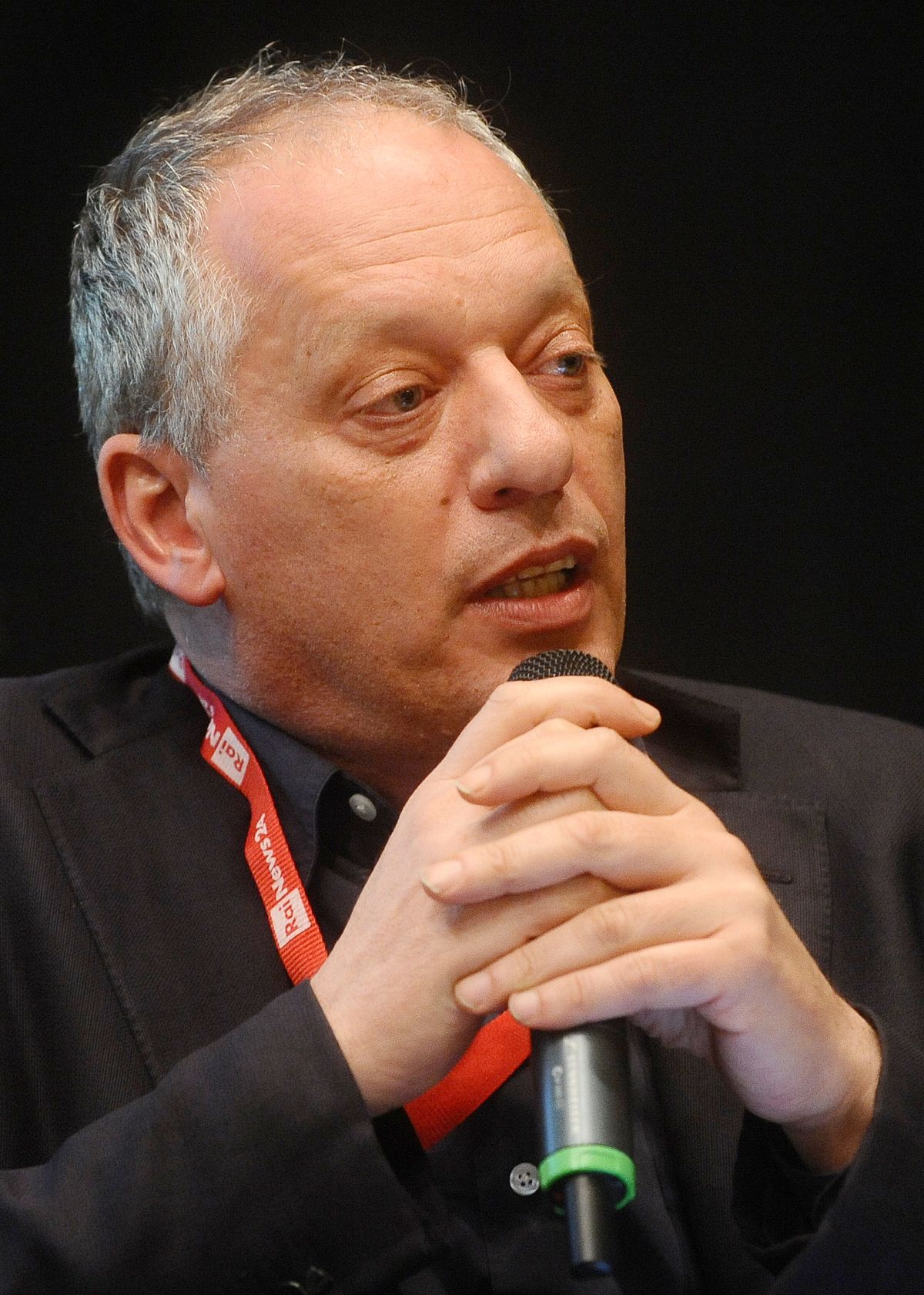
Peter Gomez, born on October 23, 1963, in New York City, is a prominent Italian journalist, author, and television personality known for his sharp analytical skills and investigative reporting. With a career that spans decades, Gomez has become a respected figure in the Italian media landscape, particularly for his work in political and judicial investigations. This article delves into his life, rise to fame, and the key moments that have defined his career, offering a comprehensive look at Peter Gomez’s significant contributions to journalism.
Early Life and Background
Peter Gomez was born to Italian parents who were temporarily residing in New York for professional reasons. His father, Filippo Gomez Homen, was a successful advertising executive whose career had taken him to the United States. After a few years, the family returned to Italy, settling in Verona, where Gomez spent his formative years.
Growing up in Verona, Gomez attended the prestigious Liceo Scientifico Messedaglia, where he excelled academically. Despite his initial interest in the sciences, Gomez’s passion for journalism began to emerge during his teenage years. After completing high school, he pursued a degree in law at the university level, while simultaneously nurturing his interest in journalism by attending a specialized journalism school.
Early Career in Journalism
Peter Gomez’s entry into the world of journalism came at a young age when he began working for L’Arena, a local newspaper in Verona. His early experiences at L’Arena provided him with a solid foundation in reporting and investigative journalism, skills that would later define his career. It was during this period that Gomez developed his distinctive writing style, characterized by a calm yet incisive approach to storytelling.
In 1986, Gomez left L’Arena and moved to Milan, the heart of Italy’s media industry. There, he joined Il Giornale, a major national newspaper that was, at the time, under the direction of the legendary journalist Indro Montanelli. Working under Montanelli, Gomez honed his skills in investigative journalism, focusing on political and judicial corruption, a theme that would dominate much of his later work.
Gomez’s relationship with Montanelli was pivotal in his career. When Montanelli left Il Giornale to start a new newspaper, La Voce, Gomez followed him, remaining a loyal member of Montanelli’s team until the newspaper’s eventual closure.
Rise to Prominence at L’Espresso
In 1996, Peter Gomez took on a new challenge by joining L’Espresso, one of Italy’s most respected investigative journalism magazines. At L’Espresso, Gomez quickly established himself as a leading investigative journalist, focusing on corruption, organized crime, and the intertwining of political and judicial power.
His work at L’Espresso included some of the most significant investigative pieces of the time. Gomez was known for his thorough research and fearless reporting, often uncovering uncomfortable truths about Italy’s political elite. His reports on corruption and mafia involvement in politics were particularly influential, shedding light on the darker aspects of Italian public life.
In addition to his journalistic work, Gomez also became a prolific author during this period, co-writing over fifteen books. Many of these works were written in collaboration with fellow journalist Marco Travaglio, and they focused on topics such as the Tangentopoli scandals and the connections between Italian politicians and organized crime. These books not only sold well but also played a crucial role in informing the public about the extent of corruption in Italy.
Founding of Il Fatto Quotidiano
Peter Gomez’s career took a significant turn in 2009 when he left L’Espresso to help found Il Fatto Quotidiano, a newspaper that quickly became known for its independent stance and rigorous investigative reporting. Alongside journalists like Marco Travaglio and Antonio Padellaro, Gomez was instrumental in shaping the editorial direction of the new publication.
At Il Fatto Quotidiano, Gomez took on the role of directing the digital version of the newspaper. Under his leadership, the online platform became a major source of news and analysis, particularly for younger readers who preferred digital media over traditional print. Gomez also maintained a blog on the website, where he shared his insights on current events and political developments.
The success of Il Fatto Quotidiano can be attributed in large part to Gomez’s vision of a newspaper that holds power to account without fear or favor. The newspaper quickly gained a reputation for its uncompromising editorial line and its commitment to exposing corruption, making it a vital part of the Italian media landscape.
In 2017, Gomez expanded his role at Il Fatto Quotidiano by taking charge of FQ Millennium, a monthly magazine that offered in-depth analysis and long-form journalism. The magazine was another step in Gomez’s ongoing mission to provide high-quality investigative journalism to a broad audience.
Transition to Television and Media Influence
While Peter Gomez made his mark in print and online journalism, he also became a familiar face on Italian television. Known for his measured but incisive commentary, Gomez was a sought-after guest on various talk shows and political programs, where his insights into Italian politics and society were highly valued.
In 2018, Gomez took a further step into television by appearing in the film Si Muore Tutti Democristiani, produced by Il Terzo Segreto di Satira, a satirical group known for its sharp political commentary. His involvement in the film highlighted his ability to engage with different forms of media and reach diverse audiences.
Gomez’s television career took a significant leap when he was given the opportunity to host his own programs on the Nove channel. These included La Confessione and Enjoy, both of which allowed him to bring his investigative style to a wider audience. However, it was the 2019 program Sono le Venti that marked a turning point in his television career. Positioned as a prime-time political analysis show, Sono le Venti sought to offer viewers in-depth coverage of current events, though it was ultimately not renewed due to ratings challenges.
Despite this setback, Gomez remained a prominent figure in both television and digital media, continuing to influence public discourse through his journalistic work and media appearances.
Personal Life and Legacy
Peter Gomez has always maintained a certain level of privacy regarding his personal life, but it is known that he has a daughter, Olga Gomez, from his relationship with Laura Urbinati, a Roman fashion designer. Although their relationship ended, Gomez and Urbinati continue to co-parent their daughter, reflecting his commitment to family despite the demands of his career.
Gomez’s legacy in journalism is already well-established. His work has not only exposed corruption and abuse of power but has also influenced a generation of journalists who look to him as a model of integrity and commitment to the truth. His ability to navigate the challenges of modern journalism, from print to digital to television, demonstrates his versatility and enduring relevance in the field.
Historical Context and Influence
Peter Gomez’s career has unfolded during a period of significant political and social change in Italy. From the aftermath of the Tangentopoli corruption scandals in the 1990s to the rise of digital media in the 21st century, Gomez has been at the forefront of reporting on some of the most critical developments in Italian public life.
His work has had a profound impact on the way Italians view their political system, particularly in terms of transparency and accountability. By consistently challenging those in power and exposing corruption, Gomez has played a key role in shaping the public’s understanding of the issues that affect their lives.
Moreover, Gomez’s involvement in the founding of Il Fatto Quotidiano represents a significant moment in the evolution of the Italian media. At a time when traditional newspapers were struggling to adapt to the digital age, Gomez and his colleagues created a successful model for independent journalism that remains influential today.
Conclusion
Peter Gomez is more than just a journalist; he is a trailblazer who has consistently pushed the boundaries of investigative reporting in Italy. From his early days at L’Arena to his leadership roles at L’Espresso and Il Fatto Quotidiano, Gomez has shown an unwavering commitment to uncovering the truth and holding the powerful accountable.
As a writer, editor, and television host, Gomez has demonstrated his versatility and ability to adapt to the changing media landscape. His work continues to inspire both colleagues and readers, ensuring that his influence on Italian journalism will be felt for many years to come.
In an era where the role of the media is more critical than ever, Peter Gomez stands as a beacon of integrity and dedication to the principles of truth and justice. His career serves as a reminder of the essential role that journalism plays in a healthy democracy, and his contributions have left an indelible mark on the field.


