
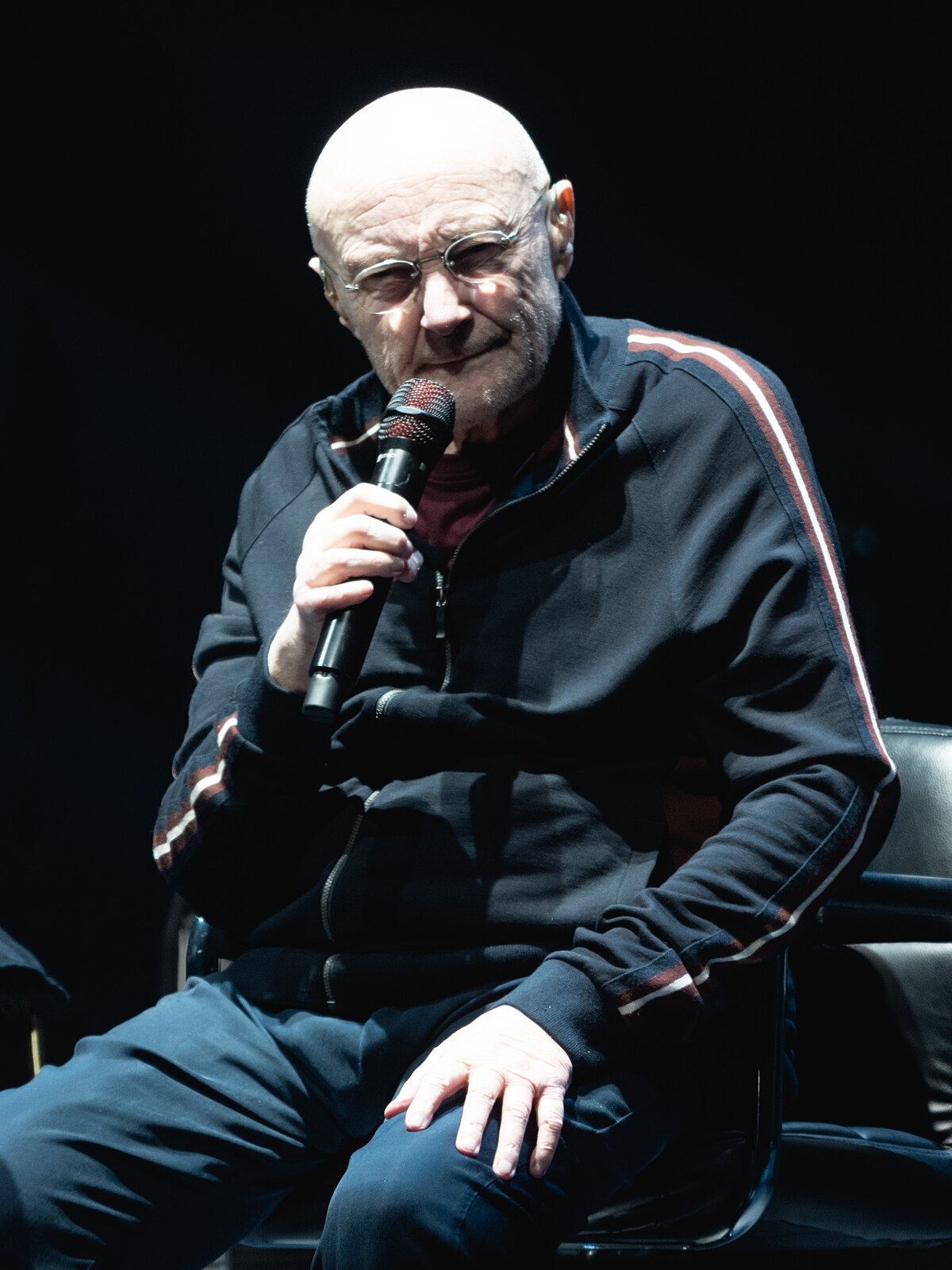
Phil Collins, born Philip David Charles Collins on January 30, 1951, in Chiswick, England, is a name that resonates deeply in the world of music. Known for his exceptional talent as both a singer and a drummer, Collins has made an indelible mark on the music industry, transitioning from a member of the legendary rock band Genesis to a highly successful solo artist. His journey is a testament to his versatility, resilience, and enduring influence in the music world.
Early Life and Musical Beginnings
Phil Collins’ early life was steeped in creativity and entertainment. Growing up in a London suburb, he was introduced to music at a very young age. At just five years old, Collins received his first drum set—a toy gifted by his uncles—which sparked a lifelong passion for rhythm and percussion. His early affinity for drumming was more than a childhood hobby; it was the beginning of a career that would later define a generation of music.
Collins’ introduction to the entertainment industry was not limited to music. As a child actor, he appeared in several productions, including the London stage production of Oliver! in 1964, where he played the role of the Artful Dodger. His brief appearance in The Beatles’ film A Hard Day’s Night further exposed him to the world of show business. These early experiences not only honed his performance skills but also deepened his connection to the entertainment world.
Despite his forays into acting, it was music that truly captured Collins’ heart. By the age of 12, he had formed his first band, where he began developing his skills as a drummer. His early musical endeavors, including recording an album with the band Flaming Youth, provided a solid foundation for what would become a remarkable career.
The Genesis Era: From Drummer to Frontman
Phil Collins’ life took a pivotal turn when he joined Genesis, a band that was already gaining traction in the progressive rock scene. Genesis, originally founded by Peter Gabriel and Mike Rutherford, was known for its complex, art-rock sound. Collins joined the band as a drummer in 1970, contributing not only his technical prowess but also a creative flair that would shape the band’s evolving sound.
As Genesis’ drummer, Collins was instrumental in developing the band’s unique rhythmic complexity. His ability to incorporate odd time signatures and intricate drum patterns added a new dimension to their music. Simultaneously, Collins maintained a separate career in jazz with the band Brand X, showcasing his versatility as a musician.
The departure of Peter Gabriel in 1975 marked a significant turning point for Genesis and for Collins himself. After an exhaustive search for a new lead singer, the band decided to have Collins step into the role. This decision transformed the dynamic of Genesis, leading to a more accessible, pop-oriented sound. Collins’ distinct voice and emotive delivery became the centerpiece of the band’s music, steering Genesis toward mainstream success. The release of albums like A Trick of the Tail and Duke during this period marked the band’s transition from progressive rock to a more commercial sound, leading to increased global recognition.
The Solo Career: A New Chapter of Success
In the early 1980s, Phil Collins began exploring his potential as a solo artist. His debut solo album, Face Value (1981), was a departure from the elaborate compositions of Genesis, featuring a more straightforward and commercially appealing sound. The album’s lead single, “In the Air Tonight,” became an instant hit, showcasing Collins’ knack for creating powerful, emotionally resonant music.
The success of Face Value catapulted Collins into the spotlight, setting the stage for a series of successful solo projects. His follow-up albums, Hello, I Must Be Going! (1982) and No Jacket Required (1985), solidified his status as a solo star. The latter album, in particular, was a massive commercial success, earning Collins multiple Grammy Awards and featuring hit singles like “Sussudio” and “One More Night.”
Collins’ ability to blend pop sensibilities with his background in rock and jazz made his solo work accessible to a broad audience. His music from this era, characterized by its catchy melodies and relatable lyrics, dominated the charts and airwaves. Despite the shift towards a more commercial sound, Collins maintained a level of artistic integrity, avoiding the pitfalls of overproduction and maintaining a balance between accessibility and quality.
Phil Collins and Film: A Multifaceted Talent
The 1980s also saw Phil Collins expanding his talents into the world of film. He composed several soundtracks that achieved significant commercial success. Notably, his work on the soundtrack for the film Buster (1988), which included the hit “A Groovy Kind of Love,” further demonstrated his versatility as an artist.
Collins’ success in film music extended into the 1990s, with his work on the Disney animated film Tarzan (1999). The soundtrack, featuring the song “You’ll Be in My Heart,” earned Collins an Academy Award and a Golden Globe, solidifying his reputation as a multifaceted artist who could seamlessly transition between different mediums.
The Evolution of Genesis: From Progressive Rock to Pop Icons
While Phil Collins’ solo career flourished, his involvement with Genesis continued to shape the band’s evolution. The release of Invisible Touch (1986) marked a significant shift in Genesis’ sound, embracing a more polished, pop-oriented style. The album was a commercial success, producing several hit singles, including the title track “Invisible Touch” and “Land of Confusion.”
Despite criticism from some quarters for abandoning their progressive roots, Genesis found a new audience with their more mainstream sound. The band’s ability to adapt to changing musical trends without losing their core identity was a testament to their creativity and resilience. Collins, as the band’s frontman, played a crucial role in this transition, using his charisma and vocal talent to bring the band’s music to a wider audience.
The 1990s saw further changes for Genesis, with the release of We Can’t Dance (1991) and the subsequent departure of Collins from the band in 1996. His departure marked the end of an era for Genesis, but it also allowed Collins to focus more on his solo projects and other artistic pursuits.
Challenges and Triumphs: The Later Years
Phil Collins’ later years have been marked by both personal and professional challenges. In the mid-2000s, Collins faced serious health issues, including a spinal injury that led to the loss of sensation in his hands, effectively ending his ability to play the drums. Despite these challenges, Collins remained active in the music industry, albeit in a different capacity.
In 2010, Collins released Going Back, an album of Motown covers that paid tribute to the music that influenced him in his youth. The album was well-received, although it was clear that Collins’ days of creating new, original music were largely behind him. His health issues, combined with a desire to spend more time with his family, led Collins to announce his retirement from music in 2011.
However, retirement did not last long. By 2015, Collins had returned to the stage, albeit in a limited capacity. His autobiography, Not Dead Yet (2016), offered fans an intimate look at his life, detailing his struggles with health issues, alcoholism, and the challenges of balancing fame with personal life. The book was both a candid reflection on his life and a celebration of his remarkable career.
The Legacy of Phil Collins
Phil Collins’ impact on the music world is undeniable. With over 100 million albums sold as a solo artist and another 150 million with Genesis, his influence spans generations and genres. His ability to blend rock, pop, and jazz elements into a cohesive and commercially successful sound has made him one of the most versatile and enduring artists in modern music.
Collins’ contributions to music extend beyond his own work. His innovative use of drum machines and gated reverb techniques helped define the sound of the 1980s, influencing countless artists and producers. His collaborations with artists like Eric Clapton, Robert Plant, and Quincy Jones further demonstrate his broad musical reach and the respect he commands in the industry.
As a performer, Collins is known for his dynamic stage presence and his ability to connect with audiences on a deep emotional level. Whether performing with Genesis or as a solo artist, his concerts are characterized by their energy, precision, and emotional intensity. Collins’ ability to convey deep emotion through his music has made him a beloved figure among fans worldwide.
Personal Life and Phil Collins Today
Phil Collins’ personal life has been as eventful as his professional career. He has been married three times and has five children, including actress Lily Collins. His relationships, particularly his divorces, have been the subject of media scrutiny, but Collins has remained private about many aspects of his personal life.
In recent years, Collins has struggled with ongoing health issues, including complications from his spinal injury. Despite these challenges, he continues to perform, albeit with the assistance of a cane and while seated for much of the performance. His resilience in the face of these challenges has only endeared him further to his fans.
In 2021, Collins reunited with Genesis for a farewell tour, with his son Nic Collins taking over drumming duties. The tour was a celebration of the band’s legacy and a fitting tribute to Collins’ enduring impact on the music world.
Conclusion
Phil Collins is more than just a musician; he is a cultural icon whose work has touched millions of lives. From his early days with Genesis to his solo career and beyond, Collins has consistently pushed the boundaries of what is possible in music. His ability to blend genres, innovate within the industry, and connect with audiences on a deep emotional level has made him one of the most influential artists of the past century.
As Collins continues to navigate the challenges of aging and health, his legacy remains secure. His music, whether with Genesis or as a solo artist, continues to inspire new generations of musicians and fans alike. Phil Collins is a testament to the power of creativity, resilience, and the enduring impact of a life dedicated to music.


