
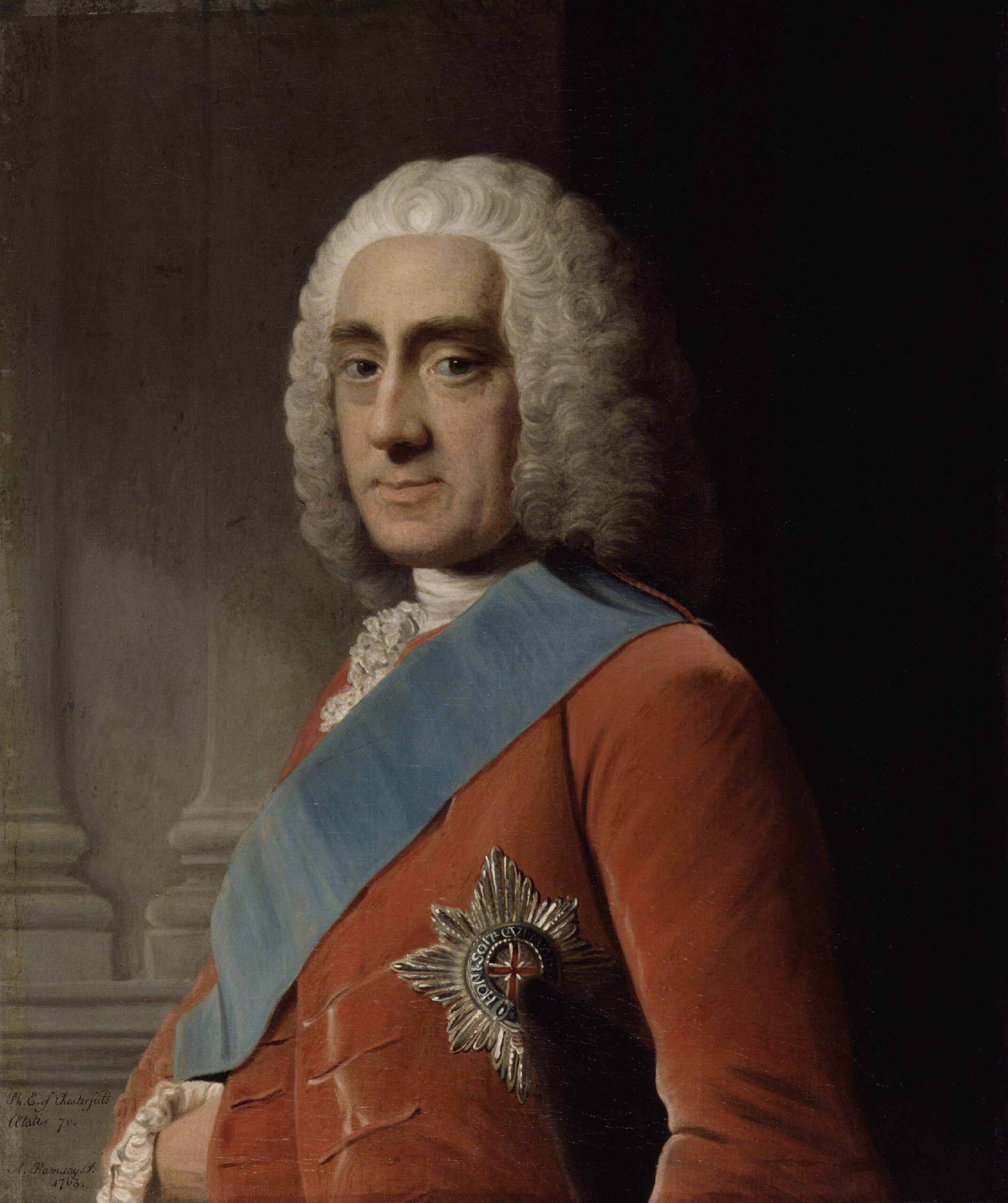
Philip Dormer Stanhope, 4th Earl of Chesterfield, commonly known as Lord Chesterfield, remains an iconic figure in British history, known for his wit, diplomacy, and the legacy of his letters. Born on September 22, 1694, in London, Chesterfield was a man of many talents—statesman, diplomat, writer, and mentor—whose life and works continue to be studied and admired.
Early Life and Education
Philip Dormer Stanhope was born into British aristocracy, his father being Philip Stanhope, the 3rd Earl of Chesterfield, and his mother, Elizabeth Savile, from the noble Savile family. Growing up in such an environment afforded young Philip access to a world of privilege and opportunity. From an early age, he was groomed for a life in public service, receiving an education that was typical of the British upper class.
Chesterfield’s formal education began at Trinity Hall, Cambridge, where he quickly distinguished himself as a student of great intellect and curiosity. His education was not limited to the classroom; like many young noblemen of his time, he embarked on a Grand Tour of Europe, an educational journey that took him through France, Italy, and the Low Countries. These travels not only broadened his cultural and intellectual horizons but also helped him cultivate the social graces and diplomatic skills that would later define his career.
Political Career and Diplomacy
Chesterfield entered the political arena in 1715, taking a seat in the House of Commons as Lord Stanhope of Shelford. His early political career was marked by his association with the Whigs, a political party that championed constitutional monarchism and opposed the absolute power of the monarchy. Chesterfield’s wit, charm, and rhetorical skills quickly made him a prominent figure in Parliament.
In 1726, upon the death of his father, Chesterfield inherited the title of Earl of Chesterfield and took his place in the House of Lords. His rise in the political world was swift, and he soon became a trusted advisor to King George II. Chesterfield’s diplomatic skills were particularly evident during his tenure as the British Ambassador to The Hague, where he played a crucial role in negotiating treaties and maintaining peace in Europe.
One of the highlights of Chesterfield’s political career was his brief tenure as Lord Lieutenant of Ireland from 1745 to 1746. Although his time in Ireland was short, Chesterfield left a lasting impact through his efforts to improve the administration and promote religious tolerance. His governance was marked by a pragmatic approach to leadership, where he prioritized the well-being of the people over rigid adherence to policies.
Personal Traits and Character
Despite his public success, Lord Chesterfield’s personal life was marked by complexities and contradictions. He was known for his sharp intellect and refined manners, but also for his calculating nature and sometimes ruthless approach to achieving his goals. Chesterfield’s contemporaries often described him as a man who was more interested in appearances and social status than in genuine human connection.
This duality in his character is perhaps best captured in his famous Letters to His Son. These letters, written over many years, were intended as a guide for his illegitimate son, Philip Stanhope, offering advice on everything from personal conduct to the art of diplomacy. While the letters are celebrated for their wisdom and eloquence, they also reveal Chesterfield’s obsession with social graces and his belief in the importance of manipulating appearances to achieve success.
For instance, in one of his letters, Chesterfield advises his son: “You must be serious, but not dull; lively, but not frivolous; and with an air of business, be however ready to have done with it.” This encapsulates his belief in the importance of balancing different aspects of one’s persona to navigate the complexities of social and political life.
Literary Contributions and Legacy
Apart from his political and diplomatic achievements, Chesterfield’s lasting legacy lies in his contributions to English literature and the art of letter writing. His letters, particularly those addressed to his son, are considered masterpieces of English prose. They are rich in wit, insight, and practical advice, offering a window into the mind of a man who was both a product and a critic of his time.
The letters were first published posthumously in 1774, edited by his widow. These writings have since become essential reading for those interested in 18th-century British history, literature, and social norms. Chesterfield’s advice on manners, education, and the conduct of life reflects the values and expectations of the British aristocracy during the Enlightenment, a period that emphasized reason, refinement, and intellectualism.
Chesterfield’s letters also provide a nuanced view of the challenges faced by individuals in maintaining their integrity while navigating the demands of society. His emphasis on the importance of reputation, and the need to balance sincerity with social expectations, continues to resonate in discussions about leadership and personal development.
The Decline and Challenges
As Chesterfield aged, his health began to decline. He faced significant physical challenges, including progressive deafness and eventual blindness. However, these disabilities did not diminish his intellectual abilities or his capacity to engage in social and political life. His sharp memory and refined manners remained intact, allowing him to continue participating in society despite his physical limitations.
Chesterfield’s later years were also marked by a sense of disillusionment. His relationship with his son, whom he had invested so much time and effort in grooming for success, was a source of personal disappointment. His son’s untimely death in 1768, just five years before Chesterfield’s own death, was a profound blow that left him reflecting on the futility of many of his ambitions.
Death and Posthumous Fame
Philip Dormer Stanhope, 4th Earl of Chesterfield, died on March 24, 1773. At the time of his death, Chesterfield was a well-respected figure, but his fame has only grown in the centuries since. His letters, which were published after his death, solidified his reputation as a man of letters and a sage of social conduct.
Chesterfield’s legacy is complex. On one hand, he is remembered as a brilliant statesman and a master of the English language. On the other hand, his life and writings reveal the limitations of a worldview that placed so much emphasis on appearances and social manipulation. Modern readers often approach his work with a mixture of admiration and critique, recognizing the wisdom in his advice while also questioning the ethical implications of some of his teachings.
Historical Context and Nuances
Understanding Chesterfield’s life and legacy requires placing him within the broader context of 18th-century Britain. This was a time of significant social and political change, marked by the rise of constitutional monarchy, the expansion of the British Empire, and the intellectual movement known as the Enlightenment.
Chesterfield’s life and work reflect the tensions of this period. He was a product of the aristocratic class, deeply invested in the preservation of its privileges and status. At the same time, his writings reveal a keen awareness of the changing social landscape and the need for adaptability and refinement in navigating it.
Chesterfield’s emphasis on education, particularly the cultivation of manners and the arts of conversation and diplomacy, was in line with the Enlightenment’s focus on reason, knowledge, and the improvement of the individual. His letters are often seen as part of the larger genre of conduct literature, which sought to provide guidance on how to live a virtuous and successful life in a complex and often contradictory world.
However, Chesterfield’s worldview was also marked by a certain cynicism. He believed that success in life required not only knowledge and virtue but also a degree of cunning and the ability to manipulate appearances. This perspective reflects the realities of a society in which social mobility was limited and reputation was everything.
Chesterfield’s Place in Modern Thought
Today, Chesterfield’s writings are studied not only for their historical significance but also for their insights into human nature and the complexities of social interaction. His letters continue to be read by those interested in the art of diplomacy, leadership, and personal development.
Chesterfield’s belief in the importance of manners and social grace remains relevant, particularly in a world where communication and interpersonal skills are highly valued. However, his emphasis on the manipulation of appearances is often critiqued in a modern context that values authenticity and transparency.
In many ways, Chesterfield’s life and work serve as a reminder of the complexities of human nature and the challenges of navigating social and political life. His legacy is a testament to the enduring relevance of questions about how to live well, how to lead others, and how to balance personal ambition with ethical considerations.
Conclusion
Philip Dormer Stanhope, 4th Earl of Chesterfield, was a man of his time, yet his influence transcends the 18th century. His contributions to literature, politics, and social thought continue to be relevant today. Chesterfield’s life is a study in the complexities of human nature and the challenges of maintaining integrity in a world that often rewards appearances over substance. His letters, rich in wisdom and insight, remain a valuable resource for those seeking to understand the art of living and leading in a complex and ever-changing world.


