
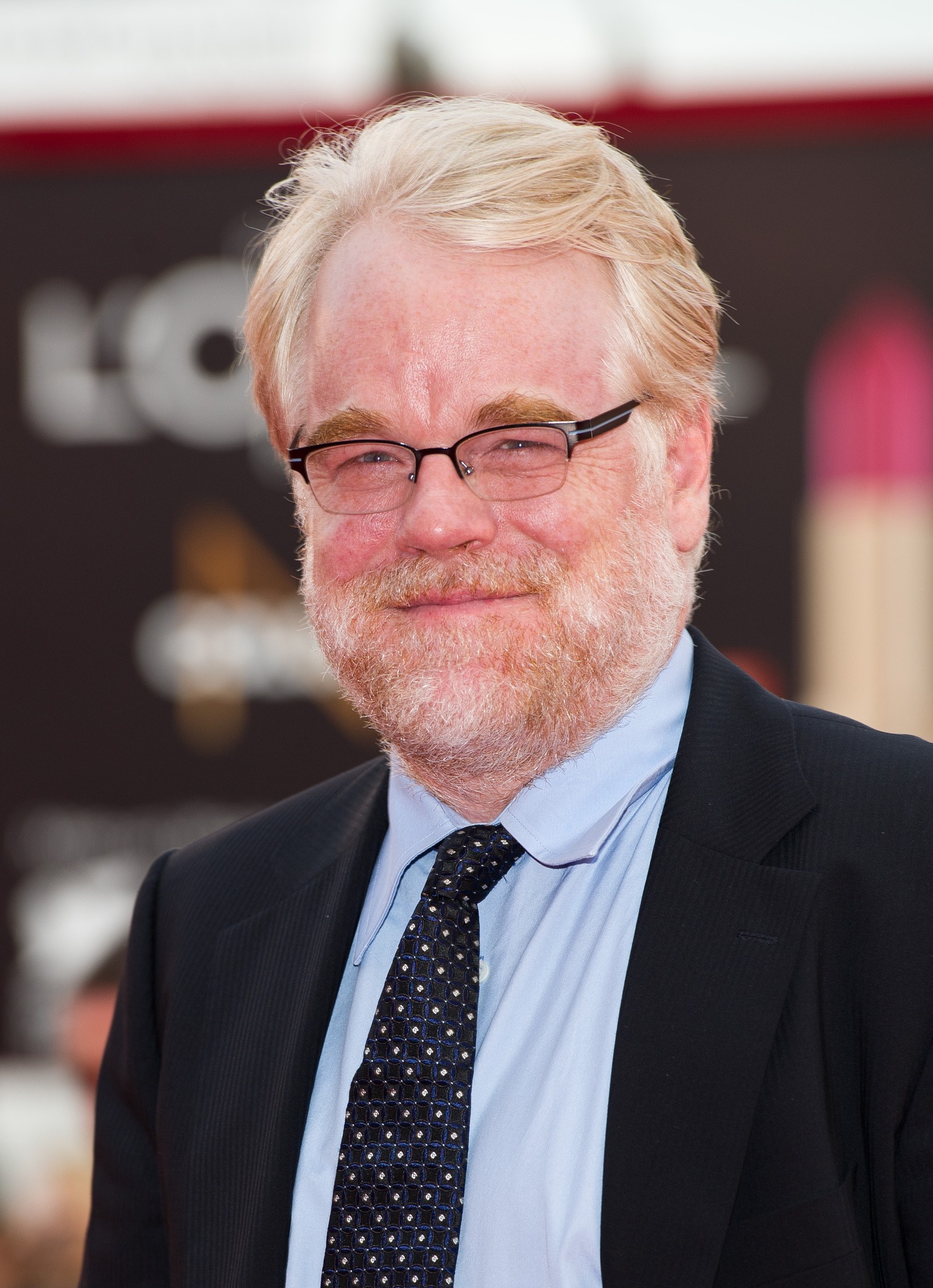
Philip Seymour Hoffman, an actor revered for his remarkable versatility and deeply immersive performances, is a name that resonates powerfully in the world of cinema. Born on July 23, 1967, in Fairport, New York, Hoffman’s life was a complex journey marked by extraordinary talent, professional triumphs, and personal struggles. His career, which spanned over two decades, left an indelible mark on the film industry, making him one of the most respected actors of his generation.
Early Life and Introduction to Acting
Philip Seymour Hoffman was born into a family that, while stable, faced its own set of challenges. His father worked as a traveling computer systems salesman, which often kept him away from home, while his mother took on the responsibility of raising Hoffman and his three siblings. The family dynamic was further complicated when his parents separated when Hoffman was only nine years old. Despite these early difficulties, Hoffman maintained a close relationship with both parents, particularly his mother, who later became a lawyer and political activist.
During his high school years, Hoffman was heavily involved in sports, excelling in tennis, baseball, and wrestling. However, a neck injury sustained during a wrestling match inadvertently redirected his focus toward acting. Initially, acting was just a way to pass the time and perhaps impress a girl he was interested in, but it soon became apparent that Hoffman had a natural aptitude for the craft. This unexpected turn of events marked the beginning of what would become a distinguished acting career.
The Academic Path to the Arts
After graduating from high school, Hoffman enrolled at New York University’s Tisch School of the Arts in 1985, where he pursued formal training in acting. His time at Tisch was pivotal, as it not only honed his skills but also deepened his passion for the stage and screen. However, it was also during this period that Hoffman began to struggle with substance abuse, a battle that would persist throughout his life. In 1989, following a stint in rehab, Hoffman emerged with a renewed focus on his craft, determined to succeed as an actor.
The Struggles and Triumphs of a Young Actor
Upon completing his studies, Hoffman landed an opportunity at the Williamstown Theatre Festival, which proved to be a critical stepping stone in his early career. To support himself during these formative years, Hoffman took on various jobs, including stints as a waiter, lifeguard, and cashier. However, his heart was always with acting, and he quickly found his way into New York’s vibrant theater scene, performing in numerous off-Broadway productions.
Hoffman’s first significant break came in 1991 when he appeared in an episode of the television series Law & Order. Shortly thereafter, he moved to Los Angeles, once again following a romantic interest, and began to gain recognition in small film roles. His breakthrough role came in 1992 when he was cast in Scent of a Woman alongside Al Pacino and Chris O’Donnell. This film marked a turning point in Hoffman’s career, showcasing his ability to hold his own alongside some of Hollywood’s most established stars.
The Ascent to Stardom
Following the success of Scent of a Woman, Hoffman’s career began to accelerate. He appeared in a series of supporting roles throughout the 1990s, gradually building a reputation as a talented and reliable character actor. Some of his notable early films include Twister (1996), Boogie Nights (1997), and The Big Lebowski (1998). Although often cast in supporting roles, Hoffman brought a unique intensity and depth to each character he portrayed, making him a standout in every production.
In 1999, Hoffman starred in Paul Thomas Anderson’s Magnolia and Anthony Minghella’s The Talented Mr. Ripley, further solidifying his reputation as an actor of immense talent. His performances were consistently praised by critics, who admired his ability to bring complex, often deeply flawed characters to life with authenticity and nuance.
Peak of Career: Acclaim and Awards
The 2000s marked the peak of Hoffman’s career, as he transitioned from a respected character actor to a leading man. His portrayal of the eccentric author Truman Capote in Capote (2005) was a defining moment. The film, which chronicles Capote’s efforts to write In Cold Blood, a true crime novel, required Hoffman to embody the writer’s peculiarities, voice, and emotional depth. His performance was widely acclaimed, earning him the Academy Award for Best Actor, along with a Golden Globe and a BAFTA Award.
Following the success of Capote, Hoffman continued to deliver powerful performances in films such as Charlie Wilson’s War (2007), Doubt (2008), and The Master (2012). Each role further demonstrated his range and commitment to his craft. In Doubt, Hoffman played a Catholic priest accused of inappropriate behavior, a role that showcased his ability to navigate complex moral landscapes and ambiguous characters. His performance earned him another Oscar nomination, solidifying his status as one of the greatest actors of his generation.
The Dual Life: Stage and Screen
Throughout his career, Hoffman remained deeply committed to the theater, a medium he regarded with great reverence. In addition to his work in film, he frequently returned to the stage, performing in and directing various productions. In 2000, he won a Tony Award for his role in True West, and he continued to receive accolades for his stage work in productions such as Long Day’s Journey Into Night and Death of a Salesman. His ability to seamlessly transition between film and theater demonstrated his versatility and deep understanding of the craft of acting.
Personal Struggles and Tragic End
Despite his professional success, Hoffman’s life was marred by personal struggles, particularly his battle with substance abuse. He had first entered rehab in 1989 but managed to stay sober for over two decades. However, in 2012, Hoffman relapsed, leading to a public struggle with addiction. He sought treatment again, but the challenges of overcoming addiction proved to be overwhelming.
On February 2, 2014, the world was shocked by the news of Philip Seymour Hoffman’s death. He was found in his Manhattan apartment, having succumbed to a heroin overdose at the age of 46. His death was a tragic loss to the film and theater communities, which mourned the passing of one of the most gifted actors of his time.
Legacy and Impact on the Film Industry
Philip Seymour Hoffman’s legacy is one of unparalleled talent and a deep commitment to his craft. He was an actor who consistently pushed the boundaries of his performances, unafraid to explore the darkest corners of human experience. His ability to disappear into his roles, combined with his dedication to portraying even the most challenging characters with empathy and nuance, set him apart as a true artist.
Hoffman’s influence on the film industry is profound. He inspired a generation of actors with his dedication to authenticity and his refusal to compromise on the complexity of his characters. Directors and co-stars alike praised his work ethic and the intensity he brought to each project. His body of work continues to be studied and admired, serving as a benchmark for excellence in acting.
Conclusion
Philip Seymour Hoffman’s life and career were marked by extraordinary achievements and profound struggles. He was an actor of rare depth and sensitivity, capable of bringing even the most complex characters to life with nuance and authenticity. His untimely death was a tragic reminder of the personal battles that many face, even in the midst of professional success.
As we remember Philip Seymour Hoffman, we celebrate not only his remarkable contributions to film and theater but also his humanity. He was an artist who sought to understand and portray the full spectrum of human experience, from the sublime to the tragic. His legacy endures in the performances he left behind, each a testament to his immense talent and his enduring impact on the world of acting.


