
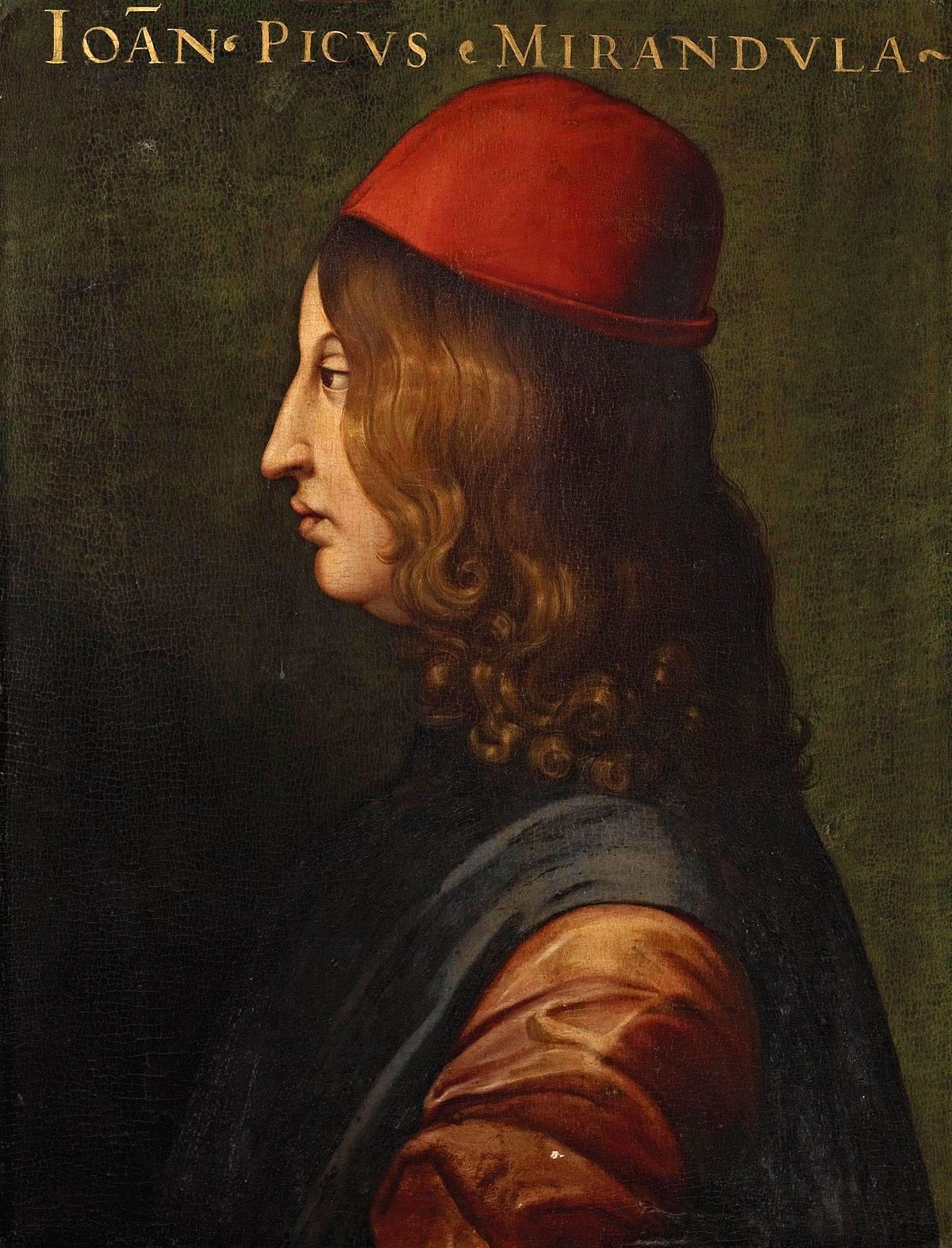
Giovanni Pico della Mirandola, born on February 24, 1463, in the Modena region of Italy, is a figure often described as one of the most brilliant and controversial thinkers of the Italian Renaissance. His life, though short-lived, left an indelible mark on the intellectual landscape of Europe. Pico’s age of only 31 years was packed with intellectual achievements, fierce controversies, and a relentless pursuit of knowledge. This article delves deep into his life, exploring the key events that shaped his fame and the enduring legacy of his ideas.
Early Life and Education: A Prodigy in the Making
Pico was born into a noble family, the son of Giovan Francesco I and Giulia Boiardo. From a young age, Pico displayed an extraordinary intellect, which was nurtured by his family, particularly his mother, who encouraged his pursuit of knowledge. At the tender age of 14, Pico began his formal education, moving from one prestigious university to another, including Bologna, Ferrara, and Pavia. His studies were not confined to the traditional subjects of the time; he immersed himself in a wide array of disciplines, including Hebrew, Greek, Latin, Arabic, and Chaldean. This linguistic prowess would later serve as the foundation for his work in philosophy, theology, and esoteric studies.
Pico’s intellectual journey took him to the University of Paris, where he delved into the study of canon law, humanistic studies, rhetoric, and mathematical logic. His ability to master multiple languages and his deep understanding of various philosophical traditions made him a unique figure in the Renaissance intellectual community.
The Quest for Universal Knowledge: Pico’s Philosophical Vision
Pico della Mirandola is best known for his attempt to reconcile different philosophical traditions and religious beliefs into a single, universal system of thought. This ambitious project was encapsulated in his 900 Theses, a collection of propositions that he planned to defend in a public debate in Rome in 1486. These Theses were a bold synthesis of Aristotelian, Platonic, and Oriental philosophies, as well as Christian theology and Kabbalistic mysticism.
Pico’s goal was nothing less than to create a universal philosophy that could bridge the gaps between different cultures and religions. He believed that all philosophical systems, despite their apparent differences, were ultimately aimed at understanding the divine. This vision of philosophical unity earned him the title of “Prince of Concordia,” reflecting his desire to harmonize the diverse intellectual traditions of his time.
However, Pico’s quest for universal knowledge was not without its challenges. The Church, particularly under the papacy of Innocent VIII, viewed his ideas with suspicion. A commission of theologians was appointed to examine his 900 Theses, and they declared several of them heretical. In response, Pico penned a passionate defense of his ideas, known as the “Apologia,” in which he fiercely defended his intellectual freedom and criticized his detractors as ignorant.
Controversy and Condemnation: Pico’s Struggles with the Church
Pico’s bold ideas and uncompromising stance on intellectual freedom soon brought him into conflict with the Church. His 900 Theses were condemned by Pope Innocent VIII, and Pico was forced to flee to France to escape arrest. Despite this setback, Pico’s reputation as a brilliant thinker continued to grow, thanks in part to the support of powerful patrons like Lorenzo de’ Medici, who helped secure his release from imprisonment in France.
Pico’s relationship with the Church remained fraught with tension throughout his life. He was accused of heresy, and his works were banned by the Church. However, his ideas continued to circulate among intellectual circles, and he found solace in the company of like-minded scholars and humanists in Florence, where he became a member of the Platonic Academy.
Personal Life: Love, Scandal, and Spiritual Transformation
Pico della Mirandola’s personal life was as eventful as his intellectual pursuits. He was known for his striking physical appearance—tall, with blonde hair and piercing blue eyes—and his charismatic personality. These qualities made him a popular figure in the social circles of Florence, but they also led to several scandals.
One of the most infamous episodes in Pico’s life was his attempted abduction of Margherita, the wife of Giuliano Mariotto de’ Medici, in 1486. The incident, which took place in Arezzo, was a dramatic affair that ended with Pico being captured and Margherita being returned to her husband. Despite this scandal, Pico’s charm and intellect ensured that he remained a favored guest in the courts of Italy.
As Pico grew older, his life took on a more spiritual dimension. The condemnation of his 900 Theses and his subsequent struggles with the Church led him to embrace a more ascetic lifestyle. He withdrew from the worldly pleasures that had once characterized his life and devoted himself to prayer, meditation, and the study of religious texts. This spiritual transformation was influenced by his close friendship with Girolamo Savonarola, a Dominican friar known for his fiery sermons and calls for religious reform.
Legacy: A Lasting Impact on Renaissance Thought
Pico della Mirandola’s life came to a tragic end on November 17, 1494, when he died at the age of 31. The exact cause of his death remains a matter of speculation, with some historians suggesting that he was poisoned, possibly due to his controversial ideas and powerful enemies.
Despite his untimely death, Pico’s legacy has endured. His 900 Theses, although condemned by the Church, are now recognized as a monumental achievement in the history of philosophy. His efforts to reconcile different philosophical and religious traditions anticipated the modern quest for interfaith dialogue and the pursuit of universal truth.
Pico’s influence can be seen in the works of later philosophers and theologians, including his nephew Gianfrancesco Pico della Mirandola, who published a posthumous edition of his uncle’s writings. Pico’s ideas also played a significant role in the development of Renaissance humanism, particularly in the emphasis on the dignity and potential of the individual.
In conclusion, Giovanni Pico della Mirandola was a towering figure in the intellectual landscape of the Renaissance. His life, marked by brilliance, controversy, and a relentless pursuit of knowledge, serves as a testament to the power of ideas and the enduring quest for understanding. Pico’s legacy continues to inspire scholars and thinkers today, reminding us of the importance of intellectual freedom and the pursuit of universal knowledge.


