
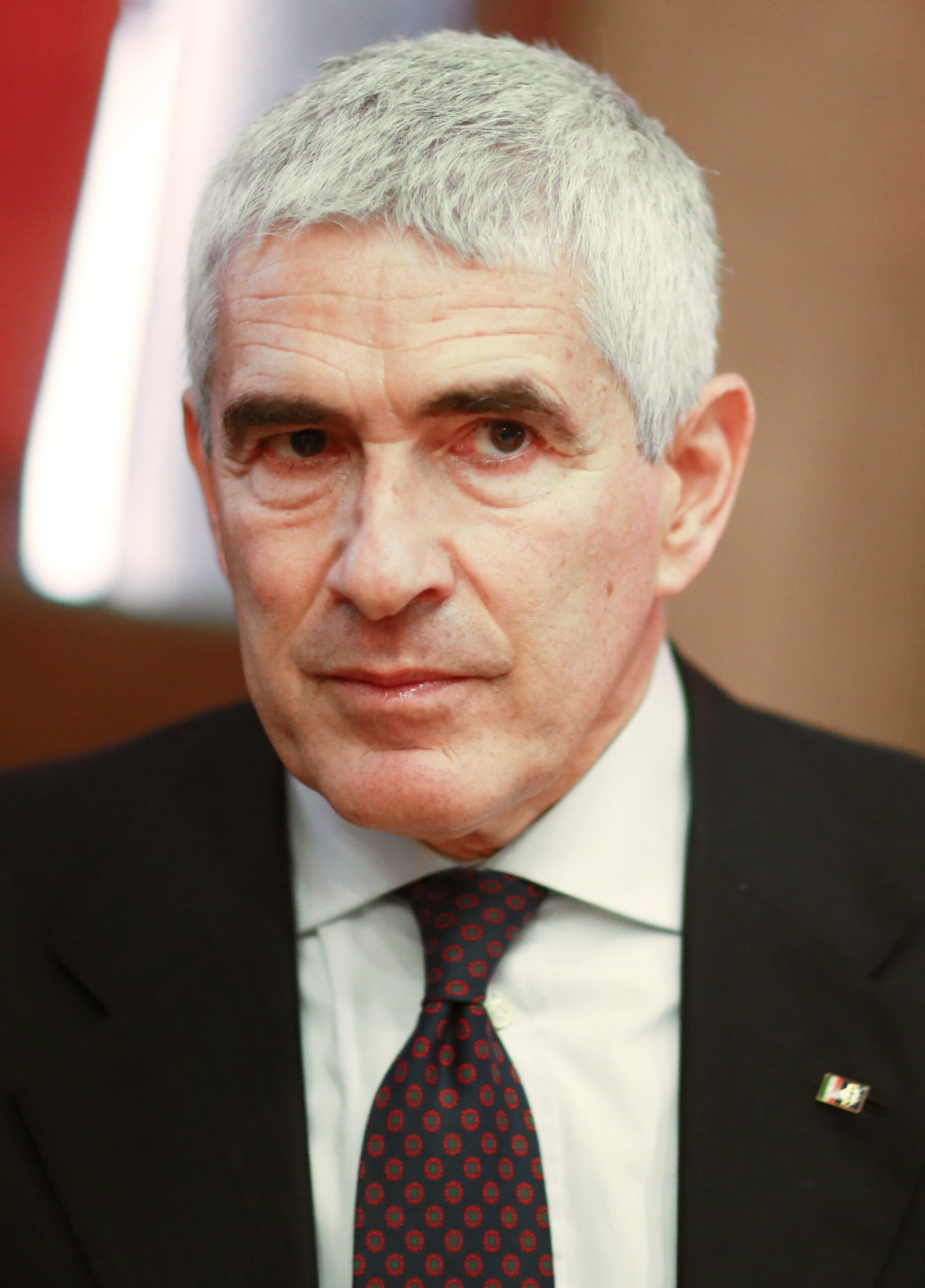
Pier Ferdinando Casini is a towering figure in Italian politics, with a career that spans several decades and numerous political transformations. Born on December 3, 1955, in Bologna, Italy, Casini has been a central player in the shifting landscape of Italian political life, moving from the traditional Christian Democracy (Democrazia Cristiana, DC) to founding and leading new centrist political movements. His journey reflects not only his personal evolution but also the broader changes in Italy’s political dynamics over the past half-century.
Early Life and Political Beginnings
Casini was born into a family that was deeply rooted in the values of the Christian Democratic tradition. His early education led him to the University of Bologna, where he earned a degree in law. It was during his university years that Casini first became actively involved in politics, joining the Christian Democracy (DC), a party that had been a dominant force in Italian politics since the end of World War II.
His early career was marked by rapid ascension within the ranks of the DC. By the 1980s, Casini had become a close associate of Arnaldo Forlani, one of the most influential leaders within the DC. Casini’s rise was emblematic of the broader generational shift taking place within the party, as younger politicians began to assert themselves in the leadership ranks. His appointment as the President of the Young Christian Democrats and his membership in the National Directorate of the DC in 1987 positioned him as one of the future leaders of the party.
The 1990s were a turbulent time in Italian politics, marked by the collapse of the DC and the rise of new political movements. The DC was deeply affected by the Tangentopoli scandal, a nationwide judicial investigation into political corruption that led to the downfall of many traditional political parties. In an attempt to salvage the party, Forlani handed over the leadership to Mino Martinazzoli in 1992, but the damage was done. By January 1994, the DC had dissolved, leading to the formation of two new parties: the Italian People’s Party (Partito Popolare Italiano, PPI) and the Christian Democratic Center (Centro Cristiano Democratico, CCD), which Casini co-founded with Clemente Mastella.
As the secretary and later the president of the CCD, Casini was instrumental in shaping the party’s direction during this critical period. The CCD became a key player in the center-right coalition led by Silvio Berlusconi’s Forza Italia, marking Casini’s first major foray into national political leadership. His election to the European Parliament in 1994 and again in 1999, where he aligned with the European People’s Party, further solidified his status as a significant figure in both Italian and European politics.
Ascension to the Presidency of the Chamber of Deputies
The 2001 Italian general elections were a turning point in Casini’s career. As a leader within the House of Freedoms (Casa delle Libertà), the center-right coalition led by Berlusconi, Casini played a pivotal role in the coalition’s victory. On May 31, 2001, he was elected as the President of the Chamber of Deputies, becoming the youngest person to hold this prestigious position since the establishment of the Italian Republic, after Irene Pivetti, who was elected in 1994.
Casini’s tenure as President of the Chamber of Deputies was marked by his commitment to institutional integrity and impartiality. He was widely respected across the political spectrum for his ability to maintain decorum and for his efforts to foster dialogue between the often fractious political factions in Italy. His leadership during this period was a testament to his deep understanding of the political process and his commitment to democratic principles.
The 2000s: Shifting Alliances and New Beginnings
The early 2000s saw Casini expanding his influence beyond Italy’s borders. In January 2002, he embarked on a diplomatic tour of Latin America, establishing himself as a respected statesman with a balanced and authoritative approach to international relations. His ability to navigate complex political landscapes earned him the moniker of “ciampista,” a reference to his alignment with the dialogue-based approach advocated by then-President Carlo Azeglio Ciampi.
On the personal front, Casini’s life was also in the public eye. His separation from his first wife, Roberta Lubich, with whom he had two daughters, Benedetta and Maria Carolina, was widely covered by the media. He later formed a relationship with Azzurra Caltagirone, the daughter of prominent businessman and publisher Franco Caltagirone. The couple, despite their significant age difference, became a fixture in Italian social circles and had two children together, Caterina and Francesco.
As the decade progressed, Casini began to distance himself from the House of Freedoms coalition, particularly after a falling out with Clemente Mastella, who left the center-right to align with the center-left. In 2006, as political divisions within the center-right deepened, Casini began to chart a more independent course. By 2008, this culminated in the formation of the Union of the Center (Unione di Centro, UdC), a new political entity that sought to create a centrist alternative in Italian politics.
The 2010s were a decade of significant political realignment in Italy, and Casini was at the forefront of these changes. In 2011, Casini and the UdC played a crucial role in supporting the technical government led by Mario Monti. This government, which was tasked with navigating Italy through a severe economic crisis, was backed by an unusual coalition that included parties from across the political spectrum, including Berlusconi’s PdL, the center-left PD, and the UdC. Casini’s support for Monti’s government demonstrated his commitment to stabilizing Italy during a period of intense economic and political uncertainty.
In the 2013 general elections, the UdC aligned with the “With Monti for Italy” coalition, and Casini was elected to the Senate representing Basilicata and Campania. However, the elections saw a significant decline in support for the UdC, reflecting the broader challenges faced by centrist parties in an increasingly polarized political landscape.
Despite the setbacks, Casini continued to play an active role in Italian politics. He was elected President of the Senate’s Foreign Affairs Committee in May 2013, where he focused on Italy’s role in international diplomacy. His leadership in this role further solidified his reputation as a statesman with a deep understanding of global affairs.
In 2017, Casini founded a new political movement, Centrists for Europe (Centristi per l’Europa), following a split with the UdC. This new entity aimed to represent a pro-European, centrist voice in Italian politics at a time when euroskepticism was on the rise. Casini’s vision was to create a political space that could bridge the growing divide between the left and right, a goal that reflected his long-standing commitment to moderation and dialogue.
Recent Years: A Continued Influence in Italian Politics
In 2018, Casini was elected as the President of the Italian Interparliamentary Union, a bicameral body that is part of the World Organization of Parliaments (IPU). This position allowed him to continue his work in fostering international cooperation and dialogue, areas in which he had built considerable expertise over his long career.
As the 2020s began, Casini remained an influential figure in Italian politics. He supported the second government of Giuseppe Conte during the COVID-19 pandemic, demonstrating his continued commitment to stability and governance during crises. His name was even floated as a potential candidate for the Italian Presidency in 2021, highlighting his enduring relevance in the political arena.
Historical Context and Legacy
To fully appreciate Pier Ferdinando Casini’s career, it is essential to consider the broader historical context of Italian politics. Casini’s political journey reflects the shifts and transformations that have characterized Italy since the end of the Cold War. The collapse of the Christian Democratic Party, the rise of new political movements, and the challenges of navigating a fragmented and polarized political landscape have all shaped his career.
Casini’s ability to adapt to these changes, to build new political alliances, and to maintain his relevance over several decades is a testament to his political acumen and his deep understanding of the complexities of Italian politics. His commitment to centrist values, to dialogue, and to the principles of democracy has been a constant thread throughout his career, even as the political environment around him has shifted.
Conclusion
Pier Ferdinando Casini is more than just a politician; he is a symbol of the endurance of centrist values in a time of political upheaval. His life and career reflect the broader story of Italy’s political evolution, from the post-war dominance of Christian Democracy to the fragmentation and realignment of the 21st century. As Italy continues to navigate the challenges of the modern era, figures like Casini remain vital, offering a vision of politics that values dialogue, moderation, and a commitment to democratic principles.
As the world looks to the future, Pier Ferdinando Casini’s legacy will undoubtedly be one of resilience and adaptability, traits that have allowed him to remain a significant figure in Italian politics for over four decades. His story is a reminder of the importance of maintaining a steady course in the often turbulent waters of political life, and of the enduring value of centrist principles in a world that is increasingly divided.


