
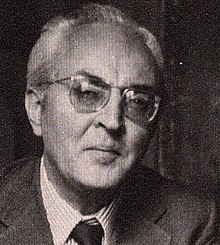
Piero Chiara, born Pierino Angelo Carmelo Chiara on March 23, 1913, in Luino, Italy, is one of the most celebrated Italian writers of the 20th century. Known for his vivid depictions of life around Lake Maggiore and his insightful, often humorous portrayals of provincial life, Chiara’s work has left an indelible mark on Italian literature. His life was as colorful as his writing, filled with rich experiences that informed his creative output. This comprehensive overview will explore Chiara’s life, his rise to fame, and the significant contributions he made to Italian culture.
Early Life and Background
Piero Chiara was born in the small town of Luino, located on the picturesque shores of Lake Maggiore, in the Lombardy region of northern Italy. His father, Eugenio Chiara, originally from Resuttano in Sicily, worked as a customs officer, while his mother, Virginia Maffei, hailed from Comnago, a village on the Piedmont side of Lake Maggiore. Chiara’s upbringing in this border region, with its unique blend of cultures and languages, would later serve as a rich source of inspiration for his literary work.
Chiara’s early education was somewhat unconventional. He attended several religious schools but struggled with the formalities of academic life, showing little interest in his studies. Despite this, he managed to earn a diploma in 1929. His formal education might have been lackluster, but Chiara was an autodidact, a self-taught intellectual who voraciously consumed literature and nurtured a deep curiosity about the world around him.
After his schooling, Chiara spent some time traveling between Italy and France, a period that further broadened his horizons. In 1932, he began working in the judiciary as a clerk, a position that pleased his parents but did little to satisfy his creative urges. This tension between societal expectations and personal ambition is a theme that would later surface in his writing.
The War Years and Literary Beginnings
The 1930s were a turbulent time in Europe, and Chiara’s life was no exception. In 1936, he married Jula Scherb, a Swiss-German woman, and the couple had a son, Marco. However, the marriage was short-lived. Shortly after, Chiara found himself entangled in the political turmoil of the time. Although he was largely apolitical, the rise of Fascism in Italy forced him to flee to Switzerland in 1944 after an arrest warrant was issued for him by the Fascist Special Tribunal.
In Switzerland, Chiara lived in refugee camps, an experience that deeply influenced his worldview. Despite the hardships, this period marked the beginning of his literary career. He started writing short stories and sketches, drawing from the rich tapestry of characters and situations he encountered during his time in exile.
After World War II, Chiara returned to Italy and took up a position as a teacher of Italian literature at a high school in Zugerberg, Switzerland. However, his passion for writing soon took precedence over his teaching career. Upon his return to Italy, Chiara fully immersed himself in the world of literature, a move that would eventually lead to widespread acclaim.
Literary Style and Themes
Piero Chiara’s literary work is characterized by its rich, descriptive prose and the sharp, often ironic, insights he offers into human nature. His writing style, while straightforward and accessible, is layered with subtle humor and a deep understanding of the complexities of life in small Italian towns.
Chiara’s narratives are typically set in the region around Lake Maggiore, and his characters are drawn from the everyday lives of the people he observed growing up. These characters—often small-time criminals, gamblers, and dreamers—are depicted with a blend of affection and satire. Chiara had a unique ability to delve into the psychological depths of his characters, revealing their vices and virtues with an unflinching yet compassionate eye.
One of the most striking features of Chiara’s work is his focus on the mundane aspects of life, which he elevates through his storytelling. His novels and short stories often revolve around themes of adultery, obsession, murder, and the darker sides of human nature, yet these are presented with a lightness of touch that avoids sensationalism. Instead, Chiara offers a humorous critique of societal norms and human foibles, making his work both entertaining and thought-provoking.
Major Works and Achievements
Piero Chiara’s literary output includes several novels and short story collections, many of which have become classics of Italian literature. His first significant success came with the novel “La spartizione” (1964), translated as “The Partition,” which established him as a major literary figure in Italy. The novel’s success led to its adaptation into the 1970 film “Venga a prendere il caffè da noi” (Come Have Coffee with Us), directed by Alberto Lattuada and starring Ugo Tognazzi.
However, it was “La stanza del vescovo” (The Bishop’s Room) published in 1976, that brought Chiara his greatest acclaim. The novel, set in a villa on Lake Maggiore, is a brilliant exploration of power, secrecy, and human weakness. It was later adapted into a successful film directed by Dino Risi, featuring Ugo Tognazzi and Ornella Muti. This adaptation further cemented Chiara’s status as a leading figure in Italian culture.
Throughout his career, Chiara was often compared to other Italian literary giants like Giovannino Guareschi, known for his “Don Camillo” series, and Italo Calvino, celebrated for his imaginative and fantastical stories. However, Chiara carved out his own niche with his focus on the microcosm of provincial life and his deep, ironic exploration of human nature.
In addition to his novels, Chiara was a prolific short story writer. His short fiction, often centered on the quirks and eccentricities of life in small towns, is regarded as some of his best work. His ability to capture the essence of a character or a situation in just a few pages is a testament to his skill as a storyteller.
Later Life and Legacy
In the later years of his life, Piero Chiara remained active in both writing and public life. He became involved in politics, holding various positions within the Italian Liberal Party. Despite his political engagements, Chiara continued to write, producing a steady stream of novels and stories that maintained his high literary standards.
Chiara passed away on December 31, 1986, at the age of 73, in Varese, Italy. His last novel, “Saluti notturni dal Passo della Cisa” (Night Greetings from the Cisa Pass), was published posthumously in 1987. The novel, like much of his work, is a rich tapestry of life, love, and the inevitability of death, offering a fitting conclusion to a distinguished literary career.
Chiara’s legacy lives on, not only through his writings but also through the Premio Chiara, a literary prize established in his honor by the city of Varese in 1989. The prize, which is awarded annually, celebrates short fiction—a fitting tribute to a writer who mastered the art of the short story. The festival associated with the prize also serves to promote the cultural heritage of the regions that Chiara so vividly depicted in his work.
In addition to the Premio Chiara, the Festival del Racconto (Storytelling Festival) has been established to further honor Chiara’s contribution to Italian literature. This festival, held in the region of Varese and the neighboring Canton Ticino, Switzerland, features a series of events that celebrate storytelling and the places Chiara loved and wrote about.
Piero Chiara as a Casanova Scholar
Beyond his work as a novelist and short story writer, Piero Chiara was also a respected scholar of Giacomo Casanova, the famed Italian adventurer and writer. Chiara’s fascination with Casanova led him to become one of the foremost experts on the subject. His writings on Casanova, compiled in the book “Il vero Casanova” (The Real Casanova), published in 1977, offer deep insights into the life and times of the legendary figure.
Chiara’s scholarship was instrumental in producing the first complete edition of Casanova’s autobiographical work, “Histoire de ma vie” (Story of My Life), based on the original manuscript. His work on Casanova extended beyond academia; Chiara also wrote the screenplay for the 1980 television adaptation of Arthur Schnitzler’s “Il ritorno di Casanova” (The Return of Casanova), further cementing his reputation as an expert on the subject.
Conclusion: The Enduring Influence of Piero Chiara
Piero Chiara’s contribution to Italian literature and culture is immense. His works continue to be read and appreciated for their wit, insight, and the rich portrayal of life in the Italian provinces. Through his novels, short stories, and scholarly work, Chiara has left a lasting legacy that continues to influence writers and readers alike.
His ability to capture the essence of human experience in a small-town setting, combined with his sharp, often humorous observations, has ensured that his work remains relevant even decades after his death. Piero Chiara’s life and career serve as a reminder of the power of storytelling to illuminate the complexities of human nature and the beauty of everyday life.
As we continue to explore the works of Piero Chiara, we are reminded of the richness of Italian literature and the importance of preserving the cultural heritage that writers like Chiara have so vividly depicted. His stories, filled with the lives of ordinary people and the landscapes of northern Italy, offer a window into a world that, while geographically specific, speaks to universal themes of love, loss, and the human condition.


