
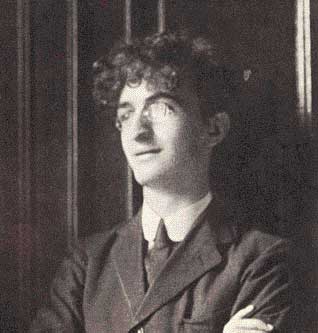
Piero Gobetti, born on June 19, 1901, in Turin, Italy, is an emblematic figure in Italian intellectual and political history. Despite his tragically short life—he died at the age of 24—Gobetti’s influence as a liberal thinker, writer, and anti-fascist activist has left an indelible mark on the cultural and political landscape of Italy. His work, characterized by a profound commitment to freedom, democracy, and intellectual rigor, continues to inspire generations of thinkers and activists. This article delves into the life, achievements, and legacy of Piero Gobetti, providing detailed insights into his contributions to Italian and global intellectual history.
Early Life and Education
Piero Gobetti was born into a family of modest means. His parents, originally from a rural background, had moved to Turin, a city that was rapidly industrializing at the turn of the century. Despite these humble beginnings, Gobetti demonstrated exceptional intellectual abilities from an early age. He attended the prestigious Liceo Gioberti, where he excelled academically, particularly in the humanities.
In 1918, at the age of 17, Gobetti graduated from Liceo Gioberti and enrolled in the Faculty of Law at the University of Turin. However, his interests extended far beyond the confines of legal studies. Even before completing his formal education, Gobetti began to immerse himself in the world of journalism and political activism, driven by a desire to contribute to the cultural and political renewal of Italy.
Early Intellectual Engagement and “Energie Nove”
Gobetti’s intellectual journey began in earnest in 1918 when he founded the magazine “Energie Nove” (New Energies). This publication was a platform for young Italian intellectuals who sought to challenge the prevailing cultural and political norms of the time. “Energie Nove” drew inspiration from the ideas of influential thinkers like Gaetano Salvemini and Benedetto Croce, both of whom were critical of Italy’s post-Risorgimento political establishment.
Gobetti used “Energie Nove” to advocate for a liberal and democratic renewal of Italian society. He was particularly influenced by Croce’s philosophy of “liberalism as a method,” which emphasized the importance of critical thinking and individual freedom as the cornerstones of a healthy democracy. Through his writings, Gobetti sought to promote a new political culture in Italy—one that was rooted in intellectual rigor, moral integrity, and a commitment to social justice.
Political Activism and the Russian Revolution
Gobetti’s engagement with political ideas was not limited to Italian affairs. In 1919, he became involved with the Unitary Socialist group in Turin, which was part of a broader movement seeking to reform Italian socialism. His participation in the group allowed him to connect with other young intellectuals who shared his vision of a more just and democratic society.
One of the most striking aspects of Gobetti’s early work was his interpretation of the Russian Revolution. In an article published in “Energie Nove,” Gobetti offered a unique analysis of the Bolshevik Revolution, which he viewed as a fundamentally liberal event, despite its association with Marxist ideology. He argued that the revolution represented a radical assertion of individual and collective freedom against the oppressive structures of the old regime. This interpretation was controversial, but it reflected Gobetti’s broader commitment to the idea that true political change could only come from a deep and sustained engagement with the principles of liberty and democracy.
“Ordine Nuovo” and Literary Criticism
In 1921, Gobetti began writing for “Ordine Nuovo” (New Order), a publication associated with the Communist faction of the Italian Socialist Party (PSI) in Turin. Although Gobetti was not a communist, his involvement with “Ordine Nuovo” reflected his interest in the broader social and political transformations taking place in Italy and Europe.
Writing under the pseudonym “Giuseppe Baretti,” Gobetti contributed articles on literature and theater to “Ordine Nuovo.” His critiques were often sharp and incisive, targeting some of the most prominent figures in Italian culture at the time. Gobetti’s literary criticism was not merely an exercise in aesthetics; it was a reflection of his broader belief in the power of culture to shape political consciousness. He believed that literature and theater could serve as vehicles for social change by challenging the complacency of both the public and the elite.
Founding “Rivoluzione Liberale” and Anti-Fascist Activities
In 1922, Gobetti founded what would become his most influential publication, “Rivoluzione Liberale” (Liberal Revolution). This weekly magazine was dedicated to the idea that Italy needed a profound political and cultural transformation. Gobetti envisioned “Rivoluzione Liberale” as a platform for both the intellectual elite and the working class to engage in a dialogue about the future of Italian society.
“Rivoluzione Liberale” quickly became a voice of militant anti-fascism. At a time when Benito Mussolini’s fascist movement was gaining power, Gobetti used the magazine to critique the authoritarian tendencies of the regime and to advocate for a liberal, democratic alternative. His writings emphasized the need for a “moral revolution” in Italy—one that would replace the corrupt and complacent political establishment with a new generation of leaders committed to the principles of freedom and justice.
Gobetti’s opposition to fascism made him a target of the regime. In September 1924, he was brutally attacked by fascist thugs, leaving him seriously injured. Despite the violence and intimidation, Gobetti refused to back down. Just two months later, he founded a new magazine, “Il Baretti,” which focused on cultural and literary issues. “Il Baretti” became a gathering point for some of Italy’s most prominent intellectuals, including Eugenio Montale, who published his first collection of poems, “Ossi di Seppia,” through Gobetti’s publishing house.
Publishing House and Cultural Contributions
In addition to his work as a journalist and political activist, Piero Gobetti was also a significant figure in the Italian publishing world. In 1923, he established the Piero Gobetti Publishing House, through which he published a wide range of works on politics, philosophy, literature, and art. His publishing house was instrumental in bringing the works of several important writers and thinkers to the Italian public, including translations of Russian literature and critical studies on figures like Vittorio Alfieri.
Gobetti’s publishing efforts were not merely commercial enterprises; they were part of his broader mission to foster a new intellectual culture in Italy. He believed that by providing access to diverse and challenging ideas, he could help create a more informed and engaged citizenry. His work as a publisher was a natural extension of his belief in the transformative power of culture.
Exile and Death
The relentless persecution by the fascist regime eventually forced Gobetti into exile. In 1926, after another brutal assault by fascist forces that left him unconscious outside his home, Gobetti fled to Paris. However, his health, already weakened by the beatings and the harsh conditions he had endured, continued to deteriorate.
In Paris, Gobetti continued his work as best he could, but his physical condition worsened rapidly. On February 15, 1926, Piero Gobetti died of bronchitis, a condition exacerbated by the injuries and hardships he had suffered. He was only 24 years old.
Legacy and Impact
Despite his untimely death, Piero Gobetti’s influence on Italian and European intellectual history is profound. His writings, particularly those published in “Rivoluzione Liberale,” continue to be studied and celebrated for their insights into the nature of political power, democracy, and freedom. Gobetti’s commitment to liberalism, even in the face of overwhelming opposition, has made him a symbol of resistance to tyranny and authoritarianism.
Gobetti’s work laid the groundwork for many of the intellectual and political movements that would emerge in Italy after World War II. His ideas about the importance of moral and cultural renewal, as well as his critique of fascism, resonated with the post-war generation of Italian intellectuals and activists. His legacy is also reflected in the continued relevance of his writings, which offer a powerful critique of political complacency and a call to action for those who value freedom and justice.
Conclusion
Piero Gobetti’s life, though tragically short, was marked by an extraordinary commitment to intellectual and political freedom. His work as a writer, publisher, and activist remains a testament to the power of ideas to challenge and change the world. Gobetti’s legacy continues to inspire those who believe in the possibility of a more just and democratic society, and his life serves as a reminder of the sacrifices that often accompany the pursuit of such ideals.


