
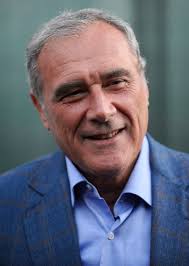
Piero Grasso, born Pietro Grasso on January 1, 1945, in Licata, Sicily, is a name that resonates powerfully in the Italian legal and political arenas. With a career spanning several decades, Grasso has emerged as a pivotal figure in the fight against organized crime, particularly the notorious Cosa Nostra, and has also made significant strides in the political sphere.
Early Life and Career Beginnings
Piero Grasso’s journey into the legal world began at the tender age of 24 when he embarked on a career in the judiciary. His initial role was as a magistrate in Barrafranca, a small town in the province of Enna, Sicily. Grasso’s early exposure to the legal system, particularly in a region plagued by crime and corruption, shaped his career and steeled his resolve to combat organized crime.
In the mid-1970s, Grasso was appointed as Deputy Public Prosecutor in Palermo, a city synonymous with Mafia activity. During this period, he gained invaluable experience in tackling organized crime and corruption within public administration. One of his notable early cases involved the investigation into the assassination of Piersanti Mattarella, the President of the Sicilian Region and brother of Sergio Mattarella, who would later become the President of Italy. This case marked the beginning of Grasso’s lifelong crusade against the Mafia.
The Maxi Trial and its Impact
Perhaps the most defining moment of Grasso’s career came in 1984 when he served as the assistant judge during the famous Maxi Trial (Maxiprocesso) against Cosa Nostra. The trial, which took place in Palermo, was the largest and most significant prosecution of the Sicilian Mafia in Italian history. Nearly 500 Mafia members were put on trial, and the courtroom drama culminated in a staggering verdict: over 2,600 years of imprisonment were handed down, including 19 life sentences.
The Maxi Trial was a watershed moment in the fight against organized crime in Italy. It demonstrated the power and reach of the judicial system and set a precedent for future anti-Mafia operations. Grasso’s role in this monumental event, alongside the presiding judge Alfonso Giordano, cemented his reputation as a fearless and determined magistrate.
Following the Maxi Trial, Grasso was appointed as a consultant to the Anti-Mafia Commission, a role he continued under the leadership of Luciano Violante. This position allowed him to influence anti-Mafia legislation and policies, furthering his impact on the national stage.
Advancing the Fight Against the Mafia
In the early 1990s, Grasso’s career trajectory took him to the Ministry of Justice, where he served as an advisor to the Directorate of Penal Affairs. During this time, he worked closely with Giovanni Falcone, another iconic figure in the fight against the Mafia. Grasso’s involvement in the Ministry’s efforts to combat organized crime included overseeing operations that targeted Mafia strongholds in both Florence and Palermo.
In 1999, Grasso was appointed as the Chief Prosecutor of Palermo. His tenure in this role was marked by an unprecedented crackdown on Mafia activities, resulting in the arrest of nearly 1,800 individuals, including 13 fugitives who were among Italy’s most wanted. Under Grasso’s leadership, the Palermo Prosecutor’s Office secured nearly 400 life sentences, a testament to his relentless pursuit of justice.
Grasso’s success in Palermo led to his appointment as the head of the National Anti-Mafia Directorate in 2005, succeeding Pier Luigi Vigna. This appointment was not without controversy, as it was widely expected that Gian Carlo Caselli, another prominent anti-Mafia magistrate, would be selected for the role. However, Grasso’s credentials and track record ultimately secured him the position.
As the head of the National Anti-Mafia Directorate, Grasso continued to lead high-profile operations against the Mafia. In 2006, he oversaw the capture of Bernardo Provenzano, a Mafia boss who had been on the run since 1963. This operation, conducted in collaboration with other law enforcement agencies, was a significant victory in the ongoing battle against Cosa Nostra.
Grasso also played a key role in Operation Odissea, a collaborative effort with the District Anti-Mafia Directorate of Catanzaro. This operation targeted the Mancuso and La Rosa clans, two powerful Mafia families involved in the control of construction contracts for tourist villages in Calabria. The operation led to more than 40 arrests and marked another milestone in Grasso’s fight against organized crime.
Transition to Politics
In December 2012, Piero Grasso made a significant career shift by entering the political arena. He requested a leave of absence from the judiciary to run for office, a decision that highlighted his desire to influence the fight against crime from within the political system.
Grasso joined the ranks of the Democratic Party and was nominated as the leading candidate for the Senate in Lazio. His campaign focused on anti-corruption measures, reflecting his lifelong commitment to justice and transparency. In the 2013 general elections, Grasso was elected to the Senate, marking the beginning of his political career.
Just a few months into his term, Grasso was elected President of the Senate, Italy’s second-highest office. His election to this prestigious position was a clear indication of his political acumen and the respect he commanded within the Senate. As President of the Senate, Grasso played a crucial role in steering the legislative agenda, particularly in areas related to justice and anti-corruption.
In 2017, Grasso made headlines once again when he left the Democratic Party in protest against the Rosatellum, a new electoral law that he believed was fundamentally flawed. His departure from the party and subsequent decision to join the Mixed Group in the Senate underscored his commitment to his principles, even at the cost of political alliances.
Educational Initiatives and Public Engagement
Beyond his roles in the judiciary and politics, Piero Grasso has also been deeply involved in public education and awareness campaigns. In 2012, he hosted a television series on Rai Storia titled “Lezioni di Mafia” (Mafia Lessons), which aimed to educate the younger generation about the inner workings of Cosa Nostra and the importance of resisting organized crime. The series was inspired by similar initiatives launched by Giovanni Falcone two decades earlier.
Grasso’s efforts to educate the public, particularly the youth, about the dangers of the Mafia and the importance of upholding the rule of law have been widely praised. His work in this area reflects his belief that the fight against organized crime must extend beyond the courtroom and into the hearts and minds of the people.
Legacy and Influence
Piero Grasso’s legacy is one of unwavering dedication to justice, the rule of law, and the fight against organized crime. His work as a magistrate, particularly in the Maxi Trial and his subsequent roles in the judiciary, has had a lasting impact on the fight against the Mafia in Italy. His transition to politics allowed him to continue this fight from a different platform, influencing legislation and policy at the highest levels of government.
Grasso’s influence extends beyond Italy’s borders, as his work has been recognized internationally. He has been a vocal advocate for global cooperation in the fight against organized crime, recognizing that the Mafia’s influence is not confined to Italy but is a global menace that requires a coordinated international response.
In summary, Piero Grasso is a towering figure in the fight against organized crime, a respected politician, and an educator dedicated to spreading awareness about the dangers of the Mafia. His life and career are a testament to the power of perseverance, integrity, and the relentless pursuit of justice.


