
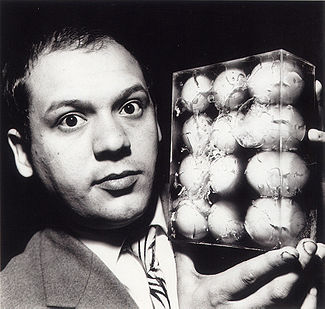
Piero Manzoni, born on July 13, 1933, in Soncino, a small town in the province of Cremona, Italy, is one of the most provocative and influential figures in 20th-century art. Though his life was tragically short—he died of a heart attack at the age of 29—Manzoni’s innovative approach to art continues to inspire and challenge the conventions of contemporary art. This article will explore Manzoni’s life, his groundbreaking works, and the lasting impact he has had on the art world.
Early Life and Background
Piero Manzoni was born into a well-off family with deep roots in Italy. His upbringing in Milan, a city known for its rich artistic and cultural heritage, played a significant role in shaping his future as an artist. Initially, Manzoni pursued studies in law, a path that would have led him to a conventional career. However, his passion for art soon took precedence, drawing him away from his academic pursuits.
Manzoni’s early exposure to the avant-garde art movements in Milan, coupled with his encounters with prominent artists such as Lucio Fontana, who pioneered the Spatialism movement, profoundly influenced his artistic direction. Fontana’s emphasis on breaking away from traditional forms and exploring new dimensions in art resonated deeply with the young Manzoni, who would later challenge the very definitions of art itself.
Artistic Beginnings and the Birth of the Achromes
Manzoni’s artistic career officially began in 1956 when he made his debut at the IV Fiera Mercato del Castello Sforzesco in Soncino. However, it was in 1958 that he created his first significant body of work: the “Achromes.” These were canvases covered with kaolin (a type of clay) and various other materials, left unpainted to emphasize their texture and form. The Achromes represented a radical departure from traditional painting; they were “non-paintings,” devoid of color and any representational imagery, focusing purely on materiality and the physicality of the art object.
The Achromes can be seen as a direct response to the dominant trends of the time, particularly the emphasis on expression and emotion in art. By stripping his work of color and narrative, Manzoni aimed to create a pure, objective art form. The Achromes were a statement against the subjective and emotional excesses of Abstract Expressionism, which had gained popularity in the United States and Europe. Instead, Manzoni’s work sought to return art to its basic, material essence.
The 1960s: Radical Concepts and Provocative Art
The 1960s marked a period of intense creativity and experimentation for Manzoni. Dissatisfied with the art establishment and the conventional norms of the time, he co-founded the gallery and art group Azimuth with fellow artist Enrico Castellani in 1959. Azimuth became a platform for like-minded artists who sought to challenge the status quo and explore new possibilities in art.
During this period, Manzoni began to explore radical new ideas, including the concept of the artist as the creator of the art object, rather than the art itself. One of his most famous works from this period is “Merda d’artista” (Artist’s Shit), created in 1961. This provocative piece consists of 90 tin cans, each purportedly containing 30 grams of the artist’s excrement. The cans were labeled and signed by Manzoni, and they were sold for their weight in gold. This work was a bold critique of the commercialization of art and the fetishization of the artist as a brand.
“Merda d’artista” was not just a shock tactic; it was a profound commentary on the art market and the value placed on the artist’s persona rather than the art itself. Manzoni was questioning what it meant to produce art and who had the authority to define what art was. By reducing the art object to a can of excrement, he was challenging the viewer to confront their preconceptions about value, authenticity, and the role of the artist.
The Living Sculptures and the Concept of Art as Life
Another groundbreaking series from the early 1960s was Manzoni’s “Living Sculptures,” where he would sign the bodies of models or participants, declaring them to be works of art. This act of signing transformed the individual into a “living sculpture,” blurring the lines between art and life, and challenging the traditional notions of what constitutes a work of art. Manzoni’s living sculptures were a direct challenge to the idea of art as an object that could be owned or commodified. By declaring living people as art, he was emphasizing the fluid, dynamic nature of art and its inseparability from life.
This concept was further explored in his “Fiato d’artista” (Artist’s Breath) series, where he sold balloons filled with his breath. These works continued Manzoni’s exploration of the ephemeral and the immaterial in art. The idea that a breath, something so transient and intangible, could be considered a work of art, was both absurd and profound. It was a direct challenge to the notion of art as something permanent and valuable in a material sense.
The Bases Magiche and the Idea of Infinite Art
Manzoni’s exploration of art as life and the dematerialization of the art object culminated in his “Bases Magiche” (Magic Bases) series, created in 1961. These were simple wooden bases, which, when a person stood upon them, transformed that person into a work of art. Manzoni declared that anything placed on these bases would become art, suggesting that art could be created by simply declaring it to be so. This idea was revolutionary, as it suggested that art was not confined to objects or materials but was a concept or an idea that could be applied to anything or anyone.
The “Bases Magiche” also introduced the concept of infinite art, where the potential for creating art was limitless. By democratizing the creation of art, Manzoni was effectively challenging the elitism of the art world and the notion that only certain individuals (i.e., artists) had the authority to create art.
Manzoni’s Impact on Contemporary Art
Piero Manzoni’s work was radical for its time and continues to influence contemporary artists and thinkers. His ideas about the role of the artist, the nature of art, and the relationship between art and life have had a lasting impact on the art world. Manzoni is often seen as a precursor to the conceptual art movement of the 1960s and 70s, which emphasized ideas over traditional aesthetic concerns.
Artists like Marcel Duchamp, who earlier questioned the nature of art with his “ready-mades,” and later artists such as Yoko Ono and Joseph Beuys, who explored similar ideas of life as art, owe a debt to Manzoni’s pioneering work. Manzoni’s influence can also be seen in the work of contemporary artists who continue to challenge the boundaries between art and everyday life, such as Damien Hirst and Jeff Koons.
Conclusion: A Lasting Legacy
Piero Manzoni’s life was brief, but his impact on the art world was profound. Through his radical ideas and provocative works, he challenged the very foundations of what art could be. His work continues to provoke debate and inspire new generations of artists to question the status quo and explore new possibilities in art.
Manzoni’s legacy is one of innovation and defiance. He refused to be constrained by traditional definitions of art and constantly pushed the boundaries of what was possible. His work serves as a reminder that art is not just about objects or materials but about ideas and the power of those ideas to transform our understanding of the world.
In the end, Piero Manzoni’s contribution to the art world is not just in the works he created but in the questions he raised and the possibilities he opened up. He remains a towering figure in the history of contemporary art, a true innovator who dared to think differently and, in doing so, changed the course of art history.


