
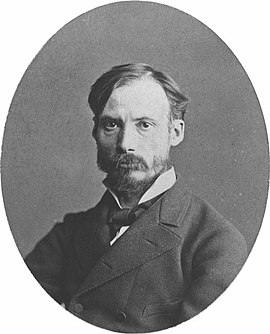
Pierre-Auguste Renoir, born on February 25, 1841, in Limoges, France, is celebrated as one of the pioneers of the Impressionist movement. Renowned for his vibrant, luminous paintings, Renoir’s work captures the joy and beauty of life, often focusing on scenes of leisure, portraiture, and the female form. His journey from a humble background to becoming one of the most famous painters in history is a story of persistence, innovation, and artistic evolution.
Early Life and Artistic Formation
Renoir was born into a modest family; his father was a tailor who had moved the family to Paris in 1844 in search of better opportunities. From a young age, Renoir exhibited a natural talent for drawing, which led him to an apprenticeship with the Lévy Frères, a porcelain factory known for its intricate designs. Here, he honed his skills in precision and detail, which would later become evident in his paintings. Alongside his work, Renoir attended classes at the Ecole de Dessin et des Arts Décoratifs, where he was exposed to formal artistic training under the guidance of sculptor Callouette.
However, much of Renoir’s artistic development was self-directed. He spent countless nights studying the works of great masters like Peter Paul Rubens and French Rococo painters, whose influence is evident in Renoir’s love for vibrant colors and sensuous depictions of the human form. This early dedication to both academic and self-taught methods laid a strong foundation for his future endeavors.
The Birth of Impressionism
Renoir’s admission to the prestigious Ecole des Beaux-Arts marked a significant milestone in his career. There, he studied under the tutelage of Emile Signol and Charles Gleyre. It was during this period that Renoir met fellow artists Claude Monet, Frédéric Bazille, and Alfred Sisley. This quartet would eventually form the nucleus of the Impressionist movement, a revolutionary art form that would challenge the traditional conventions of painting.
The Impressionists, including Renoir, rejected the rigid rules of academic painting, which dictated that all works should be carefully composed in a studio. Instead, they embraced a more spontaneous approach, often painting outdoors (a technique known as en plein air) to capture the fleeting effects of light and atmosphere. This radical approach was first explored by Renoir and his friends during a trip to the Fontainebleau forest in 1864, where they painted directly from nature, a practice that would become a hallmark of the Impressionist movement.
This group’s dedication to capturing everyday scenes in a vibrant, realistic manner set them apart from their contemporaries. Renoir, in particular, was noted for his ability to portray the shimmering effects of sunlight on skin and water, a technique that gave his paintings a sense of warmth and vitality.
Struggles and Breakthroughs
Despite the innovative nature of their work, the early years of the Impressionists were marked by struggle and rejection. The traditional art world was not ready to accept their radical new approach, and many of their works were refused by the prestigious Salon, the official art exhibition of the Académie des Beaux-Arts in Paris. Renoir’s paintings, characterized by their scintillating color effects and the luminosity of the skin of young women, were particularly difficult to sell, as they deviated from the more somber and controlled palette favored by the Salon juries.
To make ends meet, Renoir took on portrait commissions, which allowed him to refine his skills and experiment with different techniques. It was during this period that he created some of his most famous works, including Le Moulin de la Galette (1876) and Madame Georges Charpentier and Her Children (1878). These paintings showcased Renoir’s ability to capture the joie de vivre of Parisian society, combining a mastery of form with a vibrant, almost celebratory use of color.
Although his work was initially met with resistance, Renoir’s persistence began to pay off as he slowly gained recognition. By the late 1870s, he was a central figure in the Impressionist exhibitions, which provided an alternative platform for artists outside the conservative Salon. The Impressionist exhibitions, however, were not without their challenges, and Renoir himself became disillusioned with the poor financial returns and mixed critical reception.
Evolution of Style and Artistic Maturity
The 1880s marked a turning point in Renoir’s career. Disappointed by the lackluster success of the Impressionist exhibitions, he began to explore new directions in his art. A pivotal moment came in 1881-1882, when Renoir embarked on a series of travels, including trips to Algeria and Italy. These journeys exposed him to a wealth of artistic traditions, particularly the Renaissance art of Italy, which had a profound impact on his work.
Renoir became increasingly interested in the solid, sculptural qualities of Renaissance painting. He admired the way artists like Raphael and Titian modeled the human form, giving it a three-dimensional presence on the canvas. This led to a shift in Renoir’s style, as he moved away from the loose brushwork and bright colors of his earlier Impressionist period. Instead, he began to focus on more classical compositions, with a greater emphasis on form and structure.
This evolution is perhaps best exemplified in his painting Les Parapluies (The Umbrellas), which he began in 1881 and completed in 1886. The work shows a clear departure from the pure Impressionist technique, with figures that are more defined and a palette that is more subdued. This period of Renoir’s career reflects his ongoing search for balance between the spontaneity of Impressionism and the discipline of classical art.
Despite his stylistic evolution, Renoir never entirely abandoned the ideals of Impressionism. He continued to be fascinated by the effects of light and color, particularly in his depictions of the female form. His later works are characterized by a softer, more sensual approach, often focusing on intimate scenes of women and children. This period of Renoir’s life also saw him exploring other mediums, such as sculpture and ceramics, further showcasing his versatility as an artist.
Later Years and Enduring Legacy
As Renoir aged, his health began to deteriorate. By the early 1900s, he was suffering from severe rheumatoid arthritis, which caused significant pain and limited his mobility. Despite these challenges, Renoir remained dedicated to his art. He moved to the warmer climate of Cagnes-sur-Mer on the French Riviera in search of relief, where he continued to paint, often with a brush tied to his hands due to the severity of his arthritis.
Even in the face of physical adversity, Renoir’s output remained prolific. His later works, such as Le Bagnanti (The Bathers), completed shortly before his death, are a testament to his undiminished creative spirit. These paintings, with their soft, glowing colors and idyllic depictions of bathing women, encapsulate the essence of Renoir’s artistic vision—a celebration of beauty, sensuality, and the simple pleasures of life.
Renoir’s death on December 3, 1919, marked the end of an era, but his influence on the art world continued to grow. Today, he is remembered as one of the leading figures of the Impressionist movement, a painter whose work bridged the gap between traditional and modern art. His ability to capture the fleeting moments of life with such vibrancy and joy has ensured that his paintings remain beloved by audiences around the world.
Renoir’s Enduring Influence
Pierre-Auguste Renoir’s legacy extends beyond his contributions to the Impressionist movement. His work has influenced countless artists and continues to be celebrated for its emotional depth and technical mastery. Renoir’s paintings are not just admired for their aesthetic qualities but also for their ability to evoke a sense of warmth, happiness, and connection with the subject.
His approach to painting—focusing on light, color, and the human experience—has resonated with generations of artists, from the early modernists to contemporary creators. Renoir’s emphasis on capturing the beauty of everyday life, coupled with his innovative techniques, has made him a timeless figure in the art world.
Moreover, Renoir’s life and work reflect the broader cultural shifts of the 19th and early 20th centuries. His transition from the formal academic style to the more fluid and expressive techniques of Impressionism mirrors the changes in society during this period. Renoir, like his contemporaries, was a product of the Industrial Revolution, a time when the world was rapidly changing, and artists were seeking new ways to represent the modern experience.
In the end, Pierre-Auguste Renoir’s story is one of resilience, creativity, and passion. From his humble beginnings to his status as one of the most celebrated painters in history, Renoir’s life is a testament to the enduring power of art to capture the human spirit. His paintings continue to inspire and delight, ensuring that his legacy will live on for generations to come.


