
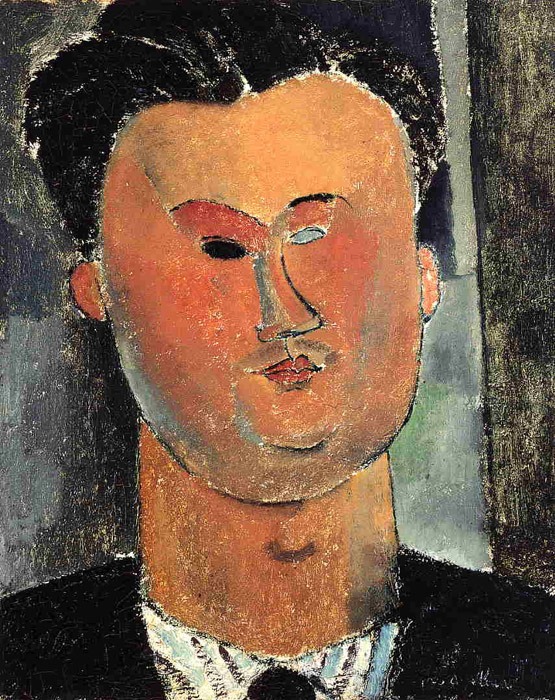
Pierre Reverdy, born on September 11, 1889, in Narbonne, France, and passed away on June 17, 1960, in Solesmes, is widely recognized as one of the most influential French poets of the 20th century. Reverdy’s work, deeply embedded in the aesthetics of Cubism and closely aligned with the Surrealist movement, left an indelible mark on modernist literature. His poetry, characterized by its ascetic simplicity and profound introspection, has inspired generations of writers and artists. This article explores the life, career, and enduring legacy of Pierre Reverdy, providing detailed insights into the nuances of his work and the historical context in which he operated.
Early Life and Initial Literary Pursuits
Pierre Reverdy was born into a family that provided him with a unique blend of intellectual freedom and religious tradition. His upbringing in Narbonne, a town in the southern region of France, was marked by a deep connection to both the natural landscape and the spiritual practices of his family. This duality—between the material and the spiritual—would later become a defining feature of his poetry.
In 1910, at the age of 21, Reverdy moved to Paris, a city that was rapidly becoming the epicenter of avant-garde art and literature. Paris during the early 20th century was a hub of artistic experimentation, with movements such as Cubism, Dadaism, and Surrealism emerging and challenging traditional forms of expression. Reverdy quickly immersed himself in this vibrant cultural milieu, establishing connections with some of the most prominent artists and writers of the time.
The Influence of Cubism and Early Works
Reverdy’s early years in Paris were profoundly influenced by the Cubist movement, which was led by artists such as Pablo Picasso and Georges Braque. Cubism sought to deconstruct objects into their basic geometric forms and present them from multiple perspectives simultaneously. This artistic approach resonated with Reverdy, who was drawn to the idea of stripping away the superficial layers of reality to reveal the underlying essence of things.
In 1915, Reverdy published his first collection of poems, Poèmes en prose (Poems in Prose), which showcased his early experiments with form and language. The following year, he released Le Voleur de Talan (The Thief of Talan), a novella that further established his reputation as a writer committed to exploring the deeper, often hidden, truths of human experience.
Reverdy’s work during this period was marked by a desire to achieve a kind of ascetic purity in his writing. His poetry eschewed elaborate metaphors and similes, instead opting for a direct and unadorned style that sought to capture the essence of objects and emotions. This approach was reflective of his broader philosophical quest for simplicity and clarity in a world that was increasingly complex and fragmented.
Founding of Nord-Sud and Collaboration with Avant-Garde Artists
In 1917, Reverdy founded the literary journal Nord-Sud, which became a significant platform for the avant-garde movements of the time. The journal, named after the Paris Métro lines connecting the northern and southern parts of the city, sought to bridge the gap between different artistic disciplines and geographic regions. Nord-Sud published works by many of the leading figures of the Cubist and Surrealist movements, including Guillaume Apollinaire, Max Jacob, and André Breton.
Reverdy’s involvement with Nord-Sud and his collaborations with other avant-garde artists positioned him at the forefront of the literary and artistic innovations of the early 20th century. However, despite his close association with these movements, Reverdy remained an independent thinker, resisting full alignment with any one group. His poetry, while influenced by Cubism and Surrealism, maintained a distinct voice that was deeply introspective and focused on the exploration of inner realities.
The Transition to Surrealism and Continued Literary Success
Although Reverdy is often associated with Surrealism, his relationship with the movement was complex. Surrealism, led by figures such as André Breton, sought to explore the unconscious mind and liberate thought from the constraints of rationalism. While Reverdy shared the Surrealists’ interest in exploring deeper layers of consciousness, his work was more restrained and less concerned with the radical experimentation that characterized much of Surrealist art.
In 1918, Reverdy published Les Ardoises du toit (The Roof Slates), a collection that further solidified his reputation as a leading poet of the time. This was followed by several other significant works, including La guitare endormie (The Sleeping Guitar, 1919), Les Jockeys camouflés (The Camouflaged Jockeys, 1920), and Étoiles peintes (Painted Stars, 1921). These collections demonstrated Reverdy’s evolving style, which increasingly emphasized the tension between the concrete and the abstract, the real and the imagined.
Reverdy’s poetry from this period is characterized by its stark, minimalist language and its focus on the internal rather than the external world. His poems often evoke a sense of solitude and introspection, reflecting his own personal struggles and his search for meaning in a rapidly changing world.
Retreat to Solesmes and Later Works
In 1926, at the height of his literary fame, Pierre Reverdy made a dramatic decision to retreat from the Parisian literary scene and settle in Solesmes, a small village in northwestern France known for its Benedictine abbey. This move marked a significant turning point in his life and work. For the next 30 years, Reverdy lived in relative isolation, dedicating himself to poetry and spiritual reflection.
The years in Solesmes were some of the most productive of Reverdy’s career. Freed from the distractions of Paris, he was able to focus on his writing with renewed intensity. His poetry from this period is marked by a deep sense of introspection and spiritual searching. Works such as Sources du vent (Sources of the Wind, 1929) and Ferraille (Scrap Iron, 1937) reflect his ongoing quest to understand the human condition and the mysteries of existence.
Reverdy’s later works are often considered his most mature and profound. They reflect a poet who has come to terms with his own solitude and who has found a sense of peace in the simplicity of life. His writing during this period is characterized by a stripped-down, almost ascetic style that seeks to capture the essence of existence without the distractions of unnecessary ornamentation.
Reverdy’s Influence on Modern Literature and Legacy
Pierre Reverdy’s influence on modern literature cannot be overstated. His work had a profound impact on many of the leading writers and artists of the 20th century, including André Breton, Louis Aragon, and Philippe Soupault. Reverdy’s commitment to simplicity and purity in his writing, as well as his focus on the inner life, helped to shape the development of modernist poetry.
Reverdy’s poetry also had a significant influence on the Surrealist movement, even though he remained somewhat distanced from it. His exploration of the unconscious and his emphasis on the importance of intuition and imagination resonated with the Surrealists, who saw him as a precursor to their own work.
Reverdy’s legacy continues to be felt in contemporary literature and art. His work remains a touchstone for writers and artists who seek to explore the deeper layers of human experience and who value simplicity and clarity in expression. Reverdy’s poetry, with its focus on the essential and its rejection of the superfluous, continues to inspire those who believe in the power of words to convey profound truths.
The Enduring Relevance of Pierre Reverdy
Pierre Reverdy’s poetry remains relevant today because it speaks to universal themes that transcend time and place. His exploration of solitude, introspection, and the search for meaning resonates with readers in an increasingly complex and fast-paced world. Reverdy’s work encourages us to slow down, to look inward, and to seek out the essential truths that lie beneath the surface of our everyday lives.
In a literary landscape that is often dominated by noise and spectacle, Reverdy’s poetry offers a quiet, meditative space where readers can reflect on the deeper aspects of existence. His commitment to simplicity and his belief in the power of words to convey the essence of things continue to inspire writers and readers alike.
Reverdy’s work also serves as a reminder of the importance of maintaining one’s independence as an artist. Despite his close associations with the Cubists and Surrealists, Reverdy remained true to his own vision and his own voice. His poetry reflects a deep sense of integrity and authenticity, qualities that are increasingly rare in a world where conformity and commercialism often dominate.
Conclusion: Pierre Reverdy’s Lasting Impact
Pierre Reverdy’s life and work exemplify the power of poetry to capture the essence of human experience. Through his exploration of the inner life and his commitment to simplicity and clarity, Reverdy created a body of work that continues to resonate with readers today. His influence on modern literature and his enduring legacy as a poet of the essential make him one of the most significant figures in 20th-century literature.
Reverdy’s decision to retreat to Solesmes and live a life of solitude and reflection allowed him to refine his craft and produce some of his most profound work. His poetry, characterized by its stark, minimalist language and its deep introspection, offers readers a space for contemplation and a reminder of the importance of maintaining one’s artistic integrity.
As we continue to navigate the complexities of modern life, Reverdy’s poetry serves as a beacon of simplicity and truth. His work challenges us to look beyond the superficial and to seek out the deeper, often hidden, aspects of our existence. In this way, Pierre Reverdy’s legacy remains as vital and relevant as ever.


