
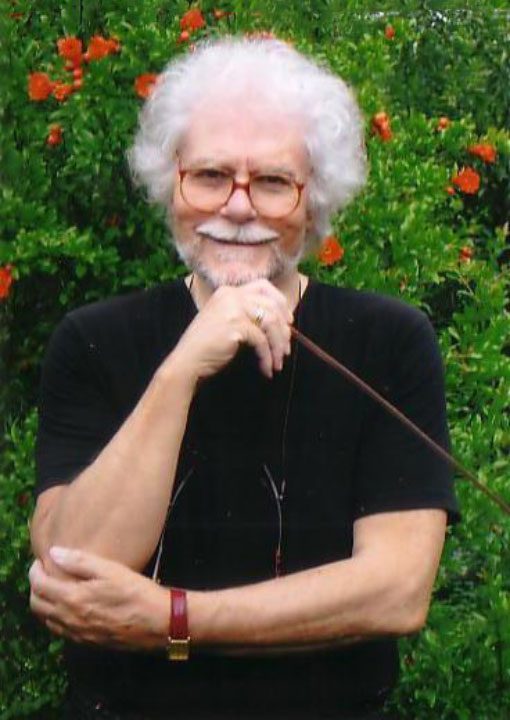
Pietro Busolini, born on April 30, 1941, in Friuli, Italy, is an esteemed Italian conductor renowned for his profound contributions to classical music. His journey from a young music enthusiast to an internationally recognized conductor is marked by dedication, passion, and an unrelenting pursuit of musical excellence. With a career that spans over five decades, Busolini’s influence in the world of classical music has been significant, leaving an indelible mark on the orchestras and audiences he has touched.
Early Life and Musical Beginnings
Pietro Busolini was born into a family with a deep appreciation for music. His father, Umberto Busolini, was a maestro and professor who introduced Pietro to the world of music at the tender age of seven. This early exposure to music laid the foundation for what would become a lifelong passion and career.
Busolini began his formal music education by studying the horn and piano, two instruments that would shape his early understanding of harmony, melody, and musical structure. His studies in solfeggio and harmony further solidified his technical skills, allowing him to develop a strong foundation in music theory.
At the age of eleven, Busolini’s musical potential was recognized by the esteemed conductor Francesco Molinari Pradelli, a close friend of his father. Under Molinari’s mentorship, Busolini received weekly lessons, delving into the complexities of opera and orchestral conducting. Although his initial interest lay in classical symphonic music, the influence of his mentor and father eventually led him to appreciate and master the art of opera, a genre that would play a significant role in his career.
Formal Education and Early Career
Pietro Busolini’s formal education in music began at the Conservatory of Bolzano, where he was admitted as an external student. His studies were rigorous, but they provided him with the technical skills necessary to pursue a professional career in music. He later attended the Luigi Cherubini Conservatory in Florence, where he earned diplomas in horn, piano, and eventually orchestral conducting in 1958 and 1959, respectively.
After completing his formal education, Busolini continued to hone his skills under the tutelage of various maestros within his family and beyond. His early experiences as an assistant to Molinari Pradelli during European and North American tours provided him with invaluable practical experience. This period was crucial in shaping his approach to conducting, allowing him to observe and learn from one of the leading conductors of the time.
Rise to Prominence
Pietro Busolini’s professional career as a conductor began in Venice in 1963, where he conducted for four seasons. His repertoire during this period included both classical symphonies and ballets, showcasing his versatility and command over a wide range of musical styles. His work in Venice was well-received, and it wasn’t long before he caught the attention of international figures in the music world.
In 1968, Robert Ruglen, a maestro from Bonn, invited Busolini to conduct at his theater. This opportunity marked the beginning of Busolini’s international career. His performances in Bonn were followed by successful stints at the Staatsoper in Berlin, Munich, and eventually, Leipzig and Dresden. During these years, Busolini studied under masters such as Julio Cortes and Robert Kaufmann, further refining his interpretative skills, particularly in classical symphonic music.
International Success
The late 1970s and 1980s were a period of significant international success for Pietro Busolini. His reputation as a conductor grew, and he was invited to conduct in prestigious venues across Europe and the Americas. One of his notable achievements during this time was his direction of Lucia di Lammermoor by Gaetano Donizetti at the Metropolitan Opera in New York. His performance was met with critical acclaim, solidifying his status as a leading conductor of both opera and symphonic music.
Busolini’s success in the United States extended beyond New York. He conducted symphonic concerts in Chicago and Dallas, receiving praise from both audiences and critics. His ability to bring out the emotional depth and technical precision in the works he conducted made him a favorite among orchestras and music lovers alike.
In the mid-1980s, Busolini expanded his reach to South America, conducting the Sinfonica Argentina and at the Teatro Colón in Buenos Aires. These performances were marked by his deep understanding of the music and his ability to communicate that understanding to the orchestra and audience, creating powerful and memorable musical experiences.
Return to Europe and Continued Success
After a successful period in the Americas, Pietro Busolini returned to Europe, where he continued to build on his already illustrious career. In 1986, he took a brief hiatus in Venice before returning to the stage with a series of concerts in Eastern Europe. His performances in Kiev, St. Petersburg, and Moscow were particularly notable, as they deepened his engagement with Russian music and culture. His work during this period included the symphonies of Tchaikovsky, Mussorgsky, and Borodin, composers whose works resonated deeply with Busolini’s interpretative style.
Busolini’s European tours also took him to Stockholm and Copenhagen, where he conducted the symphonies of Beethoven and Puccini’s La Bohème. These performances were part of his broader mission to bring classical music to diverse audiences, and they were met with widespread acclaim.
The late 1980s and early 1990s saw Busolini continue his international engagements, including a significant North American tour that took him to Vancouver, Montreal, Portland, Seattle, and New York. His performances during this tour, particularly his renditions of Brahms’ symphonies, were praised for their emotional intensity and technical mastery.
Later Years and Legacy
As Pietro Busolini entered the 1990s, his career showed no signs of slowing down. He continued to conduct in major cities across Europe and Asia, including Tokyo, Seoul, and Manila. His performances during this period were characterized by a mature, nuanced approach to conducting, reflecting his decades of experience and deep understanding of the music.
In 1996, Busolini undertook a significant project in Spain, where he prepared new editions of Verdi’s La Traviata and Il Trovatore. These performances were part of his ongoing commitment to Italian opera, a genre that had been a central part of his career since his early days under Molinari Pradelli.
The late 1990s and 2000s saw Busolini continue to conduct major symphonic works, including those of Beethoven, Chopin, and Mahler, in cities like Vienna, Budapest, and Bucharest. His ability to convey the emotional and structural complexities of these works earned him continued praise and recognition.
In the 2010s, Busolini’s career culminated with a series of important performances in Japan, including a rendition of Verdi’s Otello with the Tokyo University Orchestra in 2014. This performance, along with his other late-career achievements, demonstrated his enduring passion for music and his ability to connect with new generations of musicians and audiences.
Busolini’s contributions to music have been recognized with numerous honors, including titles of Cavaliere Ufficiale, Commendatore, and Grande Ufficiale of the Order of the Italian Republic. These awards highlight his role in promoting Italian culture and music on the global stage.
Conclusion
Pietro Busolini’s life and career are a testament to the power of dedication, passion, and artistic excellence. From his early days as a young music student in Friuli to his rise as an internationally acclaimed conductor, Busolini’s journey has been one of continuous growth and achievement. His impact on the world of classical music, particularly in the realms of opera and symphonic performance, is profound, and his legacy continues to inspire musicians and conductors around the world.


