
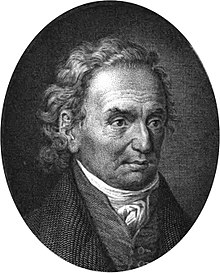
Pietro Giordani, born on January 1, 1774, in Piacenza, Italy, is a figure of significant cultural and literary importance in the history of Italy. His life spanned a period of great political and social change, and his contributions to literature, philosophy, and the intellectual life of his time are considerable. This article provides a detailed exploration of Pietro Giordani’s life, his rise to fame, and the key highlights of his career, while also delving into the nuances and historical context that shaped his work and legacy.
Early Life and Education
Pietro Giordani was born into a relatively affluent family; his father, Giambattista Giordani, was a landowner, and his mother, Teresa Sambuceti, came from a respectable background. Despite this, Giordani’s early life was fraught with difficulties, particularly concerning his health. He suffered from various ailments that left him physically weakened and contributed to a challenging relationship with his parents. His father was often preoccupied with civic duties, and his mother, who was deeply religious and frail, could not provide the emotional support he needed.
These early challenges contributed to Giordani’s introspective and solitary nature. He found solace in the extensive library owned by his father, where he immersed himself in the classics. From a young age, Giordani exhibited an extraordinary aptitude for learning, particularly in mathematics and the humanities. His early exposure to literature would shape his intellectual development and set the foundation for his future endeavors.
Academic Pursuits and Intellectual Formation
At the age of eleven, Giordani began his formal education at the Collegio San Pietro, where he studied the humanities. By the time he was fourteen, he had moved to Parma to study philosophy, following a curriculum that emphasized classical education. Despite his interest in literature and philosophy, Giordani’s father insisted that he pursue a career in law. Dutifully, Giordani enrolled in the Faculty of Law, and in the summer of 1795, he graduated with a degree in jurisprudence. His success in this field was partly due to the support of his cousin, Luigi Uberto Giordani, a law professor who took a paternal interest in his education.
However, Giordani’s true passion lay elsewhere. During his time in Parma, he continued to study classical languages and history, disciplines that fascinated him far more than the legal texts he was expected to master. It was also during this period that Giordani formed a close, albeit platonic, relationship with Rosa Milesi, a woman fifteen years his senior. Their correspondence continued until 1800, providing Giordani with emotional support during a time when he felt increasingly alienated from his family and the legal profession.
Struggles with Family and Religious Life
Giordani’s early career was marked by a deep sense of dissatisfaction. Forced into the legal profession by his family, he found the work unfulfilling and oppressive. This inner turmoil led him to contemplate suicide, an indication of the profound despair he felt at being trapped in a life that did not align with his true interests and aspirations.
In an attempt to escape his circumstances, Giordani entered a religious order on January 1, 1797. This decision was influenced by his desire to sever ties with his overbearing mother and to forget his unrequited love for Rosa. Despite his earlier ambivalence towards the church, Giordani took his vows and became a member of the Benedictine monastery of San Sisto, near Piacenza. However, the monastic life proved to be just as stifling as the legal career he had left behind. Giordani soon realized that the cloistered existence did not suit his temperament or intellectual curiosity.
During the period of French invasions and the resulting dissolution of religious orders, Giordani saw an opportunity to leave the monastic life. He abandoned the monastery and, unable to return to his family, moved to Milan in search of work. Here, he took on various minor positions within the Napoleonic administration, including serving as a government secretary in Tuscany and later as the secretary of the Department of the Lower Po in Ferrara.
Return to Secular Life and Literary Pursuits
In 1802, Giordani was officially released from his monastic vows and returned to secular life. He found employment as the deputy secretary of the prefecture in Ravenna, a position that, while not particularly fulfilling, allowed him to re-engage with his passion for literature. It was during this time that Giordani began to make connections with other intellectuals and writers who shared his literary interests.
One of the most significant relationships he formed was with Pietro Brighenti, a Napoleonic official who shared Giordani’s passion for literature. This friendship opened doors for Giordani, allowing him to become more involved in the literary circles of the time. Despite his distaste for bureaucratic work, these connections provided him with opportunities to engage in literary activities, including teaching and writing.
Giordani’s first major literary work was a satirical piece titled “Prima esercitazione scolastica d’un ignorante sopra un epitalamio di un poeta crostolio,” published in 1805. The following year, he wrote “L’Arpia messaggera, o Il corriere alato di Rubacervelli e Portavittoria,” a work that criticized the poet Vincenzo Monti. Although this text was censored and prevented from being published, it established Giordani as a sharp and fearless critic.
Major Works and Intellectual Contributions
Throughout his career, Giordani produced a number of significant literary and philosophical works. In 1806, he was commissioned by the Academy of Fine Arts in Bologna to write an “Orazione per le belle arti,” a speech that showcased his eloquence and deep understanding of classical art and literature. This was followed by a panegyric to Napoleon, delivered in Cesena in 1807, titled “Napoleone legislatore, ossia Panegirico allo imperator Napoleone per le sue imprese civili.” This work was well-received and demonstrated Giordani’s ability to blend classical rhetoric with contemporary political themes.
Giordani’s admiration for classical literature and his belief in its enduring relevance is evident in his numerous writings on the subject. In 1810, he wrote a “Panegirico ad Antonio Canova,” celebrating the works of the renowned neoclassical sculptor. This was followed by “Sulla vita e sulle opere del cardinal Sforza Pallavicino” and “Sopra un dipinto del cav. Landi e uno del cav. Camuccini,” both of which further solidified his reputation as a leading intellectual of his time.
One of Giordani’s most influential contributions to Italian literature came in 1816, when he published an article in the first issue of “La Biblioteca Italiana” titled “Sulla maniera ed utilità delle traduzioni.” This piece was a translation of an article by Madame de Staël, in which she urged Italians to move beyond their provincial literary traditions and engage with modern foreign literature. Giordani used this platform to argue for the preservation of classical ideals in literature, warning against the dangers of diluting Italian literary identity by excessive imitation of foreign works.
Advocacy for National Language and Critique of Dialects
Giordani was also a strong advocate for the promotion of a unified national language. In the second issue of “La Biblioteca Italiana,” he criticized the rise of dialect poetry, particularly targeting the work of editor Francesco Cherubini. Giordani believed that the use of dialects in literature hindered the development of a cohesive national identity and was detrimental to the progress of Italian society.
For Giordani, the use of a common national language was essential for maintaining and spreading civilization. He supported the creation of dialect dictionaries to help speakers learn Italian but insisted that dialects themselves should not be granted literary status. This position brought him into conflict with other literary figures, such as Carlo Porta, who responded to Giordani’s critiques with a series of satirical sonnets.
Later Years and Legacy
In his later years, Giordani moved to Florence, where he experienced a period of relative happiness and intellectual fulfillment. Florence, with its vibrant cultural and intellectual scene, offered Giordani an environment in which he could thrive. He became an esteemed member of several prominent institutions, including the Accademia della Crusca, the Georgofili, and the Accademia Pistoiese.
During this time, Giordani continued to write and engage with the literary community. One of his final significant works was the “Proemio al terzo volume delle opere di Giacomo Leopardi,” written in 1845. Giordani had formed a close friendship with the young poet Giacomo Leopardi, and his influence on Leopardi’s work and thought was profound.
Pietro Giordani passed away on September 2, 1848, in Parma. His death marked the end of an era, but his influence on Italian literature and culture endured. Giordani is remembered not only for his literary works but also for his role as a mentor to younger writers and his contributions to the intellectual life of Italy.
Conclusion: Pietro Giordani’s Enduring Influence
Pietro Giordani’s life was a testament to the power of intellect and perseverance. Despite the many challenges he faced, including health issues, familial pressures, and professional setbacks, Giordani remained committed to his intellectual pursuits and his love of literature. His work as a writer, critic, and advocate for classical ideals has left a lasting legacy in the annals of Italian literature.
Giordani’s advocacy for a unified national language and his defense of classical literature against the encroachment of foreign influences were particularly significant in shaping the cultural and intellectual landscape of Italy during the 19th century. His influence on younger writers, most notably Giacomo Leopardi, ensured that his ideas would continue to resonate long after his death.
In the end, Pietro Giordani’s legacy is one of intellectual rigor, cultural preservation, and a deep commitment to the values of classical literature. His life and work continue to be studied and celebrated for their contributions to the development of Italian national identity and the enrichment of its literary heritage.


