
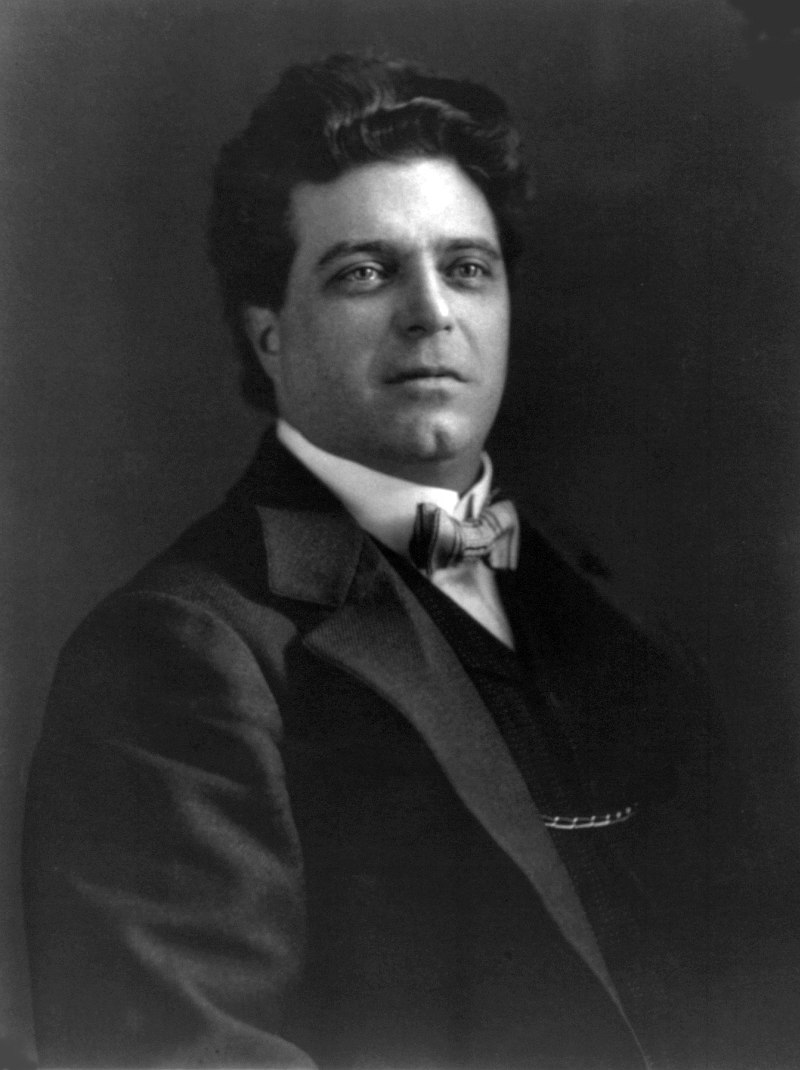
Pietro Antonio Stefano Mascagni, an iconic figure in the realm of classical music, was born on December 7, 1863, in Livorno, Italy. His life and works left an indelible mark on the world of opera, particularly through his masterpiece “Cavalleria Rusticana.” Mascagni’s journey from a humble beginning to becoming one of the most celebrated composers of his time is a tale of passion, resilience, and artistic genius.
Early Life and Education
Pietro Mascagni was born into a modest family; his father, Domenico Mascagni, owned a bakery, while his mother devoted her life to raising Pietro and his four siblings. Despite the family’s limited financial resources, Mascagni’s intellectual curiosity and passion for learning were evident from an early age. Recognizing his potential, his parents supported his education in the humanities, even when it stretched their means.
Mascagni’s love for music blossomed early. He balanced his academic pursuits with an avid interest in music, particularly in singing and playing the piano. He received his initial musical education at the Schola Cantorum of the Church of San Benedetto. By the age of 13, Mascagni was already pursuing more formal musical studies under the tutelage of Alfredo Soffredini, the founding director of the Istituto Musicale di Livorno. This period was critical in shaping Mascagni’s musical foundations, laying the groundwork for his future successes.
The Path to Composition
By 1880, at just 17 years old, Mascagni had begun composing his first symphonies, including notable works such as “Sinfonia in F Major,” “Elegia for Soprano, Violin, and Piano,” “Ave Maria for Soprano and Piano,” and “Pater Noster for Soprano and String Quintet.” His early compositions were well-received, signaling the emergence of a talented young composer. The following year, Mascagni’s cantata “In filanda” for soloists and full orchestra was performed in Livorno, further establishing his reputation.
In 1882, with financial assistance from Count de Larderel, Mascagni moved to Milan, a pivotal moment in his career. Milan, with its rich artistic milieu, offered Mascagni exposure to the leading figures of the time. Here, he formed friendships with influential composers such as Giacomo Puccini and Amilcare Ponchielli, connections that would be instrumental in his professional development. During this period, Mascagni composed “Il Re a Napoli,” a romance for tenor and orchestra, and began working on his opera “Guglielmo Ratcliff,” based on the play by Heinrich Heine.
However, Mascagni’s relationship with the Milan Conservatory soured due to disagreements with the director, leading him to leave the institution. Undeterred, Mascagni embarked on a series of tours across Italy, conducting for various opera companies. It was during these tours that Mascagni met Argenide Marcellina Carbognani, with whom he had a child, though tragically, the child passed away at just four months old. The couple married a year later.
The Birth of a Masterpiece: Cavalleria Rusticana
In 1888, Mascagni’s life took a significant turn when he participated in a competition organized by the Sonzogno music publishing house, which called for the submission of a one-act opera. Mascagni chose to adapt “Cavalleria Rusticana,” a novella by Giovanni Verga, into an opera with the help of librettists Giovanni Targioni-Tozzetti and Guido Menasci.
“Cavalleria Rusticana” premiered on May 17, 1890, at the Teatro Costanzi in Rome. The opera was an immediate success, winning the competition and captivating audiences with its intense drama and emotional depth. Mascagni was thrust into the limelight, and “Cavalleria Rusticana” became a cornerstone of the verismo style, a movement in opera characterized by its realistic portrayal of everyday life, often focusing on the struggles of the lower classes.
The success of “Cavalleria Rusticana” was unprecedented. Wherever it was performed, the opera drew enthusiastic crowds, and it quickly became a staple in opera houses worldwide. The opera’s success also marked the beginning of Mascagni’s rise to fame, establishing him as one of the leading composers of his generation.
Later Works and Continued Success
Following the triumph of “Cavalleria Rusticana,” Mascagni continued to compose, although none of his subsequent works achieved the same level of acclaim. His next major opera, “L’amico Fritz,” premiered at the Teatro Costanzi in Rome in 1891. While it did not achieve the same explosive success as “Cavalleria Rusticana,” “L’amico Fritz” was still well-received and further cemented Mascagni’s reputation as a talented composer.
In the years that followed, Mascagni composed several other operas, including “Guglielmo Ratcliff,” which premiered at La Scala in Milan in 1895, and “Iris,” which was the result of his collaboration with librettist Luigi Illica. Despite these efforts, Mascagni struggled to replicate the overwhelming success of his first opera, though he remained a respected and influential figure in the world of music.
Mascagni also became involved in various other musical endeavors. From 1899 to 1903, he embarked on numerous tours, conducting in major cities across Italy, Europe, and the United States. Upon returning to Italy, Mascagni was appointed director of the National School of Music in Rome and later became the director of the Teatro Costanzi, a position he held from 1907. His role as a conductor and administrator further solidified his place in the Italian musical landscape.
Later Years and Legacy
In the latter part of his career, Mascagni continued to compose and conduct, though his output slowed. In 1927, he represented Italy at the centenary celebration of Ludwig van Beethoven’s death in Vienna, a testament to his standing in the international music community. In 1929, Mascagni was inducted into the Royal Academy of Italy, an honor that recognized his contributions to Italian culture.
Mascagni’s final opera, “Nerone,” premiered at La Scala in 1935, though it failed to achieve the same level of success as his earlier works. By this time, Mascagni’s style was seen as somewhat outdated, overshadowed by the new trends in 20th-century music. Nevertheless, his influence remained, particularly through “Cavalleria Rusticana,” which continued to be performed regularly.
In 1940, “Cavalleria Rusticana” celebrated its 50th anniversary, a milestone that was marked by the recording of the opera, ensuring its preservation for future generations. By this time, Mascagni had retired from his administrative roles, although he continued to be an influential figure in the world of opera.
Pietro Mascagni passed away on August 2, 1945, at the age of 82, in his hotel room at the Hotel Plaza in Rome, where he had resided since 1927. His death marked the end of an era, but his legacy lived on through his music, particularly through “Cavalleria Rusticana,” which remains one of the most performed operas in the world today.
The Historical Context and Influence of Pietro Mascagni
Pietro Mascagni’s work is often associated with the verismo movement in opera, which sought to bring realism to the stage by portraying the lives of ordinary people, often focusing on themes of passion, betrayal, and violence. “Cavalleria Rusticana” is a quintessential example of this style, with its raw emotional intensity and depiction of rural Sicilian life.
The success of “Cavalleria Rusticana” had a profound impact on the world of opera, inspiring a generation of composers to explore similar themes and styles. Mascagni’s influence can be seen in the works of composers such as Giacomo Puccini, whose operas like “La Bohème” and “Tosca” also embody elements of verismo.
Despite the fact that Mascagni’s later works did not achieve the same level of success as his first opera, his contribution to the development of opera cannot be understated. His ability to convey deep emotion and his innovative approach to composition have ensured that his music continues to resonate with audiences today.
In summary, Pietro Mascagni’s life was one of remarkable achievement and enduring influence. From his humble beginnings in Livorno to his rise as a celebrated composer, Mascagni’s story is a testament to the power of talent, determination, and passion. His legacy, particularly through “Cavalleria Rusticana,” continues to inspire and captivate audiences, securing his place as one of the great composers in the history of opera.


