
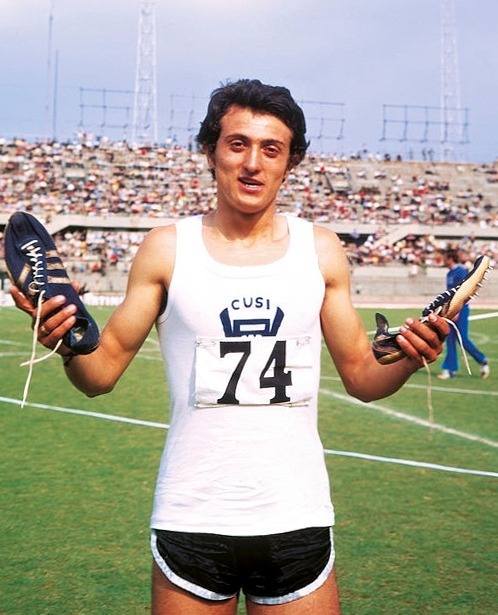
Pietro Paolo Mennea, born on June 28, 1952, in Barletta, Italy, remains one of the most iconic figures in the history of athletics. His life and career are emblematic of perseverance, determination, and sheer athletic prowess. Mennea’s journey from a humble background to global fame is a testament to his extraordinary talent and unyielding spirit. This article delves deep into the life of Pietro Mennea, exploring his age, fame, and significant life highlights that made him a legend in the world of sports.
Early Life and Background
Pietro Mennea was born into a modest family, with his father working as a tailor and his mother as a homemaker. From an early age, Mennea exhibited a natural talent for athletics, particularly in sprinting. His athletic journey began in the streets of Barletta, where he honed his skills as a sprinter, eventually leading him to compete at the highest levels of international competition.
After completing his middle school education, Mennea enrolled in a technical school, where he continued to nurture his passion for athletics. His dedication to the sport was evident from a young age, as he balanced his academic pursuits with rigorous training sessions. This commitment paid off when, at just 19 years old, Mennea made his debut on the international stage.
Rise to Fame: The European Championships and Olympics
Mennea’s breakthrough came at the 1971 European Championships, where he competed in the 200 meters event, finishing sixth. He also helped Italy secure a bronze medal in the 4×100 meters relay. This early success was a harbinger of the greatness that was to come.
The following year, Mennea competed in the 1972 Munich Olympics, where he won the bronze medal in the 200 meters, finishing behind the Soviet Union’s Valeriy Borzov and the American sprinter Larry Black. This Olympic success marked the beginning of Mennea’s ascent to global fame, as he became a household name in Italy and a respected figure in the international athletics community.
Mennea’s rivalry with Borzov became one of the most talked-about aspects of his career. This rivalry pushed Mennea to new heights, particularly at the 1974 European Championships in Rome. In front of a home crowd, Mennea won the gold medal in the 200 meters and a silver in the 100 meters, firmly establishing himself as one of the fastest men in the world.
The Record-Breaking Year: 1979
One of the most remarkable years in Mennea’s career was 1979 when he set a world record in the 200 meters at the World University Games in Mexico City. Mennea clocked a time of 19.72 seconds, a record that stood unbroken for 17 years. The altitude of Mexico City played a role in this exceptional performance, but Mennea’s record was no fluke. He went on to confirm his dominance by running 19.96 seconds at sea level in Barletta, Italy, further cementing his place in the annals of athletics history.
Olympic Glory: Moscow 1980
The pinnacle of Mennea’s career came at the 1980 Moscow Olympics. Despite the absence of many top athletes due to the U.S.-led boycott, Mennea’s performance was nothing short of extraordinary. He won the gold medal in the 200 meters, narrowly defeating Allan Wells of Great Britain by just two-hundredths of a second. This victory earned Mennea the nickname “La Freccia del Sud” (The Arrow of the South), a moniker that captured both his speed and his southern Italian heritage.
In addition to his gold medal, Mennea also secured a bronze medal in the 4×400 meters relay, showcasing his versatility as an athlete. His triumphs in Moscow made him a national hero in Italy and further solidified his status as one of the greatest sprinters of his time.
The Decision to Retire and a Brief Comeback
After the 1980 Olympics, Mennea announced his retirement from athletics to focus on his studies. However, his love for the sport soon brought him back to the track. In 1983, Mennea set another world record, this time in the 150 meters, with a time of 14.8 seconds. This record, achieved in Cassino, Italy, remains unbeaten to this day.
Mennea’s participation in the 1984 Los Angeles Olympics was historic, as he became the first athlete to compete in four consecutive Olympic finals in the 200 meters. Although he did not win a medal in Los Angeles, his achievement of reaching four finals was a testament to his longevity and consistency as an elite sprinter.
Despite officially retiring in 1984, Mennea returned to compete in the 1988 Seoul Olympics at the age of 36. Although he did not advance beyond the qualifying rounds, Mennea had the honor of carrying the Italian flag during the opening ceremony, a fitting tribute to his illustrious career.
Life Beyond Athletics
Mennea’s life was not limited to athletics. He was a man of many talents and pursued multiple academic degrees, earning degrees in Political Science, Law, Letters, and Physical Education. His academic achievements were as impressive as his athletic ones, and he often balanced his studies with his training.
Mennea also made significant contributions to sports administration and politics. He served as the General Director of the Salernitana Football Club and was a member of the European Parliament from 1999 to 2004. His involvement in politics, particularly in sports-related issues, demonstrated his commitment to using his platform to advocate for the betterment of society.
In 2006, Mennea and his wife, Manuela Olivieri, founded the “Fondazione Pietro Mennea,” a charitable organization dedicated to supporting social causes, scientific research, and cultural initiatives. The foundation reflects Mennea’s philanthropic spirit and his desire to give back to the community.
Honors and Legacy
Pietro Mennea received numerous honors throughout his life. In 1979, he was appointed Commendatore of the Order of Merit of the Italian Republic, one of the highest honors in Italy. The following year, he was promoted to Grand Officer of the same order, recognizing his contributions to Italian sports and society.
In 2012, the London Underground named a station after Mennea as part of the Olympic celebrations, a rare honor that highlighted his lasting impact on the world of athletics.
Mennea’s legacy extends beyond his records and medals. He authored 20 books, sharing his insights on athletics, law, and society. As a professor, he taught European Legislation on Motor Activities and Sports at the University of Chieti, influencing the next generation of sports professionals.
Final Years and Passing
In the final years of his life, Mennea battled a serious illness with the same courage and determination that characterized his athletic career. On March 21, 2013, he passed away in Rome at the age of 60, leaving behind a legacy that continues to inspire athletes and non-athletes alike.
Mennea’s death was met with an outpouring of grief from around the world, as people remembered not just his achievements on the track but also his contributions to society. His life story is a reminder of the power of perseverance, the importance of education, and the impact that one individual can have on the world.
Conclusion
Pietro Mennea’s life was a remarkable journey from a small town in southern Italy to the pinnacle of international athletics. His achievements on the track, his academic pursuits, and his contributions to society make him a unique figure in sports history. Mennea’s legacy as “La Freccia del Sud” is not just about the records he set or the medals he won but also about the values he embodied: hard work, determination, and a commitment to making the world a better place. Today, he remains a symbol of what can be achieved with talent, dedication, and an unwavering belief in oneself.


