
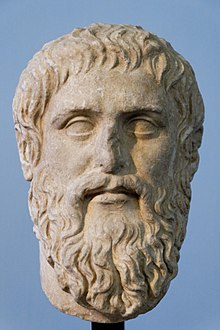
Plato, one of the most influential philosophers in history, was born in 427 BCE in Athens, Greece. His contributions to philosophy, politics, and education have left an indelible mark on Western civilization. A student of Socrates and the teacher of Aristotle, Plato’s work has shaped the intellectual landscape for centuries. This article explores Plato’s life, his philosophical ideas, and the historical context in which he lived. By delving into his major works, teachings, and the legacy he left behind, we aim to provide a comprehensive understanding of one of history’s greatest thinkers.
Early Life and Background
Plato was born into an aristocratic family during a time of great political upheaval in Athens. His family was well-connected, with ties to the city’s ruling elite. This privileged background provided Plato with access to some of the best education available, where he was exposed to the teachings of the pre-Socratic philosophers, including Heraclitus and Parmenides. These early influences would later play a significant role in shaping his philosophical ideas.
The period during which Plato was born coincided with the decline of the “Golden Age” of Athens. The city was embroiled in the Peloponnesian War with Sparta, a conflict that eventually led to Athens’ defeat and the subsequent decline of its political power. This turbulent environment, characterized by political instability and social unrest, profoundly influenced Plato’s thinking, particularly his views on governance and justice.
Plato and Socrates: A Pivotal Relationship
At the age of twenty, Plato became a disciple of Socrates, the enigmatic philosopher who would have a lasting impact on his life and work. Socrates’ method of dialectical questioning, known as the Socratic method, deeply influenced Plato’s approach to philosophy. The relationship between the two was not merely that of a teacher and student but one of profound intellectual partnership.
Socrates’ trial and execution in 399 BCE left an indelible mark on Plato. Witnessing the death of his mentor at the hands of the Athenian democracy led Plato to question the moral and political foundations of the city-state. This event profoundly shaped his later works, where he explored the nature of justice, the flaws of democracy, and the concept of the ideal state.
Travels and the Founding of the Academy
After Socrates’ death, Plato left Athens and traveled extensively throughout the Mediterranean. He visited Egypt, where he was exposed to ancient wisdom and the mysteries of the Egyptian priesthood. He also traveled to Italy and Sicily, where he encountered the Pythagorean philosophers who believed in the mystical significance of numbers. These travels broadened Plato’s philosophical horizons and exposed him to a variety of ideas that would later influence his own thinking.
In 387 BCE, upon returning to Athens, Plato founded the Academy, one of the earliest institutions of higher learning in the Western world. The Academy was more than just a school; it was a center for philosophical debate and inquiry, attracting students from across the Greek world. Plato’s Academy would become the model for future universities and played a crucial role in the development of Western education.
The Academy was not only a place for teaching but also for research and the pursuit of knowledge in various fields, including philosophy, mathematics, astronomy, and political theory. Plato himself taught at the Academy for most of his life, and the institution continued to operate for nearly a millennium, long after Plato’s death.
Plato’s Philosophical Works and Ideas
Plato’s philosophical output is vast, encompassing a wide range of topics, including ethics, politics, metaphysics, epistemology, and aesthetics. His works are typically divided into three periods: the early, middle, and late periods, each reflecting different stages of his intellectual development.
Early Period: Socratic Dialogues
The early period of Plato’s work is characterized by the Socratic dialogues, where he primarily explores the ideas of his mentor, Socrates. These dialogues, such as “Apology,” “Crito,” and “Phaedo,” focus on Socratic ethics, the nature of virtue, and the immortality of the soul. In these works, Plato is less concerned with developing his own philosophical system and more focused on preserving the teachings of Socrates.
The “Apology,” for instance, is a defense of Socrates’ life and philosophy, presenting his arguments against the charges of corrupting the youth and impiety. Through this dialogue, Plato not only immortalizes Socrates’ thoughts but also lays the groundwork for his own ideas on justice and the moral responsibilities of the individual.
Middle Period: Development of Platonic Philosophy
In the middle period, Plato begins to develop his own philosophical ideas, moving beyond the Socratic method to formulate theories that would define his legacy. This period includes some of his most famous works, such as “The Republic,” “Phaedrus,” and “Symposium.”
“The Republic” is perhaps Plato’s most significant work, where he outlines his vision of an ideal state governed by philosopher-kings. In this dialogue, Plato introduces the theory of the Forms, a central concept in his philosophy. According to this theory, the physical world is only a shadow of a higher reality composed of unchanging, perfect Forms or Ideas. For example, the concept of “justice” exists as a perfect Form, and the just actions we observe in the world are merely imperfect reflections of this ideal.
Plato’s theory of the Forms is also explored in the “Allegory of the Cave,” another key component of “The Republic.” In this allegory, Plato describes prisoners chained in a cave, only able to see shadows cast on a wall by objects behind them. The shadows represent the perceptions of the physical world, while the objects casting the shadows represent the higher reality of the Forms. The allegory illustrates Plato’s belief that true knowledge can only be attained through philosophical reasoning, which allows one to grasp the Forms beyond the illusions of the senses.
Late Period: Reconsideration and Critique
In the late period, Plato revisits some of his earlier ideas and subjects them to critical examination. This phase of his work includes dialogues such as “The Laws” and “Parmenides.” “The Laws,” Plato’s longest dialogue, represents a more pragmatic approach to political philosophy, where he offers a detailed blueprint for a second-best state, acknowledging the difficulties of implementing his ideal state in “The Republic.”
In “Parmenides,” Plato engages in a critical dialogue with his own theory of the Forms, exploring the logical problems it presents. This dialogue is notable for its rigorous dialectical method, where Plato scrutinizes the coherence of his own ideas, demonstrating his commitment to philosophical inquiry and the search for truth.
Plato’s Influence on Western Thought
Plato’s influence on Western philosophy is immeasurable. His ideas have shaped the development of various fields, including political theory, ethics, metaphysics, and epistemology. The concept of Platonic realism, the belief in the existence of abstract entities (Forms) independent of the physical world, has been a foundational idea in the history of philosophy.
Plato’s political philosophy, particularly his vision of the ideal state ruled by philosopher-kings, has inspired political thinkers throughout history, from Augustine and Aquinas to Rousseau and Hegel. His skepticism of democracy, based on the belief that most people are not equipped to govern themselves wisely, continues to provoke debate in contemporary discussions of governance and political ethics.
In addition to his philosophical contributions, Plato’s influence extends to the realm of education. His establishment of the Academy laid the groundwork for the development of Western educational institutions, emphasizing the importance of a broad, liberal education that includes philosophy, mathematics, and the sciences.
Historical Context and Legacy
Plato lived during a time of great change in the ancient world. The decline of Athens after the Peloponnesian War, the rise of Macedonian power under Philip II and later Alexander the Great, and the increasing influence of Persia in Greek affairs all shaped the political and intellectual climate of the time. Plato’s works reflect the concerns of his age, particularly the challenges of preserving moral and political order in a rapidly changing world.
The legacy of Plato is not only seen in the works of his immediate successors, such as Aristotle, but also in the broader history of Western thought. During the Renaissance, Plato’s works were rediscovered and became central to the intellectual revival of the period. His ideas on aesthetics, ethics, and metaphysics influenced artists, writers, and philosophers, shaping the course of Western art and literature.
In the modern era, Plato’s influence can be seen in various philosophical movements, including idealism, existentialism, and analytic philosophy. His emphasis on the importance of reason, the pursuit of truth, and the quest for knowledge continues to resonate with philosophers and thinkers today.
The End of Plato’s Life and His Enduring Impact
Plato spent his final years in Athens, teaching and writing until his death in 347 BCE at the age of eighty. He left behind a vast body of work that has continued to be studied and revered for over two millennia. The Academy he founded persisted as an institution of learning until it was closed by the Roman Emperor Justinian in 529 CE, marking the end of the ancient philosophical schools in Athens.
Plato’s enduring impact on philosophy, politics, and education cannot be overstated. His ideas have shaped the course of Western thought, influencing countless generations of thinkers and scholars. Today, Plato is remembered not only as one of the greatest philosophers of all time but also as a foundational figure whose work continues to inspire and challenge us to think more deeply about the nature of reality, justice, and the human condition.


