
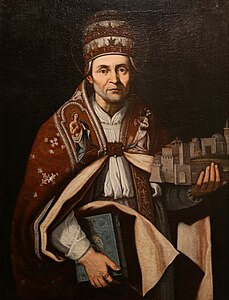
Introduction
Pope Celestine V, born Pietro Angelerio (or Angeleri), is a figure of immense historical significance in the Catholic Church. His life and papacy are characterized by humility, asceticism, and a controversial resignation that has intrigued historians for centuries. This article explores the life, fame, and enduring legacy of Pope Celestine V, providing a comprehensive understanding of his impact on the Church and the broader historical context of his time.
Early Life and Ascetic Beginnings
Pope Celestine V was born between 1209 and 1215 in Molise, Italy, likely in the town of Isernia or Sant’Angelo Limosano. He was the penultimate of twelve children in a family of peasant origin. From a young age, Pietro displayed a strong inclination towards solitude and asceticism. This led him to spend a brief period at the Benedictine monastery of Santa Maria in Faifoli, where his spiritual journey began in earnest.
In 1239, seeking deeper solitude, Pietro retreated to a remote cave on Mount Morrone, near Sulmona. This act of withdrawal from the world earned him the moniker “Pietro del Morrone.” His life as a hermit became the foundation of his spiritual reputation, and his piety attracted followers who sought his guidance.
The Rise of a Hermit Monk
After several years of hermitage, Pietro moved to Rome and took priestly vows. He then returned to the mountains of the Abruzzo region, where he founded the “Order of the Friars of Pietro del Morrone,” later recognized by Pope Gregory X as a branch of the Benedictine Order. This order was headquartered at the hermitage of Sant’Onofrio al Morrone, and it became a symbol of Pietro’s growing influence.
In 1273, Pietro made a pilgrimage to Lyon, France, during the winter to attend the Second Council of Lyon convened by Pope Gregory X. His objective was to prevent the suppression of his monastic order. Pietro’s reputation for sanctity had grown so much that Gregory X invited him to celebrate Mass before all the council fathers, a testament to his growing fame within the Church.
A Church in Turmoil
The latter part of the 13th century was a period of great upheaval for the Catholic Church. The death of Pope Nicholas IV on April 4, 1292, left the Church leaderless, and the subsequent conclave, consisting of only twelve cardinals, struggled to elect a new pope. The conclave was further delayed by an outbreak of the plague, and by 1294, the Church had been without a pope for over two years.
During this period of uncertainty, Pietro sent a prophetic letter to Cardinal Dean Latino Malabranca, predicting grave consequences if the Church failed to elect a new pope. This letter had a profound impact on the cardinals, who, inspired by Pietro’s asceticism and spiritual reputation, ultimately chose him as the new pope. On July 5, 1294, after 27 months of vacancy, the conclave elected Pietro Angelerio del Morrone as Pope Celestine V.
The Humble Papacy of Celestine V
Pope Celestine V’s election was seen as a means to bring spiritual purity to a Church embroiled in political and bureaucratic complexities. However, his inexperience in governance made him vulnerable to manipulation. Many cardinals, recognizing his lack of political savvy and advanced age, believed they could easily control him. Celestine himself was reluctant to accept the papacy, but after much prayer and meditation, he agreed, despite his deep reservations.
Celestine V’s papacy was marked by his continued asceticism and humility. Upon his election, he was escorted by King Charles II of Anjou to the city of L’Aquila, where he was crowned in the Church of Santa Maria di Collemaggio on August 29, 1294. One of his first acts as pope was the issuance of the “Bull of Pardon,” which granted plenary indulgence to all who, having repented of their sins, visited the Basilica of Santa Maria di Collemaggio from the evening of August 28 until sunset the following day. This act established the tradition of the “Perdonanza,” a celebration that would later inspire the Jubilee of 1300.
The Influence of King Charles II and the Papal Resignation
Pope Celestine V’s papacy was heavily influenced by King Charles II of Anjou, who was instrumental in his election. Celestine, recognizing his own limitations, relied heavily on Charles for guidance. This close relationship led to several significant decisions, including the relocation of the Papal Curia from L’Aquila to Naples, where Celestine took up residence in Castel Nuovo.
Despite his deep spirituality, Celestine struggled with the demands of the papacy. His lack of experience in governance, coupled with his ignorance of Latin, made it difficult for him to manage the Church effectively. These challenges, along with his desire for a return to a life of solitude and prayer, led him to make the unprecedented decision to resign from the papacy on December 13, 1294. This act of resignation, known as the “Great Refusal,” was later criticized by Dante Alighieri, who immortalized Celestine in the “Divine Comedy” as the pope who “made the great refusal out of cowardice.”
The Aftermath of Resignation and Legacy
Following his resignation, Celestine V sought to return to his life as a hermit. However, his successor, Pope Boniface VIII, feared that Celestine might be used by enemies of the Church to challenge his authority. To prevent this, Boniface ordered that Celestine be closely monitored. When Celestine attempted to flee to Greece, he was captured and imprisoned in the fortress of Fumone, where he spent the last year of his life.
Pope Celestine V died on May 19, 1296, in captivity. His death marked the end of a brief but significant papacy that continues to be remembered for its profound humility and spiritual focus. Celestine V was canonized in 1313 by Pope Clement V, and his feast day is celebrated on May 19.
Historical Context and Significance
Pope Celestine V’s papacy occurred during a time of great political and religious turmoil in Europe. The Catholic Church was grappling with internal divisions, the rise of powerful monarchies, and the challenge of maintaining spiritual authority in a rapidly changing world. Celestine’s election was seen as a return to spiritual purity, but his resignation highlighted the growing complexities of the papal office.
Celestine V’s life and papacy have been the subject of much historical debate. Some view his resignation as a sign of weakness, while others see it as an act of profound humility and self-awareness. His decision to step down set a precedent for future popes, although it would be centuries before another pope, Benedict XVI, would follow in his footsteps by resigning in 2013.
Conclusion
Pope Celestine V remains a figure of enduring fascination in the history of the Catholic Church. His life as a hermit, his brief papacy, and his decision to resign from the highest office in the Church offer valuable insights into the challenges and responsibilities of spiritual leadership. Celestine’s legacy is one of humility, spiritual dedication, and the recognition that even the most pious individuals may find the burdens of power too great to bear. His story continues to inspire those who seek to balance the demands of faith with the realities of leadership.


